
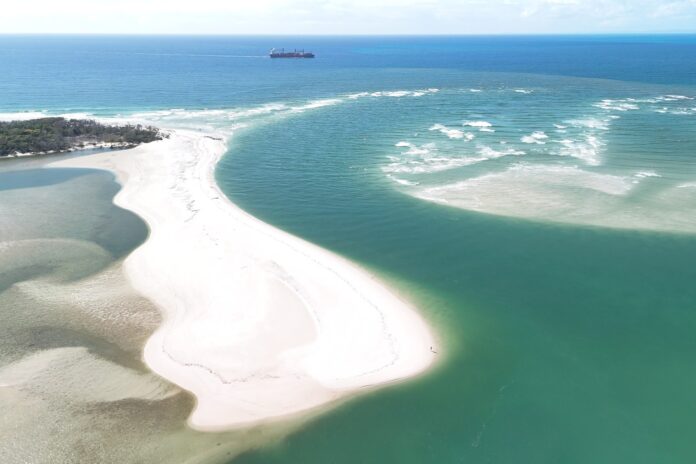
The deputy premier has lauded emergency works to shore up a vulnerable stretch of coastline and says longer-term options to protect the area are still being considered.
The state government introduced a range of measures at Bribie Island and the Pumicestone Passage, during the past 12 months, to address significant environmental challenges caused by three tidal breakthroughs in the isle that contributed to changed tides, shifting sands, restricted Coast Guard movements, the closure of the Caloundra Bar and erosion on the mainland.
The emergency works included filling two tidal breakthroughs with more than 1.1 million cubic metres of dredged sand, opening a channel in the Pumicestone Passage, creating an extensive sand buffer, building two 1.35km sand fences and installing 6500 native plants on the island.
“The Crisafulli Government has secured the protection of Bribie Island and Pumicestone Passage,” Deputy Premier Jarrod Bleijie said.
The office of Coordinator-General Gerard Coggin stated that the works had stabilised the island, supported tidal flow and sediment management in the passage, and improved resilience to future weather events while reducing risks to property, infrastructure and environmentally significant areas.
But it remains unclear what further works, if any, will be done.
“We’re continuing to investigate longer-term options for Bribie Island and Pumicestone Passage through the independent Bribie Island Erosion and Breakthrough Review,” Mr Bleijie told Sunshine Coast News.
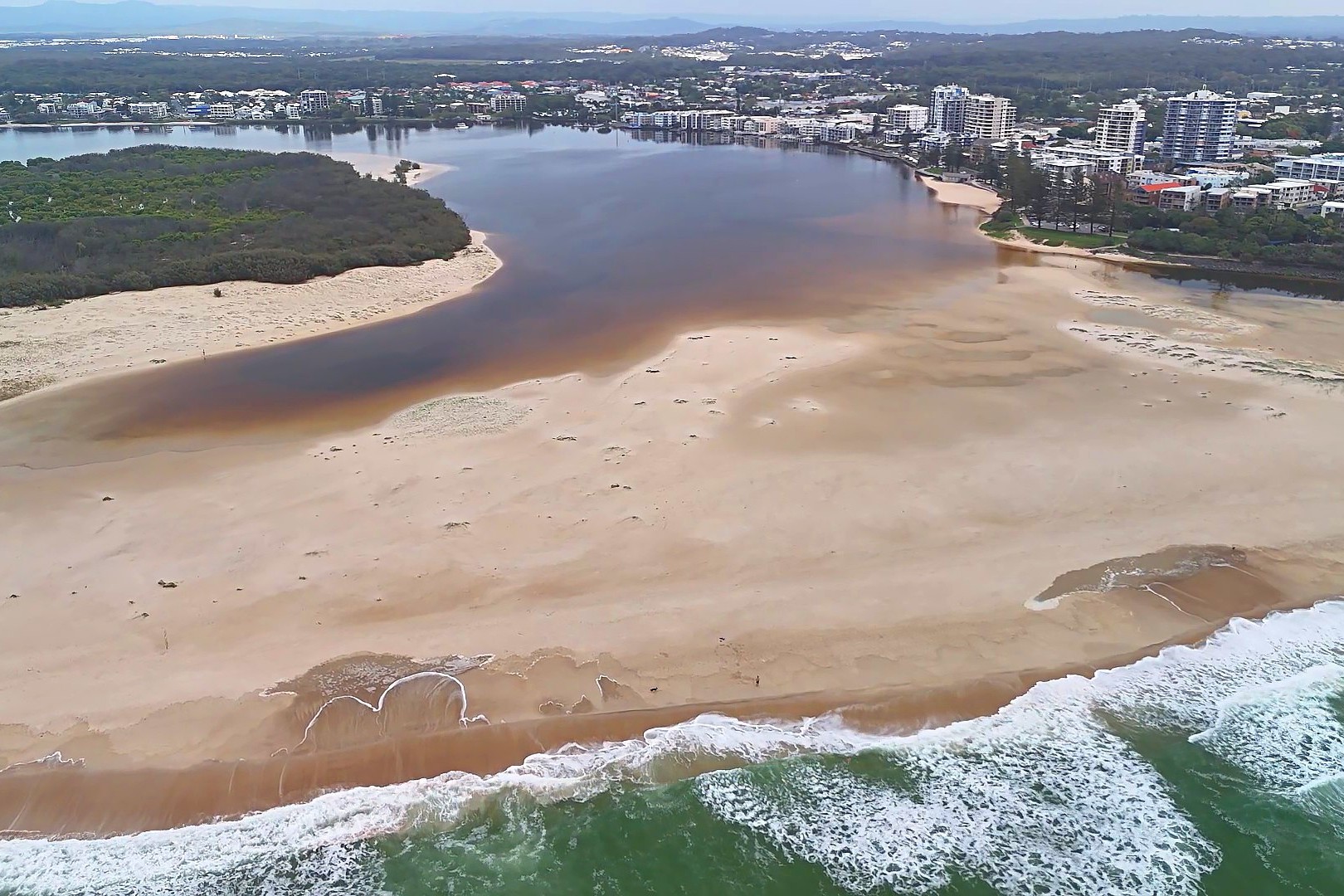
Footage by Damien Lange (Droner.au), above, shows the main tidal breakthrough, which formed in 2022 and is known as the Bribie Bar, is still flowing. The video also shows the Caloundra Bar, which became clogged with sand as a result.
The review, by International Coastal Management and RPS, recommended longer-term options like closing the main breakthrough and reopening the Caloundra Bar.
“Reinstating the breached section of Bribie Island is proposed as a critical early intervention,” it stated.
“This involves a large-scale dredging and nourishment campaign, drawing material from identified sources (eg the filled Caloundra Bar, internal shoals and other sources), and restoring a target dune width and elevation.”
“This approach is not a ‘return to the past’ but rather a strategic reset to improve tidal conditions, reduce wave energy entering the passage, and buy time for more permanent and robust solutions to be implemented.”
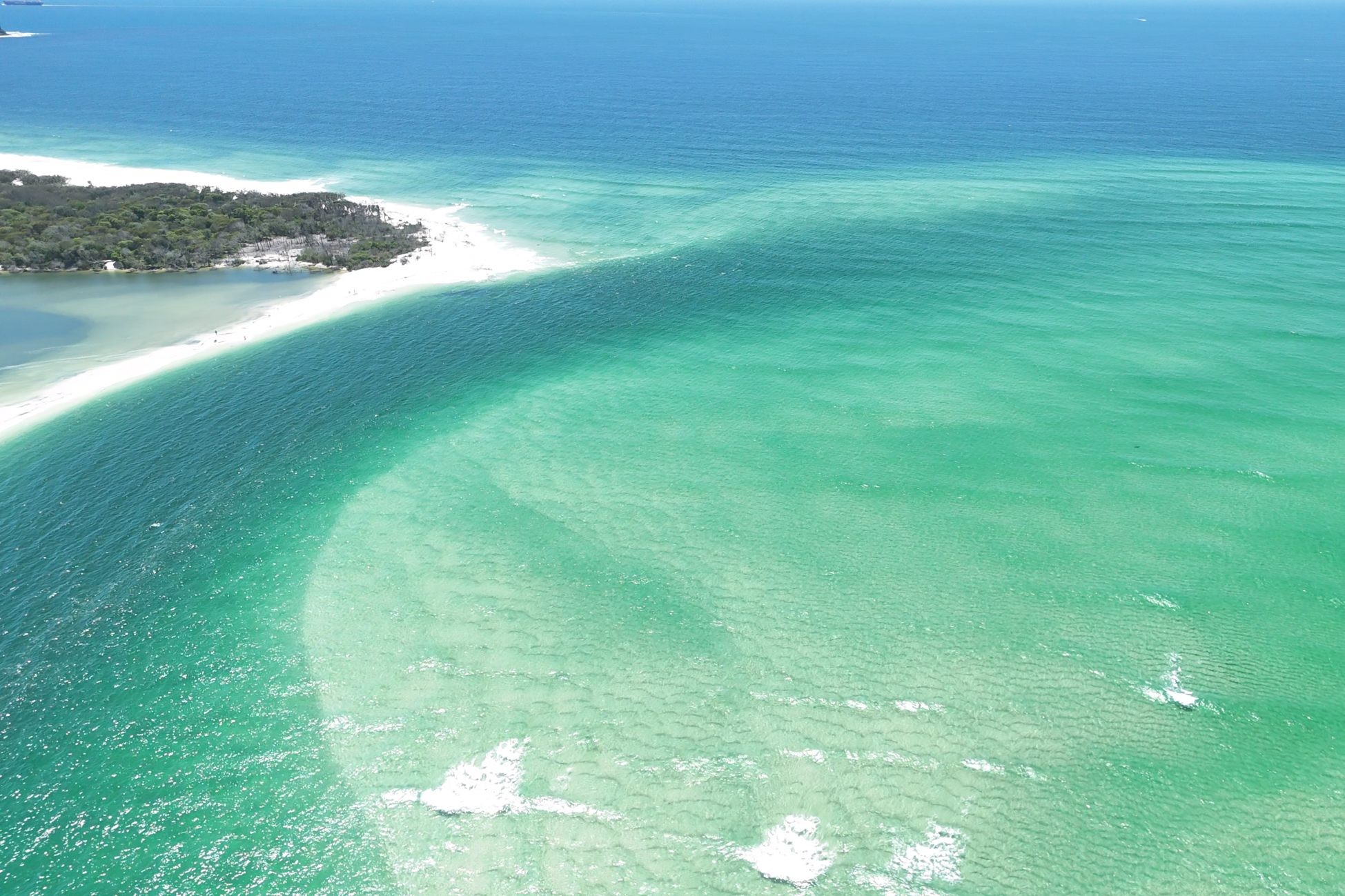
Local group Pumicestone Passage Catchment Management Board last year expressed its support.
“We need to close breakthrough No.1 and build back a strong barrier island to protect the Caloundra community,” the group said.
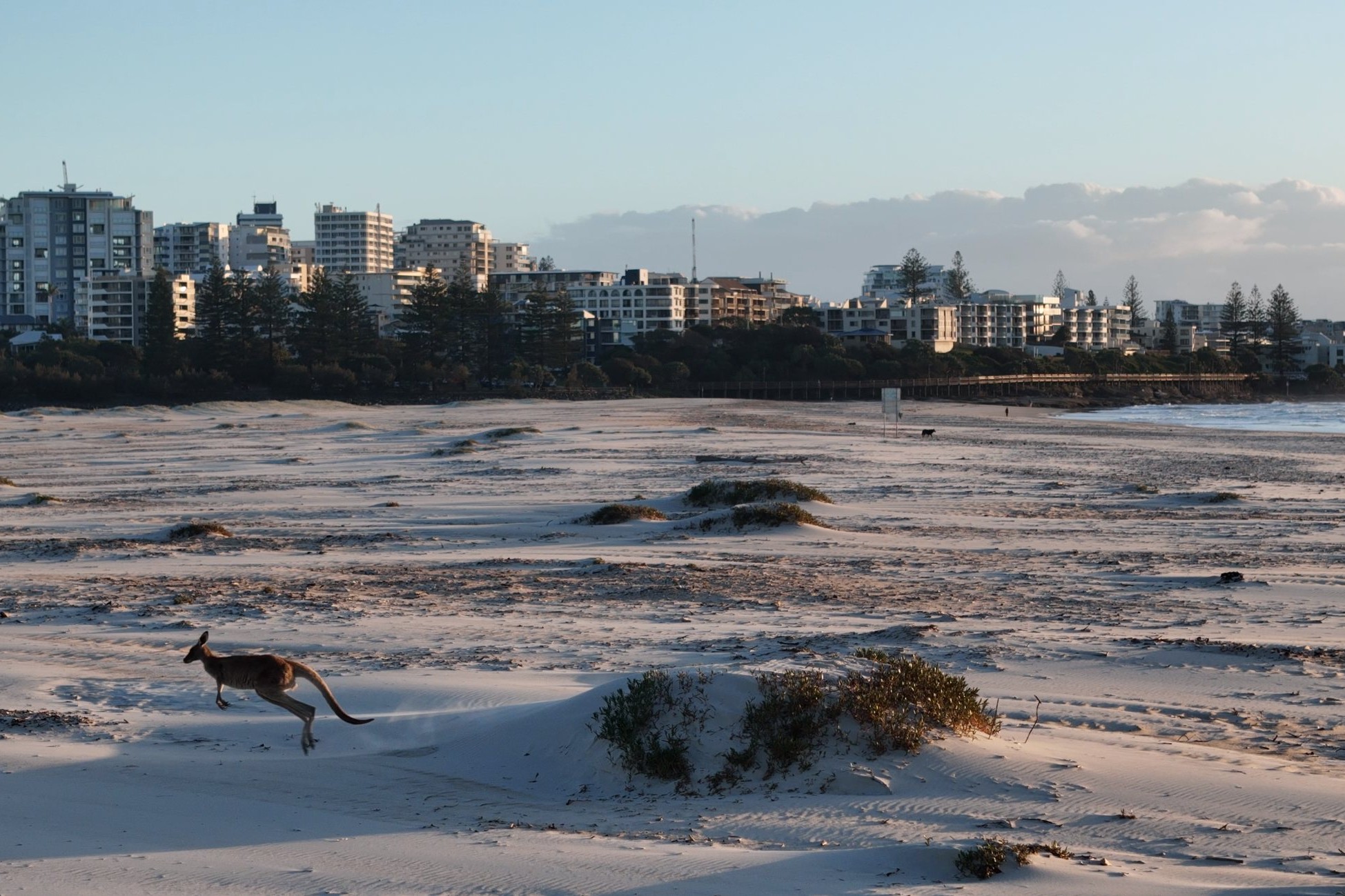
“We need to reopen the old bar in a safe, stable and navigable way, in the vicinity of its traditional location at Bulcock Beach.
“This is also necessary to re-establish water flow and restore the tidal prism to pre-breakthrough conditions, as these were the conditions around which we built our community.”
The coordinator-general’s project web page said the department “has commenced planning and investigations into the long-term options to ensure the resilience of Bribie Island and Pumicestone Passage”.
Do you have an opinion to share? Submit a Letter to the Editor at Sunshine Coast News via news@sunshinecoastnews.com.au. You must include your name and suburb.
The area remains subject to an exclusion zone as part of Bribie Island National Park and Recreation Area, with signage in place, and Queensland Parks and Wildlife Service rangers monitoring compliance to protect the fragile coastal environment.