

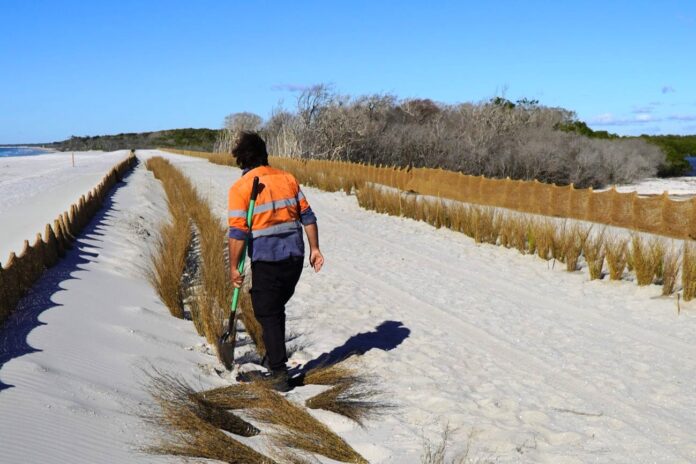
About 6500 native species have been established on a section of island that is being rebuilt to help protect the coastline from the elements.
The plants were added to Bribie Island off the coast of Caloundra, as part of a multimillion-dollar emergency works package.
Those works have also included filling two tidal breakthroughs with more than 1.1 million cubic metres of dredged sand, opening a channel in the Pumicestone Passage, constructing an extensive sand erosion buffer that is now about 5m high and building a sand fence.
In tandem with the fencing, the plants trial was carried out over 2000sqm.
Caloundra MP Kendall Hatcher issued a press release providing more information.
“The plant species were meticulously selected to align with national park management guidelines,” it stated.
Establishing vegetation on the broader erosion barrier presents unique hurdles, which this trial aims to address.
“Key challenges include harsh environmental conditions (including) high salinity and nutrient-poor, freshly dredged sand,” it read.
“Oncoming months will require strategic watering, heavily reliant on local rainfall.
“(There are also) complexities surrounding the transport of materials and equipment to the isolated island location.
“To combat these challenges, the project is leveraging cutting-edge innovation by trialling Mangrove Mates, a biodegradable device designed to assist in seed capture, trap sand, and significantly improve plant establishment.”
The release outlined the next steps.
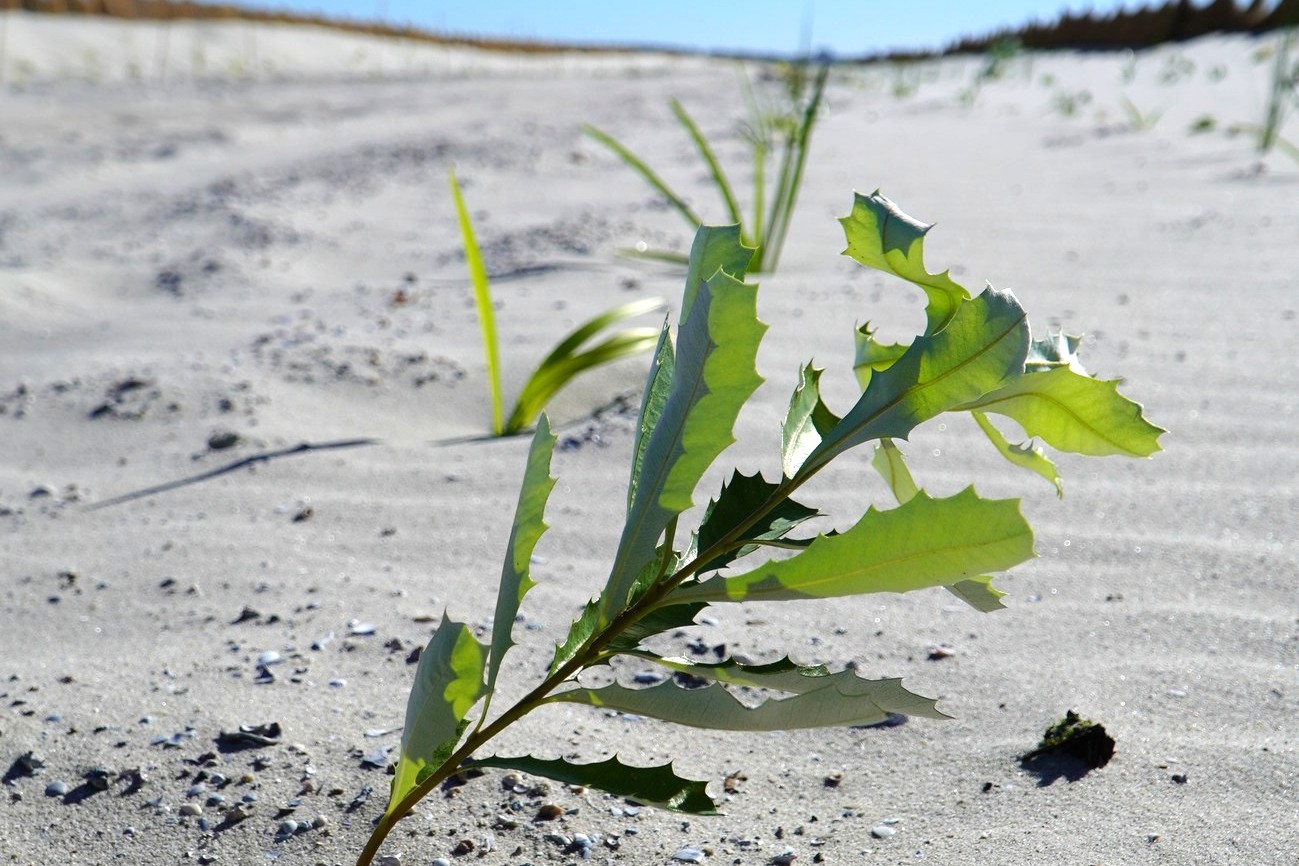
“The immediate focus shifts to the ongoing monitoring of plant survival and performance.”
“The project team will continue to evaluate logistical arrangements to maximise efficiency as they plan for potential future large-scale vegetation works.
“This science-based approach ensures that Bribie Island’s defences are not just rebuilt, but are naturally equipped to withstand future coastal pressures.”
Ms Hatcher’s release also said the installation of two 1.35km fences in April was a “critical phase of the dune stabilisation”.
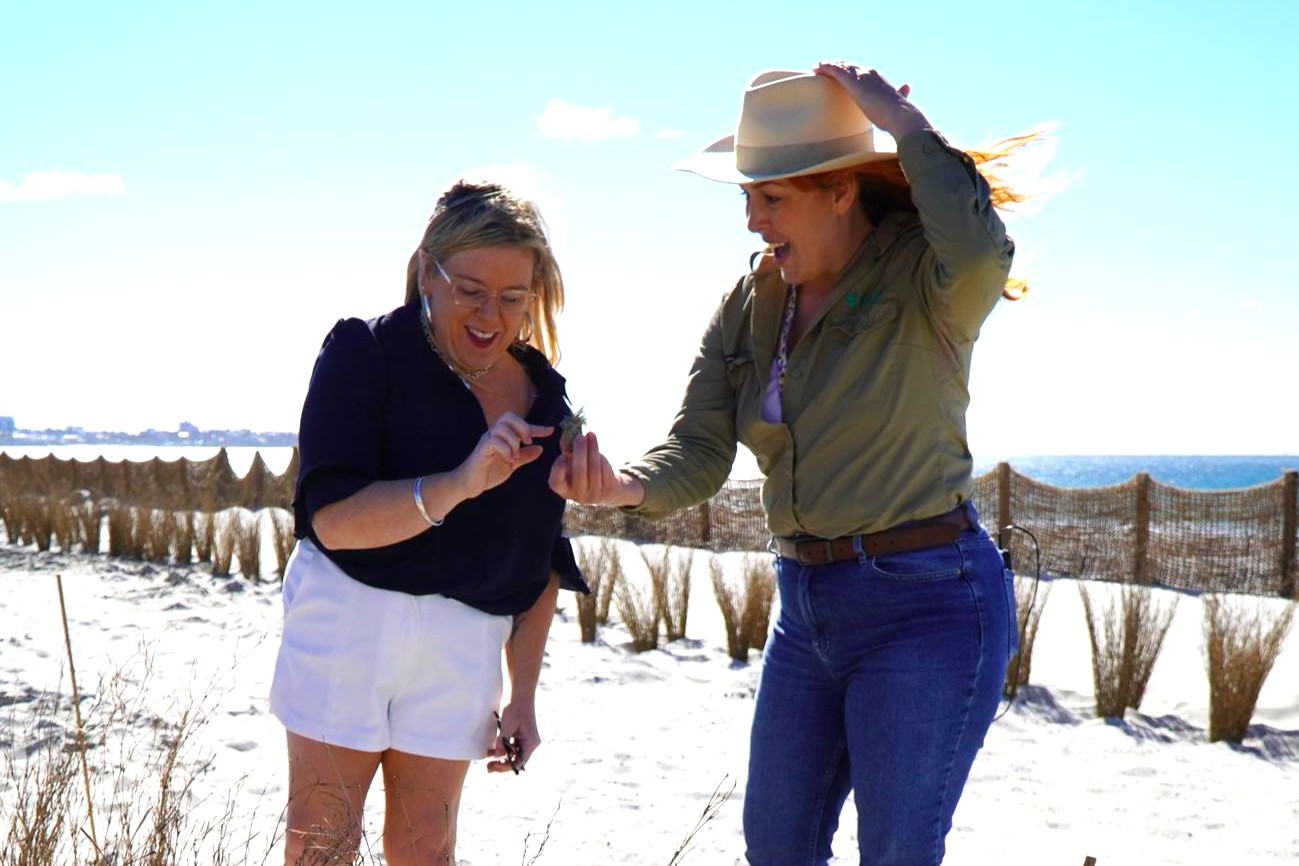
“Delivered by Queensland-based company Ecosure, the fencing is constructed entirely from biodegradable materials, including untreated hardwood stakes and jute matting.”
“Designed to capture wind-blown sand and promote natural dune rebuilding, the fences will be progressively buried over time, eventually integrating into the natural dune system.”
Do you have an opinion to share? Submit a Letter to the Editor at Sunshine Coast News via news@sunshinecoastnews.com.au. You must include your name and suburb.



