
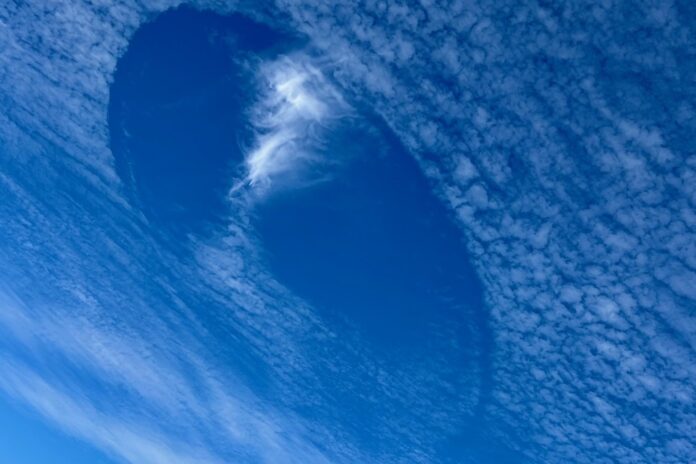
People on the Sunshine Coast have been left impressed and bewildered by a relatively unusual weather phenomenon.
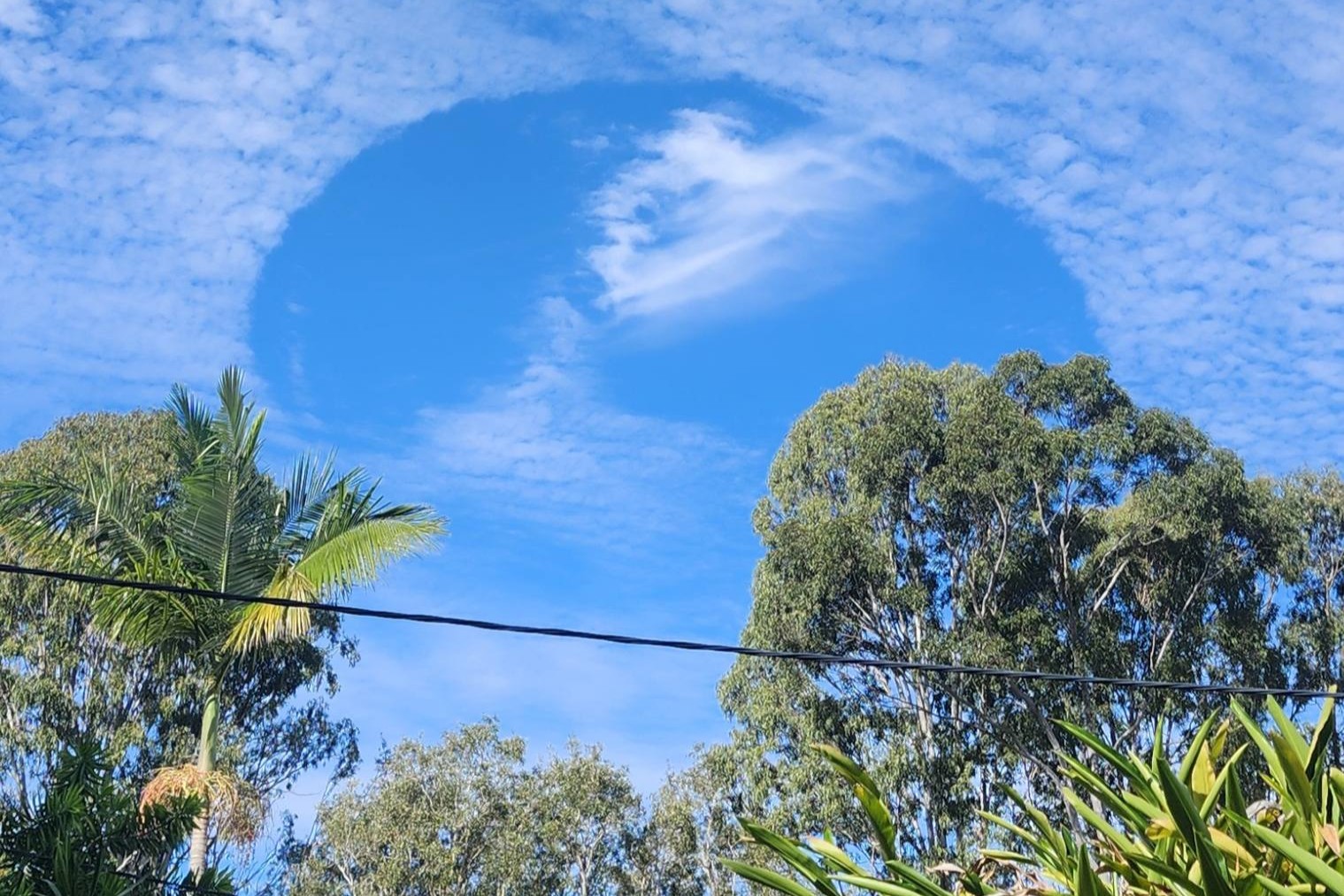
Many were left scratching their heads at the sight of a large, circular gap that suddenly appeared in a thin layer of cloud on Wednesday.
Social media was awash with theories and jokes.
“The hole in the ozone layer,” Roxanne Black said.
“They’re definitely NOT trying to be inconspicuous. LOL,” Taz Colefax added.
“Some say it’s an alien going through a portal. I think it is a formation made by cold lower clouds over water and a hole left by an aircraft that went through it,” Sans Lowe said.
Help us deliver more news by registering for our FREE daily news feed. All it requires is your email at the bottom of this article.
Bureau of Meteorology senior meteorologist Angus Hines provided the answer.
“It’s a pretty prime example of a fallstreak hole, or sometimes it’s called a hole-punch cloud for obvious reasons. You get this almost perfectly circular hole, gap or divot carved out of the cloud,” he said.
Mr Hines said it was essentially formed when supercooled water droplets froze into ice crystals and fell out of the cloud, creating a hole.
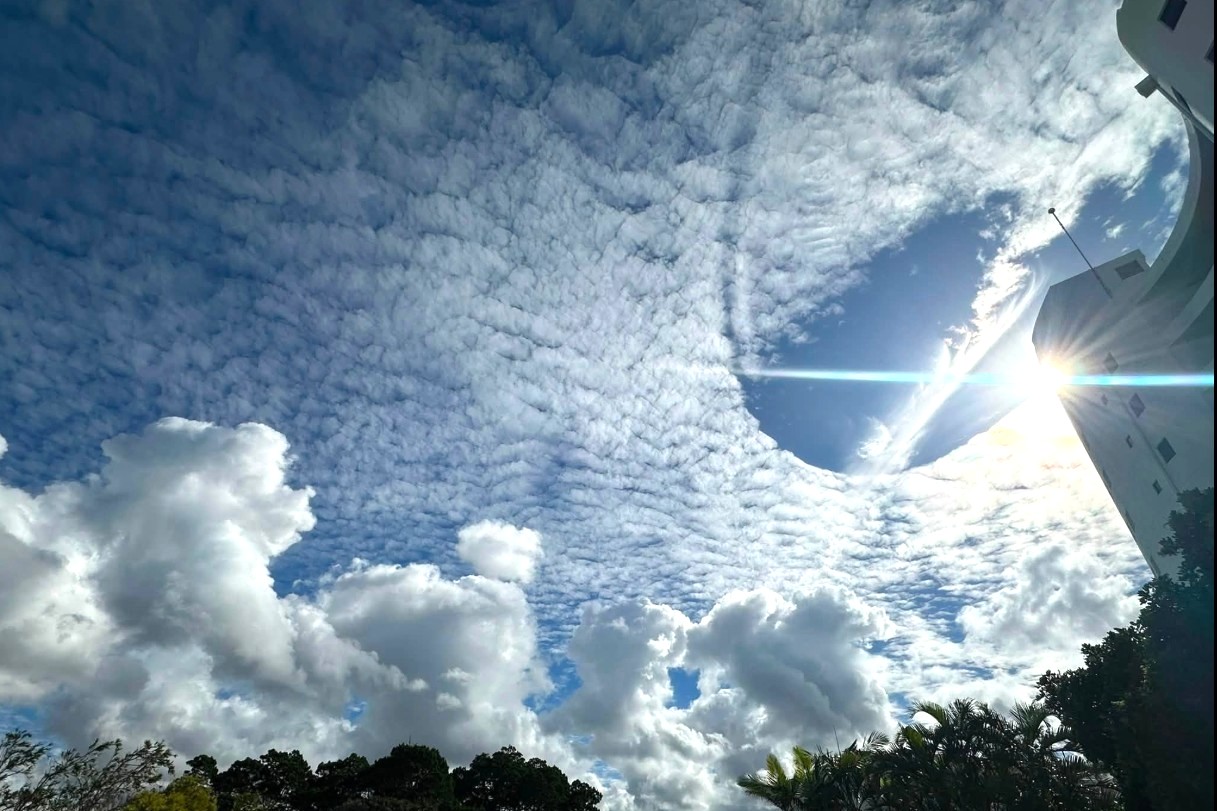
“Most of the sky is covered by that really thin layer of cloud, which is made up of tiny liquid water droplets,” he said.
“The temperature has to be around zero degrees or below. Somewhere inside that cloud, some of those droplets start forming ice particles.
“They (cling to) any small particles which float around in the atmosphere. Some common examples would be dust, pollen, sea spray, soot and clay or even ash from volcanos.
“It kicks off a bit of a chain reaction where the growing ice particles absorb all the supercooled water around them, creating a cascading reaction that spreads outwards in a circle.”
“The ice crystals are heavier and tend to fall out of the cloud layer, which creates the gap. That’s why it’s called a fallstreak hole.”
Mr Hines it was relatively unusual.
“It requires a very precise arrangement in the atmosphere for something like this to occur, which is why they’re not very common,” he said.
“I’ve seen a couple, but they’re certainly not common.
“It could probably happen at any time of year. It just needs that perfect arrangement: a really thin layer of cloud at the right height in the atmosphere and at the right temperature.”