
Two Sunshine Coast prep-to-Year 12 independent schools are in the running for national education awards.
Matthew Flinders Anglican College at Buderim and St Andrew’s Anglican College at Peregian Springs were nominated for the 2026 Australian Education Awards across five categories, collectively.
The awards, now in their ninth year, recognise and celebrate the outstanding achievements of the country’s top performing schools, principals, department heads and teachers across 29 categories.
Matthew Flinders Anglican College was named an Excellence Awardee in three categories: Secondary School of the Year – Non-Government; Primary School of the Year – Non Government; and Best Professional Learning Program.
St Andrew’s Anglican College received Excellence Award nominations for Regional School of the Year and Best Use of Technology, recognising the college’s innovative approach to artificial intelligence in education through its newly developed digital research hub.
The shortlisted awardees will go to an independent judging panel and the final winners will be announced in August in Sydney.

In 2023 Matthew Flinders was awarded Primary School of the Year (Non-Government) and in 2024 St Andrew’s was awarded Secondary School of the Year (Non-Government) in the Australian Education Awards.
In 2025 both schools were named a 5-Star Best School by the awards host, The Educator magazine.
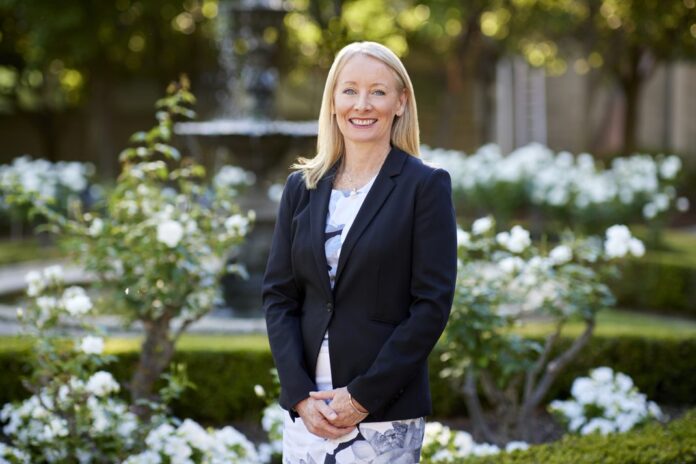
Matthew Flinders principal Michelle Carroll said the awards reflected the college’s strategic focus on evidence-based frameworks that drive both student and staff performance.
“It is a wonderful achievement for Flinders to be recognised across three separate categories in the nation’s leading education awards,” Ms Carroll said.
“Along with our staff and our community, we strive to provide an ‘education for excellence in learning and life’.
“It is incredibly rewarding to see our continuous commitment to student growth and future success validated on a national stage.”
Help us deliver more news by registering for our FREE daily news feed. All it requires is your email at the bottom of this article.
St Andrew’s redesigned the traditional library model to support research and learning in an AI-enabled world.
Its new digital research hub recognises AI is part of the world students will inherit.
College principal Karen Gorrie said the school wanted to equip students with the skills to understand AI and critically evaluate it.
“We don’t want our students to fear AI or be naive about it,” she said.
“We wanted them to be the kind of thinkers who know how to interrogate any source and hold it to account.”
The new platform, which went live in 2025, gives secondary students a structured framework for research in an AI-enabled world.
Two learning pathways guide students through the full research process: defining questions, locating credible sources, evaluating information critically and constructing evidence-based arguments.
“AI tools are taught as one of many research aids,” Ms Gorrie said.
“Not a shortcut, but a thinking partner. The goal is developing students who use these tools with real discernment.”
Running alongside the hub is an AI Learning Insights Dashboard, which tracks patterns of AI usage across curriculum contexts, helping teachers understand how students are engaging with AI tools during learning tasks and informing how they design assessments.
In the first 12 months, teachers reported improved student engagement with AI tools.
Following targeted classroom sessions on prompting and verification, the quality of student AI prompts improved by 40 per cent, with students increasingly comparing outputs across platforms and verifying claims through academic databases.
“What we’re seeing is students who ask better questions,” Ms Gorrie said.
“They’re not just prompting AI to give them an answer, they’re using it to think. That’s exactly what we hoped for.”