
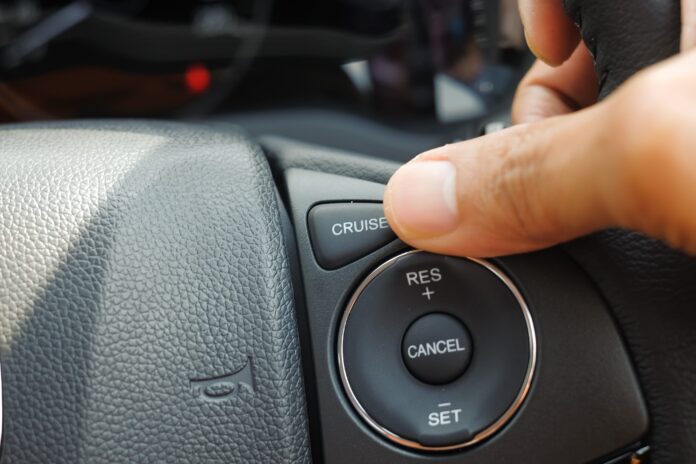
Many rely on cruise control to stay under the speed limit, but new research from the University of the Sunshine Coast (UniSC) claims this technology is not fool proof.
Adaptive cruise control (ACC) is a feature in modern cars that adjusts a driver’s selected cruising speed to maintain a designated gap with the car ahead.
The UniSC research found that ACC systems in many of the most popular cars in Queensland might not adhere to the State Government’s safe following distance recommendations.
The study, led by Dr Michelle Nicolls from the MAIC/UniSC Road Safety Research Collaboration, found that just two of the 20 car manufacturers analysed had available settings that expressly followed Queensland guidelines.
“The Queensland Government recommends maintaining at least a two-second gap between you and the vehicle in front,” Dr Nicolls said.
“But the majority of vehicle manuals explored in our study either did not specify what gap they employed or used metres to describe gap distances, which may make it difficult for drivers to set their car to follow the guidelines.
“Drivers trusting their ACC system to maintain the correct following distance are not only risking their safety – they might be breaking Queensland law if following too closely to the vehicle in front.
“It’s possible that many drivers aren’t aware of the discrepancy, given the lack of clarity and specifics listed in car manuals.”
Help us deliver more news by registering for our FREE daily news feed. All it requires is your email at the bottom of this article.
It’s not the only unsafe way motorists might be using the technology either.
“This technology has several limitations – with many manuals recommending ACC be switched off under poor driving conditions like rain, fog and glare,” Dr Nicolls said.
“And we know from previous research that more than 50 per cent of motorists will still use ACC in poor conditions, despite manufacturer recommendations.”
This technology is also limited in heavy congestion, and frequent stopping and starting traffic.
“These are high-risk areas associated with rear-end crashes, however the use of ACC may not be appropriate in these places,” she said.
“It’s important that motorists understand the limitations of these technologies and consider whether they’re using them properly.
“ACC might be convenient as a driving tool but it’s not a substitute for safety. Drivers still need to exercise good judgement and caution.”