

Queensland’s rapidly growing data centre industry could provide a new market for treated wastewater under a local push to reduce pressure on drinking supplies.
Noosa councillor Amelia Lorentson is calling on the state government to develop clearer rules around where data centres are built and how they use water and energy.
She said work already underway in Noosa could help shape the approach.
Cr Lorentson plans to bring her proposal back to Noosa Council in November after withdrawing an earlier notice of motion at the September 17 meeting.
That notice called for Queensland to develop a model code – a standard set of planning and assessment benchmarks – covering data centre location, water use and energy demands, including support for treated wastewater in cooling systems where suitable.
She said the idea had grown from her long-running push to find productive uses for treated wastewater.
“This is my sixth year in council, in that time, I’ve gone to Canberra and the Local Government Association of Queensland every year for the past six years advocating for cleaner oceans, no ocean outfalls and to try find a market for treated wastewater,” she said.
“The interest is solely on focusing on the use of treated wastewater and diverting it to locations where it’s needed to take the pressure off potable water.”

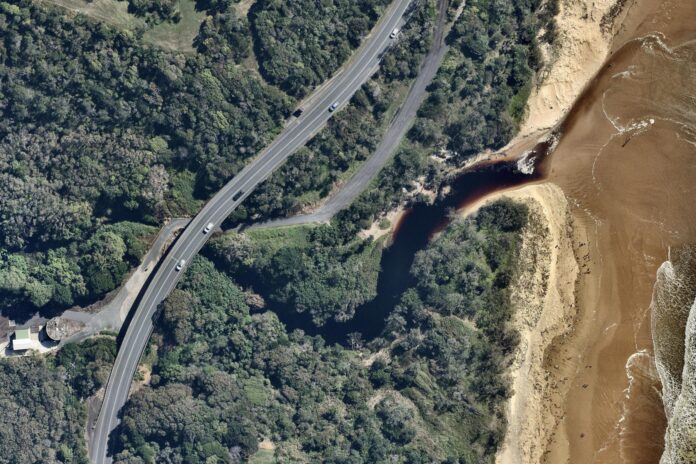
Cr Lorentson believes work already underway at Noosa’s Burgess Creek could help test how treated wastewater might be put to better use.
Noosa Council and Unitywater are developing an Integrated Catchment Management Plan for the coastal catchment, which flows to the ocean at Sunshine Beach. The councillor’s notice states about eight to 12 megalitres of treated wastewater has historically been discharged through the creek each day.
Cr Lorentson wants council to investigate whether that existing work could underpin a pilot, potentially involving Sunshine Coast Council and Seqwater and provide practical evidence to help shape emerging data centre rules.
Her proposal does not identify a particular data centre that would use Noosa’s treated wastewater or outline a specific pipeline or reuse scheme.
“It’s about viewing what opportunities are there for Unitywater … and how we can make the most of an opportunity to use treated wastewater,” she said.
It was while looking more closely at the rapid growth of data centres that Cr Lorentson saw a potential new market.
“I did some reading on data centres and it really, really excites me that this may be an opportunity for us, not as a council – we don’t want data centres located in Noosa,” she said.
“I view data centres as a threat and an opportunity to councils.”
In its Getting it right: Building AI infrastructure that works for Australia consultation paper, released last month, the federal government estimated Australian data centres consumed about 5.5 gigalitres of water for cooling in 2025.
To put that in perspective, Seqwater says residential customers across Unitywater’s South East Queensland service area – covering Noosa, the Sunshine Coast and Moreton Bay – use an average of about 150 litres of water per person each day.
At that rate, 5.5 gigalitres is equivalent to the annual residential water use of about 100,000 people.
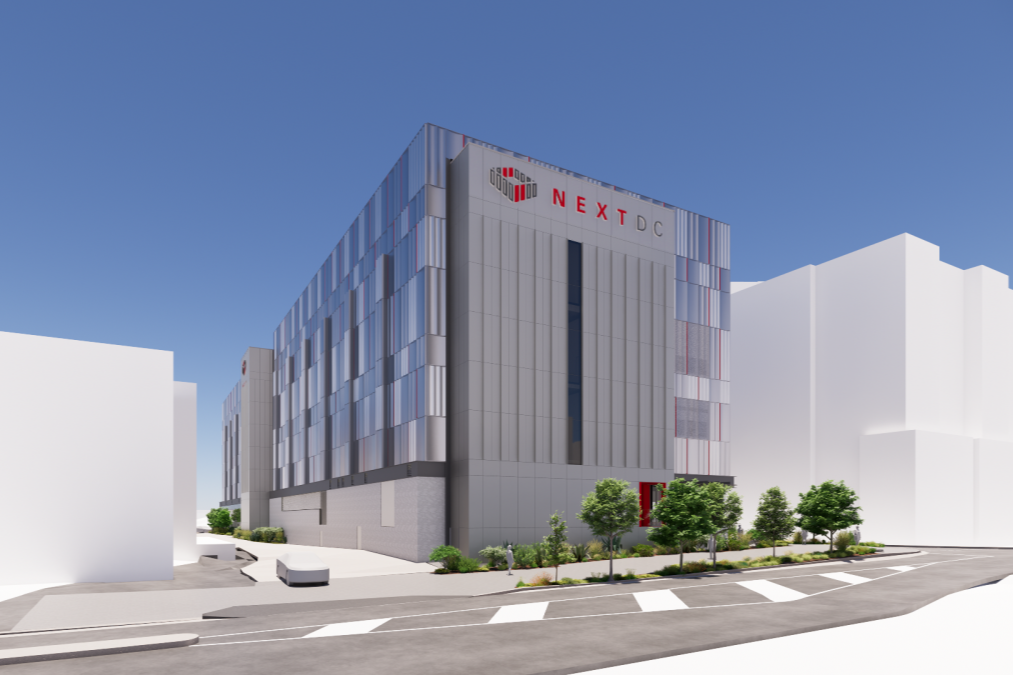
Closer to home, data centre operator NEXTDC has not publicly disclosed how much water its new $200 million SC2 facility at Maroochydore will use.
Unitywater has also declined to reveal the facility’s design and service requirements, citing customer privacy.
The push comes as governments grapple with how to manage the rapid expansion of data centres and the pressure they can place on power, water and land.
National Cabinet agreed on August 26 to develop nationally consistent mandatory standards for large data centres, with Commonwealth legislation planned for early 2027.
The federal government consultation now underway proposes requiring large data centres to minimise water use and prioritise efficient cooling technology and non-potable and recycled water where possible.
It also proposes making operators contribute towards additional water infrastructure and servicing costs and report their water use.
Anyone with an interest in the issue can make a submission before consultation closes at 5pm on October 9.
Cr Lorentson believes Queensland has an opportunity to develop more detailed planning guidance alongside the national standards.
“Part of my motion was that the guidelines can be drawn up,” she said.
“I got all excited at the opportunity to push for a pilot and an opportunity for Queensland as a state to have an influence into the future model code.
“This is the gap that is missing. That’s the power of groups like the LGAQ.
“We have the opportunity as a single council, we have a voice and the LGAQ as an effective lobby group.
“If a decision is made at policy level, in my experience, they will make it happen. At a minimum, they will start the conversation.”
Cr Lorentson will table her motion at Noosa Council in November but said the LGAQ had already been receptive to the data centre proposal and had indicated it would be referred to its Policy Executive.
Do you have an opinion to share? Submit a Letter to the Editor at Sunshine Coast News via news@sunshinecoastnews.com.au. You must include your name and suburb.
Noosa and Sunshine Coast councils are also members of the Council of Mayors (South East Queensland), whose SEQ Digital Plan identifies development of a regional Data Centre Strategy as a priority.
The proposed strategy would identify suitable precincts and land based on access to water and energy infrastructure and compatible surrounding uses, while also considering cooling and water consumption.
While Sunshine Coast Council told Sunshine Coast News last month it had no plans for dedicated data centre provisions in its proposed new planning scheme, it pointed to regional discussions and said council would participate as a stakeholder if a regional strategy proceeded.
To make a submission on the future of artificial intelligence (AI) training and large data centres in Australia, click here.
The aerial imagery in this story is from Australian location intelligence company Nearmap. The company provides government organisations, architectural, construction and engineering firms, and other companies, with easy, instant access to high-resolution aerial imagery, city-scale 3D content, artificial intelligence data sets, and geospatial tools to assist with urban planning, monitoring and development projects in Australia, New Zealand and North America.



