
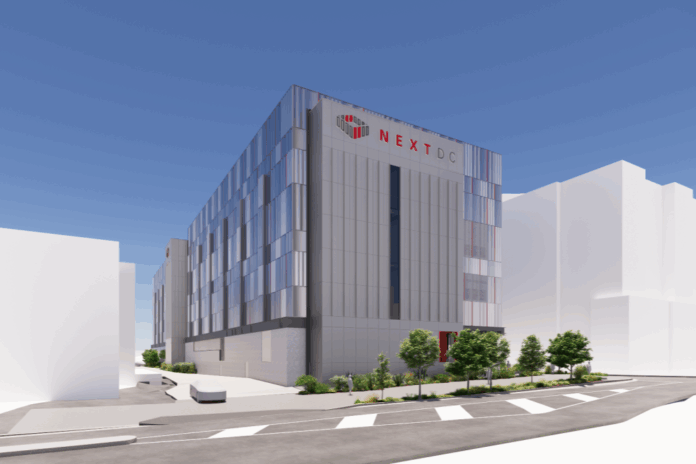
A $200 million AI-ready data centre already under construction on the Sunshine Coast will not be subject to incoming federal rules designed to prevent future facilities placing additional energy and water costs on households and businesses.
The news comes as figures show the new data centre’s electricity usage could equate to that of 10,500 homes.
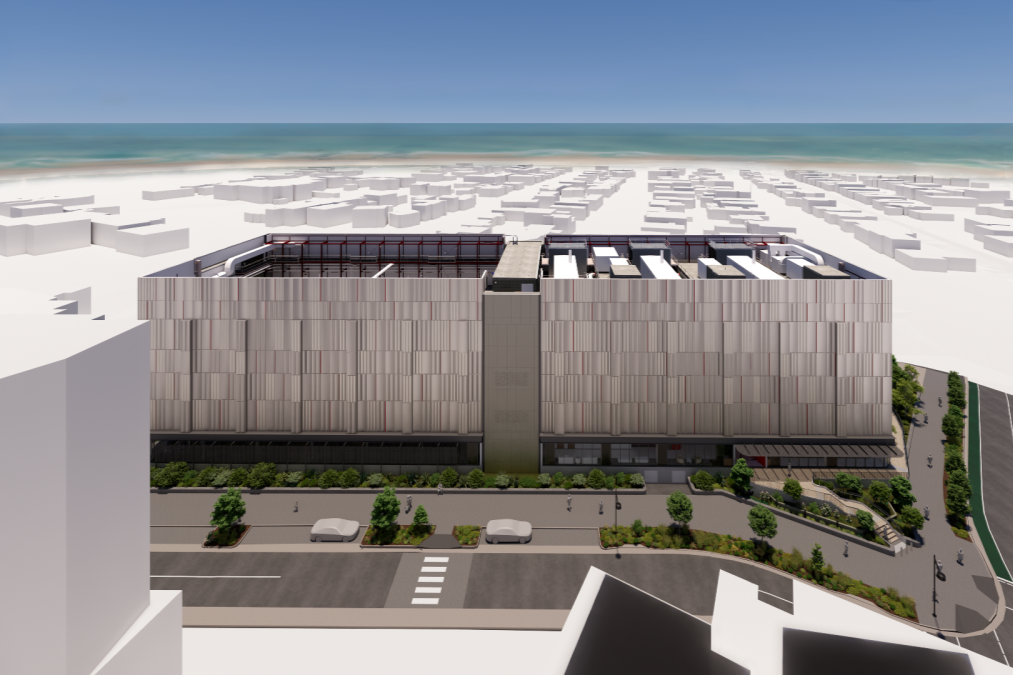
Technology infrastructure company NEXTDC Limited says its five-level facility, which will be its second data centre in the region, is expected to be online between January and June 2027.
Named SC2, the centre at 10 South Sea Islander Way, Maroochydore, will adjoin NEXTDC’s existing SC1 facility and be co-located with the international submarine cable landing station.
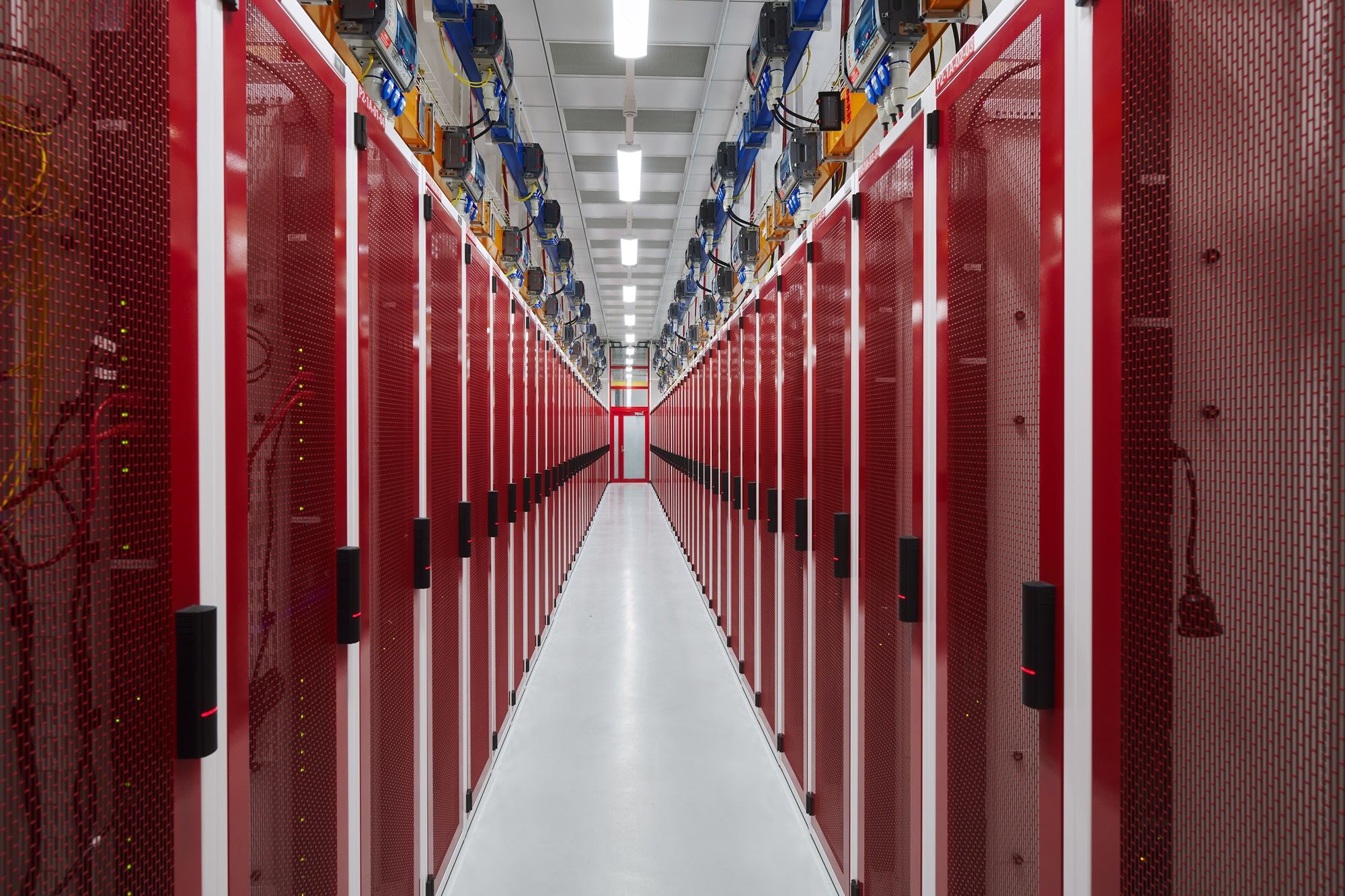
Data centres are secure facilities filled with computer servers that store, process and transfer the information behind websites, apps, cloud services and artificial intelligence tools. An AI-ready centre is designed to handle the more powerful and energy-intensive computing equipment used for artificial intelligence.
Economic Development Queensland approved SC2 in June 2025. Sunshine Coast Council’s investment attraction website describes the development as a purpose-built “AI-factory” designed to meet the intensive cooling and power demands of modern high-density computing.
The website says data-intensive businesses could benefit from faster data speeds, reduced risk and lower costs.
On Wednesday, in response to community concerns about environmental impacts, Prime Minister Anthony Albanese announced new legal standards for artificial intelligence and data centres were expected to be legislated in early 2027, including requirements for operators of new large facilities to underwrite new power supplies and pay for additional water infrastructure.
The Prime Minister confirmed the rules would only apply to new proposals and not centres, such as SC2, which are already under construction.
However, calls are mounting for immediate action to prevent data centre firms from rushing projects through before national rules take effect, with advocates urging the government to introduce temporary protections in the immediate term.
The delay could create a window for companies to avoid stricter environmental regulations, Australia Institute senior economist Matt Grudnoff said.
“There needs to be an urgent conversation about what we’re going to do in the interim between when the regulations come out and now,” he told AAP.
“There’s a distinct possibility that this will take longer than what the government thinks.”
Mr Albanese said many centres already under construction “tend to be smaller ones”.
“What we’re talking about here is very large data centres, need to be in appropriate locations, need to make sure they add energy to the grid,” he said.
A May 2026 report commissioned by Greenpeace Australia Pacific described Australia as being in the midst of a “feverish data centre boom” and called for a pause on new developments until binding safeguards were introduced.
The report, written by independent climate, environment and sustainability expert Ketan Joshi in collaboration with Greenpeace, argues that operators generally do not disclose the customers, purpose or site-specific energy consumption of individual centres.
NEXTDC’s website lists SC2 as having six megawatts of IT capacity, while its latest investor presentation says it is expected to initially provide about one megawatt, with about six megawatts planned in total. IT capacity refers to the power available to its computer equipment, rather than all the electricity needed to run the building.
If that equipment operated at full capacity around the clock, it would use 52.56 gigawatt-hours of electricity a year – equivalent to the annual use of about 10,500 typical homes on the Energex network, based on its benchmark of 5024 kilowatt-hours a year for a residential customer.
NEXTDC’s existing SC1 centre has about one megawatt of IT capacity, taking the two Maroochydore facilities’ published capacity to about seven megawatts.
If both operated continuously at full capacity, their computer equipment would use the equivalent annual electricity of about 12,200 typical homes.
Those comparisons do not include the electricity needed for cooling, pumps, lighting, power conversion and other building systems, meaning total annual use at full capacity would be higher. They are also full-capacity calculations, rather than forecasts of the centres’ actual consumption.
According to the most recent available Census data, Maroochydore has around 11,420 dwellings.
Energex could not confirm whether it had received or approved an application to connect SC2, or disclose the facility’s requested electricity demand, citing customer privacy laws.
It said the network upgrades required for the centre would depend on the size and complexity of the connection.
“Large customers, as defined by our connection policy as any connected customer with a load greater than 1MVA, pay 100 per cent of the dedicated network connection cost,” a spokesperson said.
“Energex must maintain sufficient capacity and voltage stability to supply every home and business on the day of the year when electricity demand is at its maximum, no matter where those customers are connected in the network.”
The spokesperson also confirmed commercial customers were not prioritised over other customers during outages, with restoration efforts focused on public health and community facilities and returning power to the greatest number of customers as quickly as possible.
NEXTDC has not publicly disclosed SC2’s expected annual electricity consumption or how much potable and recycled water it will use.
Unitywater also declined to disclose the facility’s design and service requirements, due to customer privacy.
Executive manager customer experience Katherine Gee said all connection requests were assessed against water availability and network capacity to ensure existing customers continued receiving reliable services.
“There is no cause for our customers to have concern about the current supply availability or network capacity,” Ms Gee said.
She said Seqwater would ultimately assess whether additional demand could be met if a connection request was large enough to exceed current supply availability.
Any development requiring increased water supply or network capacity would also have to contribute towards those costs before receiving connection approval.
Ms Gee said Unitywater generally sought to expand recycled water use for suitable purposes to help preserve drinking water supplies, but did not disclose whether SC2 would use recycled water.
Do you have an opinion to share? Submit a Letter to the Editor at Sunshine Coast News via news@sunshinecoastnews.com.au. You must include your name and suburb.
The Federal Government plans to require operators of new large data centres to cover the cost of additional power generation.
“So you want to build a big data centre, you have to provide the energy so that’s additional to the grid,” Mr Albanese told ABC’s 7.30.
“You have to pay for transmission. If there are any additional water usage, you have to fund that as well, and it needs to be located in an appropriate location as well.”
The government has not yet disclosed what size or electricity capacity will qualify a future facility as a “large” data centre.
NEXTDC described SC2 as “purpose-built for the AI era” and says it will support Queensland’s growing demand for AI-ready digital infrastructure.
The company said it operates 17 data centres across Australia, with another five in planning.
NEXTDC was contacted by Sunshine Coast News but had not yet responded.