
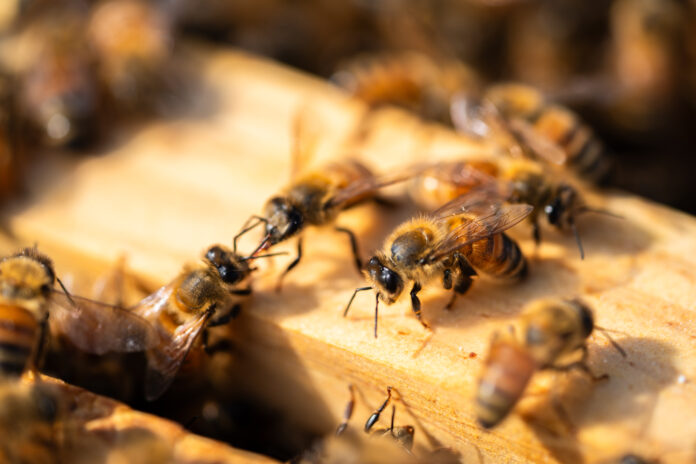
Spider venom may not sound like the obvious way to save honeybees, but new Sunshine Coast-led research suggests it could help protect them from a destructive parasite.
A study led by the University of the Sunshine Coast has found components in the venoms of two spiders killed Varroa destructor mites without harming bees.
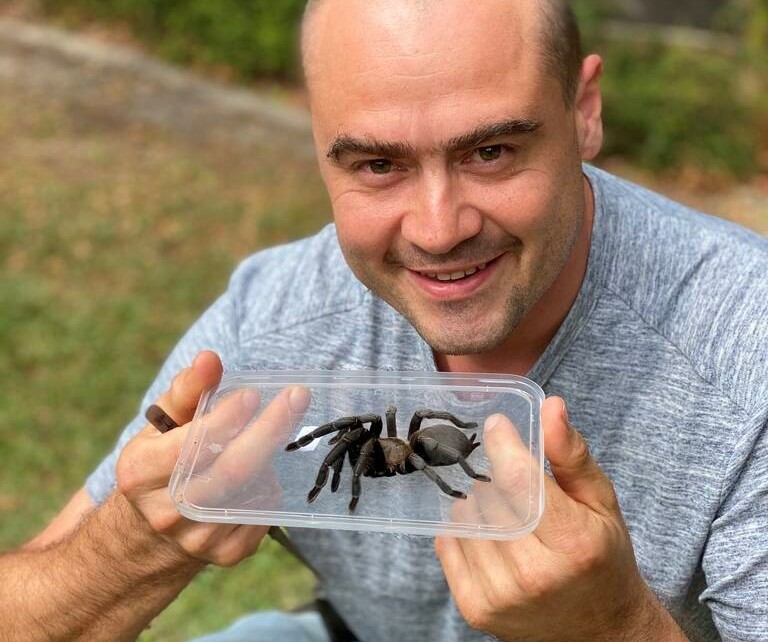
Researchers identified the components in the venoms of the Tasmanian cave spider and the Giant Japanese funnel-web spider.
Lead author UniSC Associate Professor Volker Herzig said the discovery was the first step in finding a new, environmentally friendly way to combat varroa mites, which have been destroying honeybee colonies around the world.
“We screened 50 venoms, mostly from spiders and scorpions, by applying them externally to the mites. We found more than 75 percent killed the mites within 24 hours. We selected two of the most potent spider venoms for further analysis,” he said.
“We isolated a specific component, called a peptide, from each of these two venoms and applied them to the bodies of varroa mites. The peptides killed only the mites, while the bees survived.
“These peptides, which we named Ht1a and Gg1a, are fully biodegradable and our findings suggest they could be developed into a commercial, sustainable treatment for varroa mite infestations in honeybee hives.”
Alternative treatments are urgently needed as the mites become increasingly resistant to existing chemical pesticides, leading to widespread destruction of bee colonies in Australia and across much of the northern hemisphere.
The study involved collaborators from UniSC, The University of Queensland, The University of Oslo, Ghent University in Belgium and the Swiss Bee Research Centre Agroscope in Switzerland.
Dr Herzig said a new $50,000 Community Bee Innovation Fund grant from the State Government would further the research.
He said the next steps would include testing the two peptides on honeybees carrying varroa mites and applying them in mite-infested beehives to assess how well they worked under real-world conditions.
The venoms used in the study came from Dr Herzig’s arachnid venom biobank, which currently comprises 640 spider and 230 scorpion venoms and is the largest in the world.
Like stories about Sunshine Coast people doing great things? Help us deliver more by registering for our FREE daily news feed. All it requires is your email at the bottom of this article.
UniSC Vice-Chancellor and President Helen Bartlett said the research was making a significant contribution towards solving a global challenge.
“This world-class research led by UniSC is tackling one of the most urgent threats to global food security,” she said.
“It reflects UniSC’s commitment to sustainability, with the research aiming to protect agriculture in Australia and around the world.”
UniSC claimed top spot in Australia for research and initiatives to reduce hunger locally and internationally in the recent Times Higher Education Sustainability Impact Ratings 2026.
The collaborative study was published in the journal npj Drug Discovery and funded by an Australian Research Council Future Fellowship awarded to Dr Herzig in 2020.