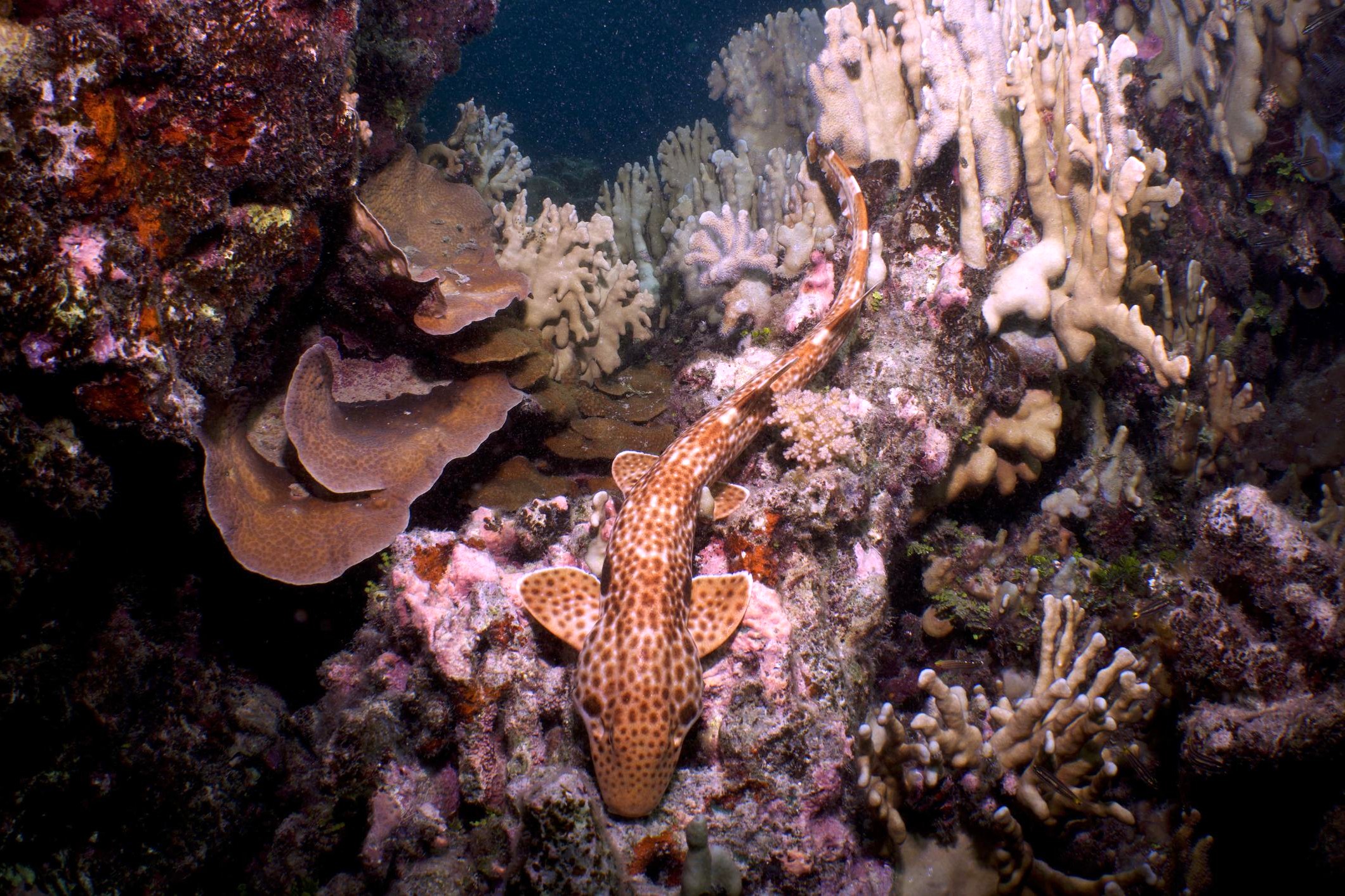
Scientists on a night dive off Papua New Guinea have made a surprising discovery.
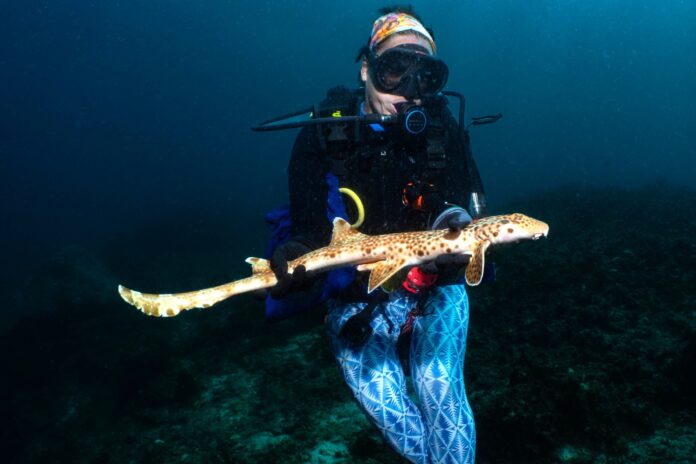
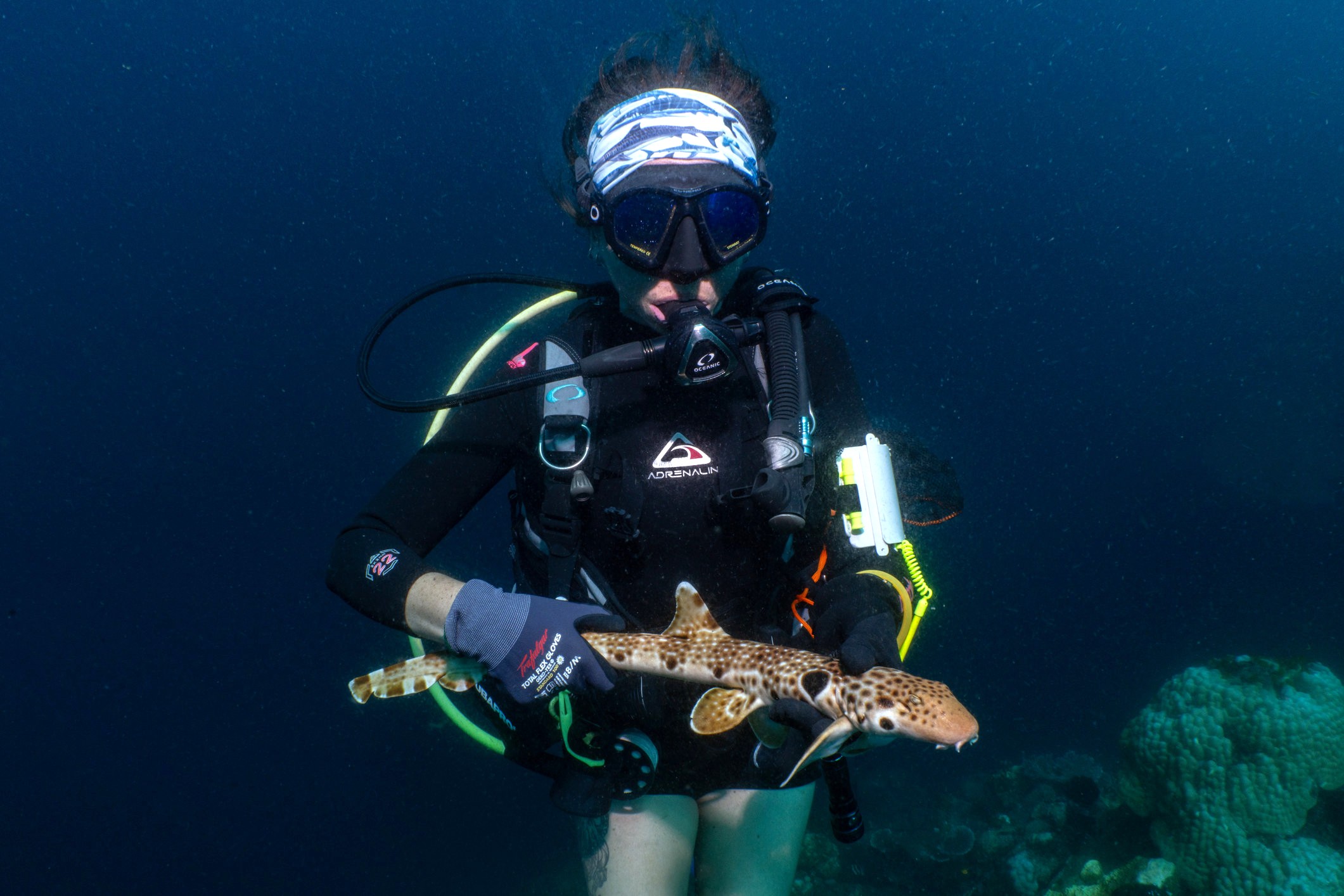
Researchers found a new species, the Dudgeon’s Walking Shark, which was named after University of the Sunshine Coast researcher Dr Christine Dudgeon, who caught one by hand and carefully guided it back to the study boat.
“New shark species don’t come along that often, and it’s most definitely the first one named after me,” she said.
The shark, scientifically known as Hemiscyllium dudgeonae, was found in a tiny area off the country’s south-eastern coastline.
It was confirmed in a collaborative paper published in the Journal of the Ocean Science Foundation overnight.
The Uni SC-led research team was working in Milne Bay and nearby shallow waters last year to examine numbers of endangered epaulette sharks.
The sharks, which eat invertebrates off the sea floor and are not dangerous to humans, are famous for using all four fins as limbs to amble across reef flats at low tide.
While a related species in the Great Barrier Reef is relatively well studied, the global team focused on understanding the distribution of, and threats to, PNG epaulettes endemic to the tropical waters north of Australia.
UniSC PhD student Jess Blakeway, lead author of the paper, was first to see the specimen in the boat’s lights as it was brought in by her supervisor, Senior Research Fellow Dr Dudgeon.
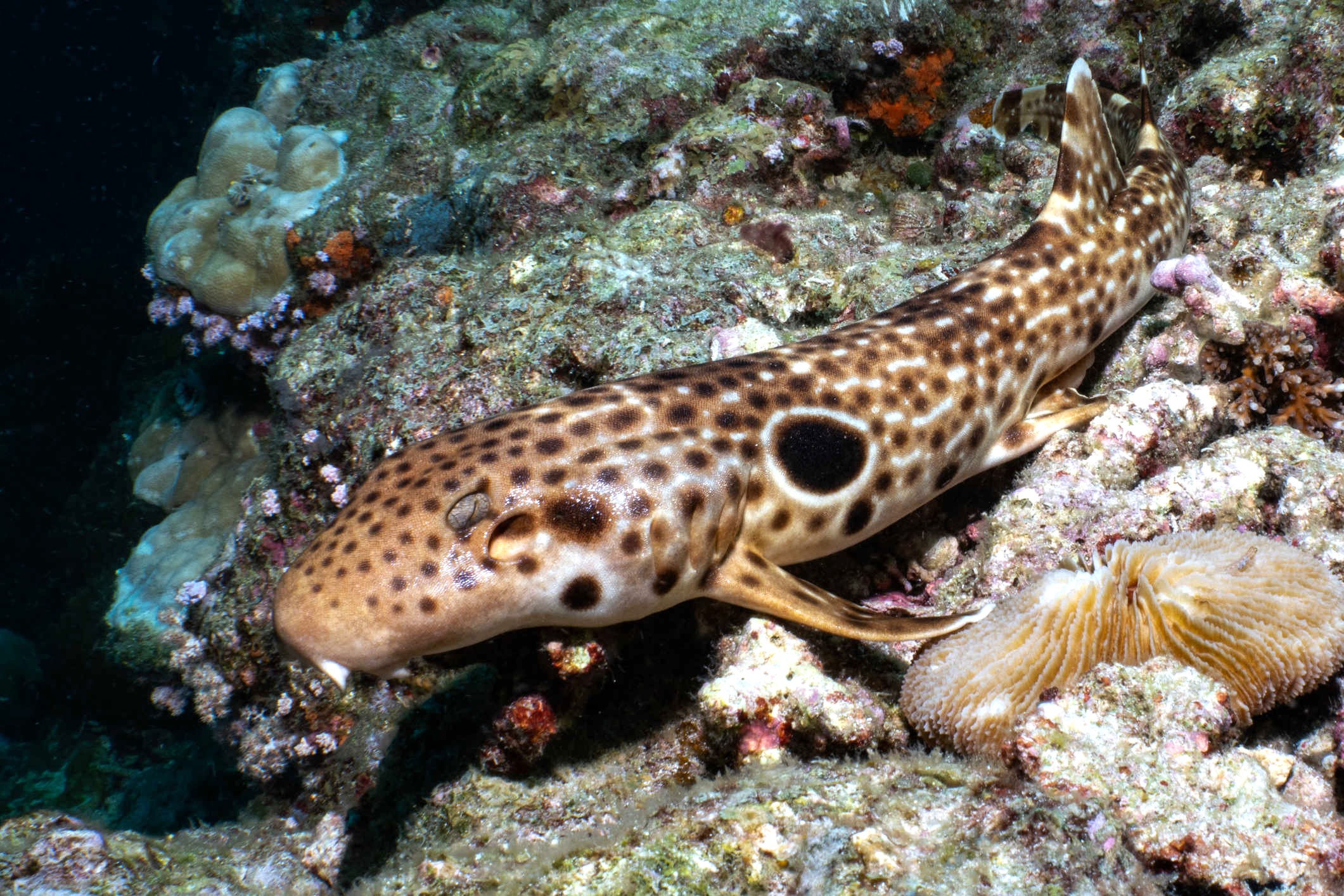
“Straight away I recognised that the colour pattern was different from any of the other species I had worked with before,” she said.
“The first thing that stood out was the white dashes along its brown body. These dashes were quite different to the leopard-like spots we were expecting.
“We put it in a tub with fresh seawater to give us time for measuring and blood and tissue sampling, and over the next two nights found another 11 individuals with the same patterning.
“It wasn’t until genetic analysis of the samples back in Australia that we could confirm a new species. It’s exciting because this is the first new species described for the genus since 2013.”
Dr Dudgeon is a renowned elasmobranch geneticist and ecologist who has researched the genus (group of species) for more than two decades.
The new species’ local name is kadedekedewa, which loosely translates to dog shark or lazy shark due to its slow, four-limbed gait.
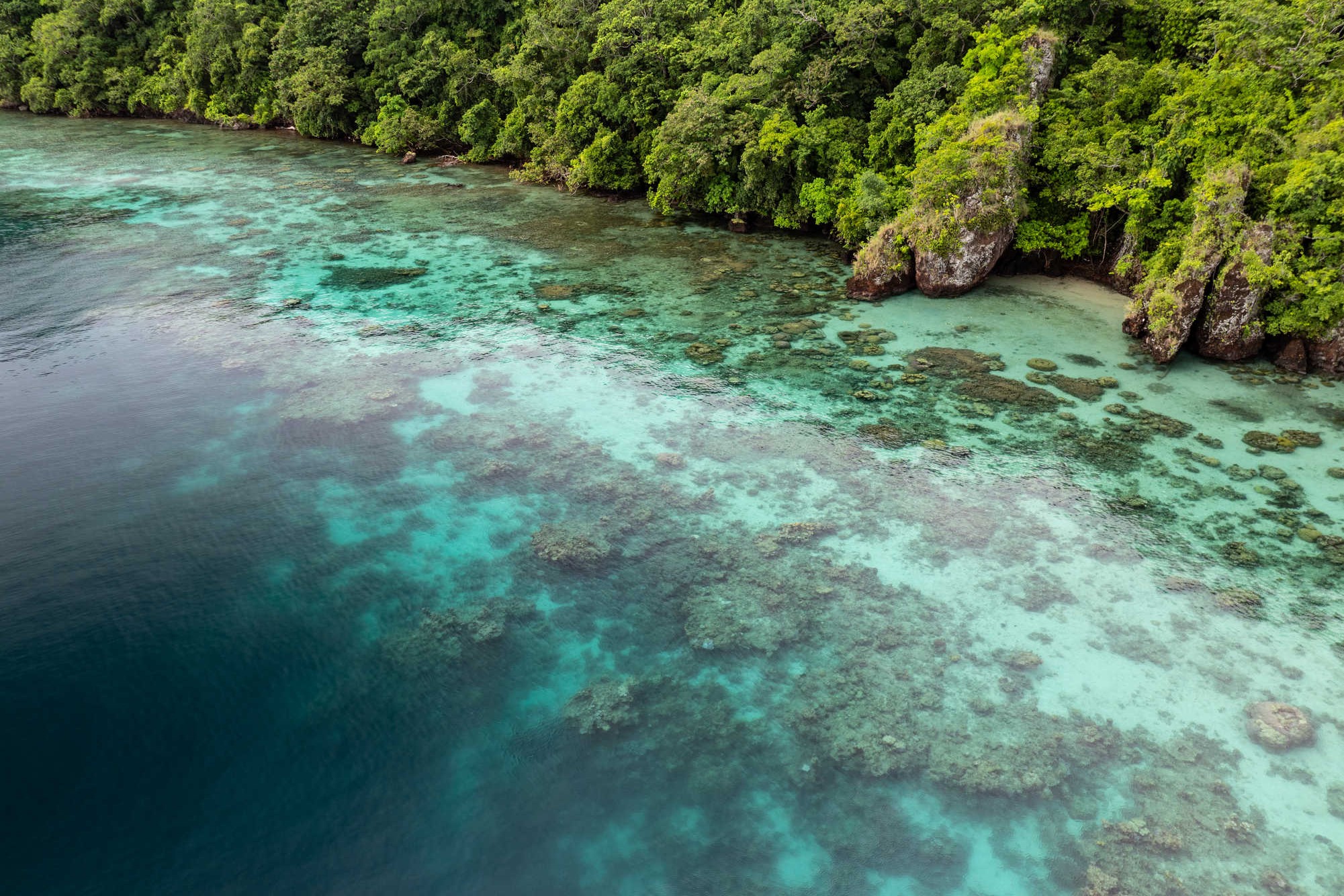
The findings immediately raised concerns about the new shark’s vulnerability due to its restricted home range, habitat degradation, fishing activity and climate change.
“We hope to collect more data on our next research trip in October to help the International Union for Conservation of Nature (IUCN) Red List assess the species as vulnerable or endangered with extinction,” Ms Blakeway said.
Want more free local news? Follow Sunshine Coast News on Facebook, LinkedIn and Instagram, and sign up for our FREE daily news email.
The research also revealed new information about the geographic distribution of two other epaulette species off the island of New Guinea.
Survey methods included diving, snorkelling and reef walking to catch walking sharks by hand, with 70 dedicated surveys completed at 35 sites in 15 locations.
Co-authors included PhD supervisors Professor Kathy Townsend of UniSC and Dr Mark Erdmann of Re:wild and the California Academy of Sciences, and collaborators Dr Gerald Allen of the Western Australian Museum and Conservation International, Max Teliwa of PNG’s Milne Bay Provincial Fisheries, Julie Waranaka of the University of Papua New Guinea, and William Brooks of San Francisco.
Ms Blakeway said the research also changed the understanding of where walking sharks can be found.
“Previously, it was thought that each species had distinct habitat barriers such as rivers or deep water. Now we know that distributions in eastern PNG overlap, though species do not co-occur,” she said.
“The new species is the 10th in the PNG epaulette genus (group of species).
“Five are already listed as threatened with extinction on the IUCN Red List under criterion B (which relates to their restricted geographic range): a criterion that only applies to three percent of all sharks.”
The research received funding from Conservation International (WM Brooks grants), Australia Pacific Science Foundation, Shark Foundation and the VanDyson Marine Fund.