
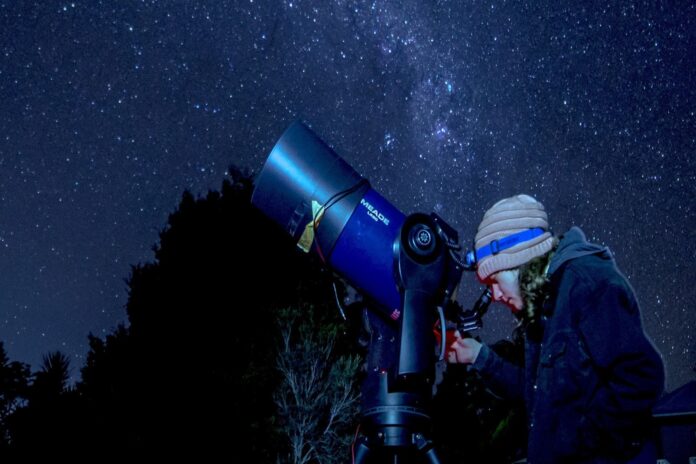
The Sunshine Coast hinterland has been officially recognised as Queensland’s first international dark sky reserve, protecting star-filled views across about 870 square kilometres.
The official designation by DarkSky International comes after a community push, years of investigation and consultation, and an application to establish the reserve submitted by Sunshine Coast Council.
The region joins reserves including Aoraki Mackenzie (New Zealand), Mont-Megantic (Canada) and River Murray (Australia).
Stars are becoming increasingly rare around the world, with more than 80 per cent of the world’s population living under skyglow: light pollution that eliminates any visible stars.
Sunshine Coast Mayor Rosanna Natoli said dark skies were important for wildlife, health and hinterland business.
”People in our communities know the awe of looking up at a sky filled with stars, and we’re incredibly lucky to still have that here on the Sunshine Coast,” she said.
“As our region continues to grow, we need to make sure we keep that wonder for our future generations.
“This Dark Sky Reserve project is both a mechanism to reduce light pollution, and our enduring reminder that dark skies are a precious part of what makes our Sunshine Coast Biosphere special.”
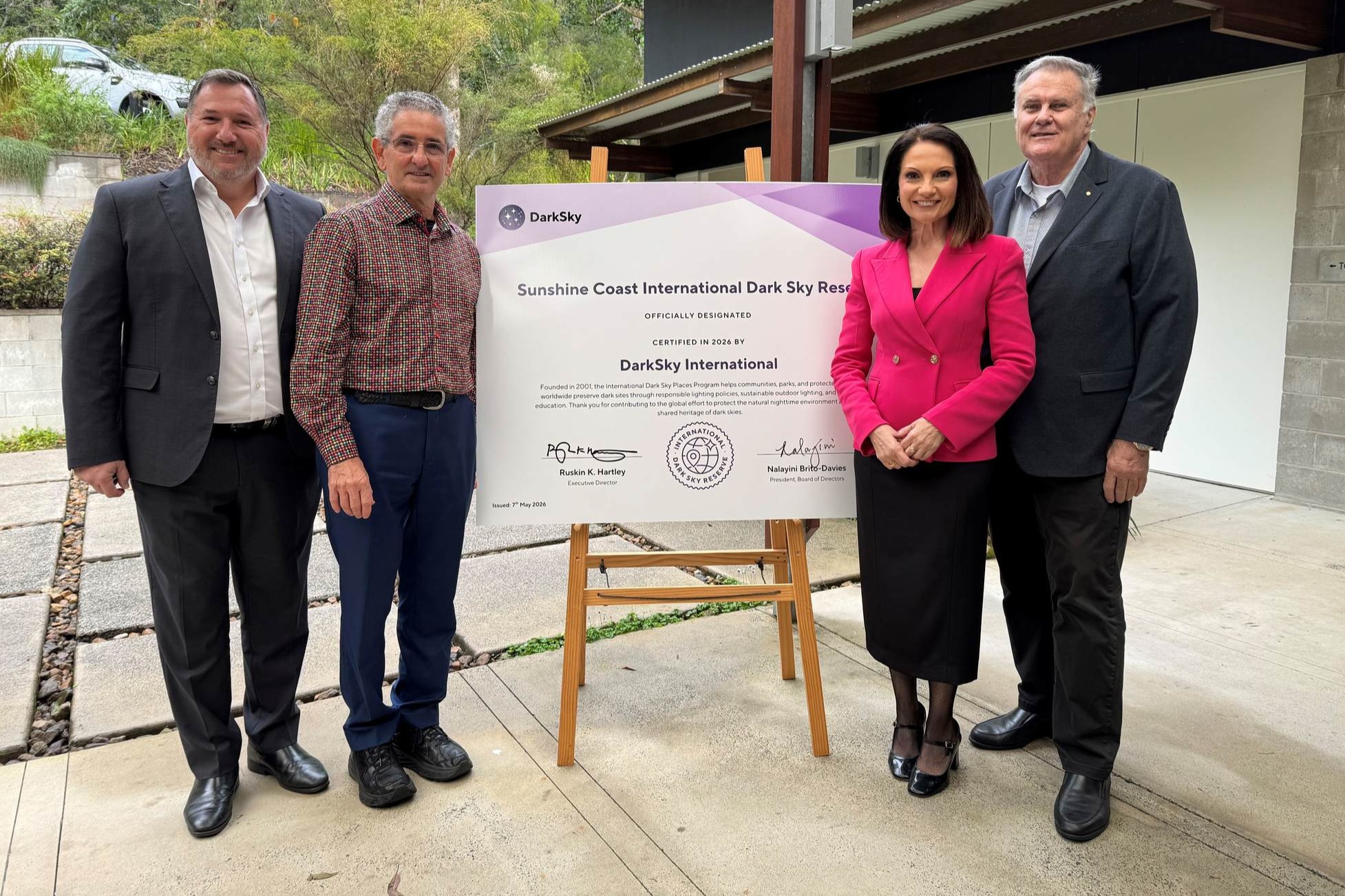
DarkSky International Policy and Destination manager Dan Oakley congratulated the region.
“We are really thrilled to designate the Sunshine Coast International Dark Sky Reserve as it should serve as a tremendous source of dark skies in the area,” he said.
“The work needed to develop and adopt the thorough lighting management plan was well noted by the Dark Sky Committee, and we hope it will serve as an inspiration for others to follow.”
Astronomer Ken Wishaw, a driving force of the project, said he was spurred into action after hearing from people elsewhere who had lost their starry night skies.
“I am hoping the reserve will play a major role in educating visitors on the impact of light pollution, and how easy it is to prevent it or reverse it,” he said.
“The reserve is the last place in coastal South-East Queensland that has starry night skies free of light pollution. This window to the universe will now stay open.
“This has been a 10-year project for me and, through the tremendous support of the Sunshine Coast Council, it is now a reality for all to experience and enjoy.”
The designation recognises about 870 square kilometres of the hinterland as a place committed to protecting natural night skies through responsible lighting and community partnership.
The area includes the townships of Maleny, Mapleton, Montville, Witta, Flaxton, Kenilworth and Conondale.
Do you have an opinion to share? Submit a Letter to the Editor at Sunshine Coast News via news@sunshinecoastnews.com.au. You must include your name and suburb.
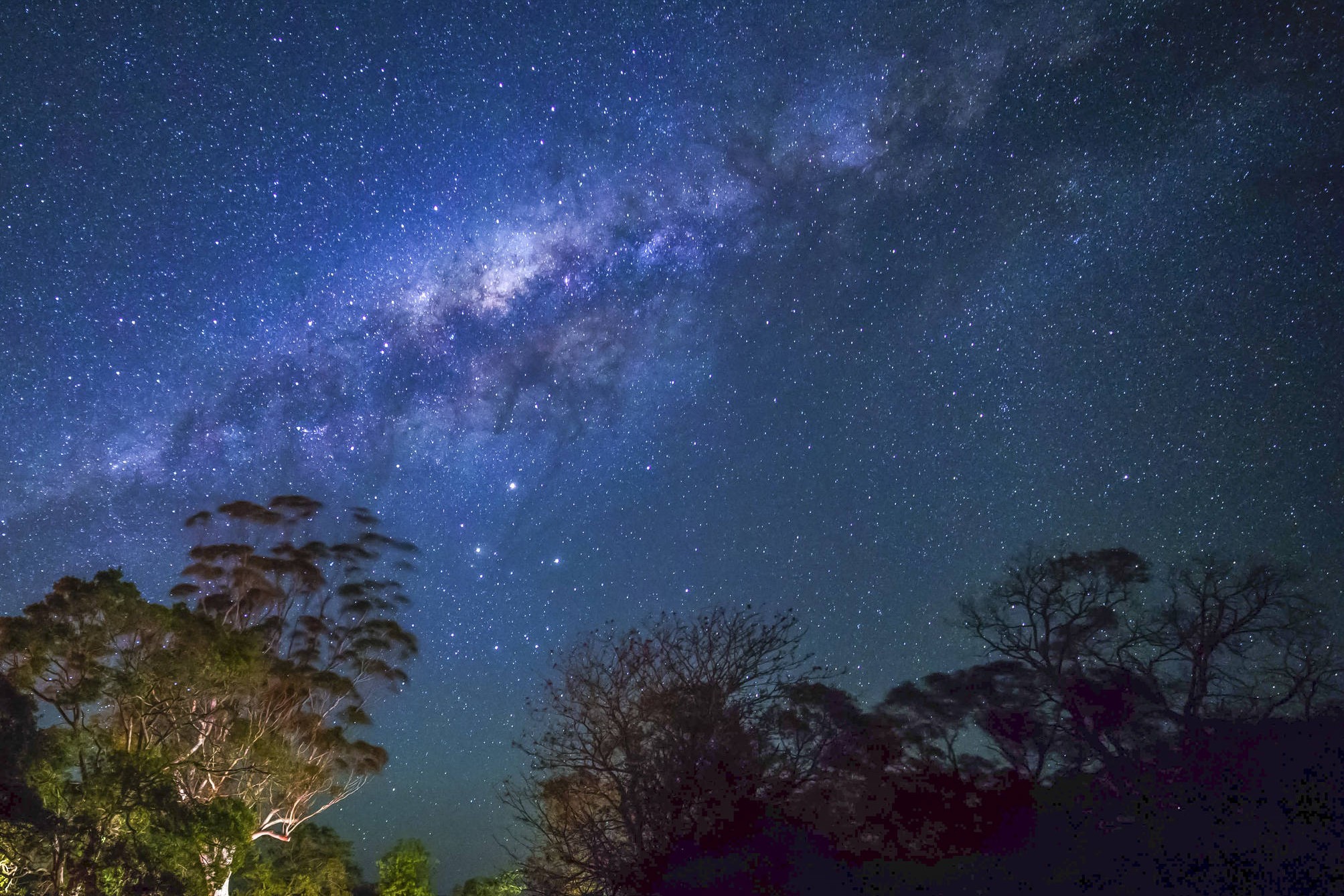
A Dark Sky Reserve is a specific category of a Dark Sky place that protects a core area of excellent night sky quality and involves the local community.
As part of the application process, Council developed a lighting management plan and worked in partnership with Energex, state government agencies and others managing public lighting across the reserve area, balancing the need for lighting while preserving our night skies, the environment, health and wellbeing and energy resources.
Mayor Natoli said council would continue to work with partners like Dr Wishaw to encourage dark sky friendly habits.
“We’ll always need lighting, but we invite every resident, business and visitor to this special place to do what they can to reduce their light pollution,” she said.
“Every decision to use outdoor lighting in smarter ways helps keep stars visible in the sky and preserve this precious element of our hinterland’s landscape and character.
“Our community cherishes its starry night skies – that’s what we’ve heard ever since we started investigating this proposal – and now has the chance to make a real difference in preserving it for future generations.”
The council encouraged locals to help keep skies dark and starry and make sure outdoor lighting at home and businesses is: useful (all lights should have a clear purpose); targeted (use shielding and careful aiming to direct the light downward and without spill); low level (use the lowest light brightness required and ensure they are not reflecting upward); controlled (use timers or motion detectors to ensure that light is available when it is needed, dimmed when possible, and turned off when not needed); warm coloured (blue light creates more light pollution, so choose lights that are warm in colour).