
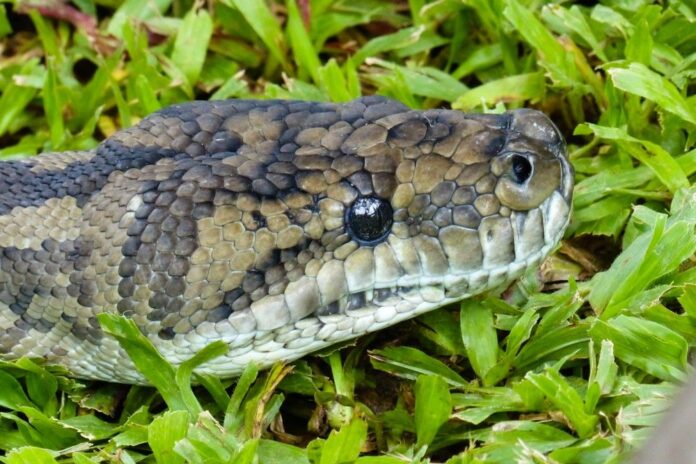
Sunshine Coast residents are being urged to report any reptiles with unusual skin lesions or shedding problems as researchers investigate a potentially deadly disease.
Sunshine Coast Snake Catchers 24/7 wildlife carer Summer Woolston said community reports were playing an increasingly important role in helping researchers track the spread of snake fungal disease.
The organisation has been working alongside wildlife veterinarian and The University of Queensland PhD candidate doctor Shelly Butcher to investigate three emerging fungal conditions in wild Australian reptiles.
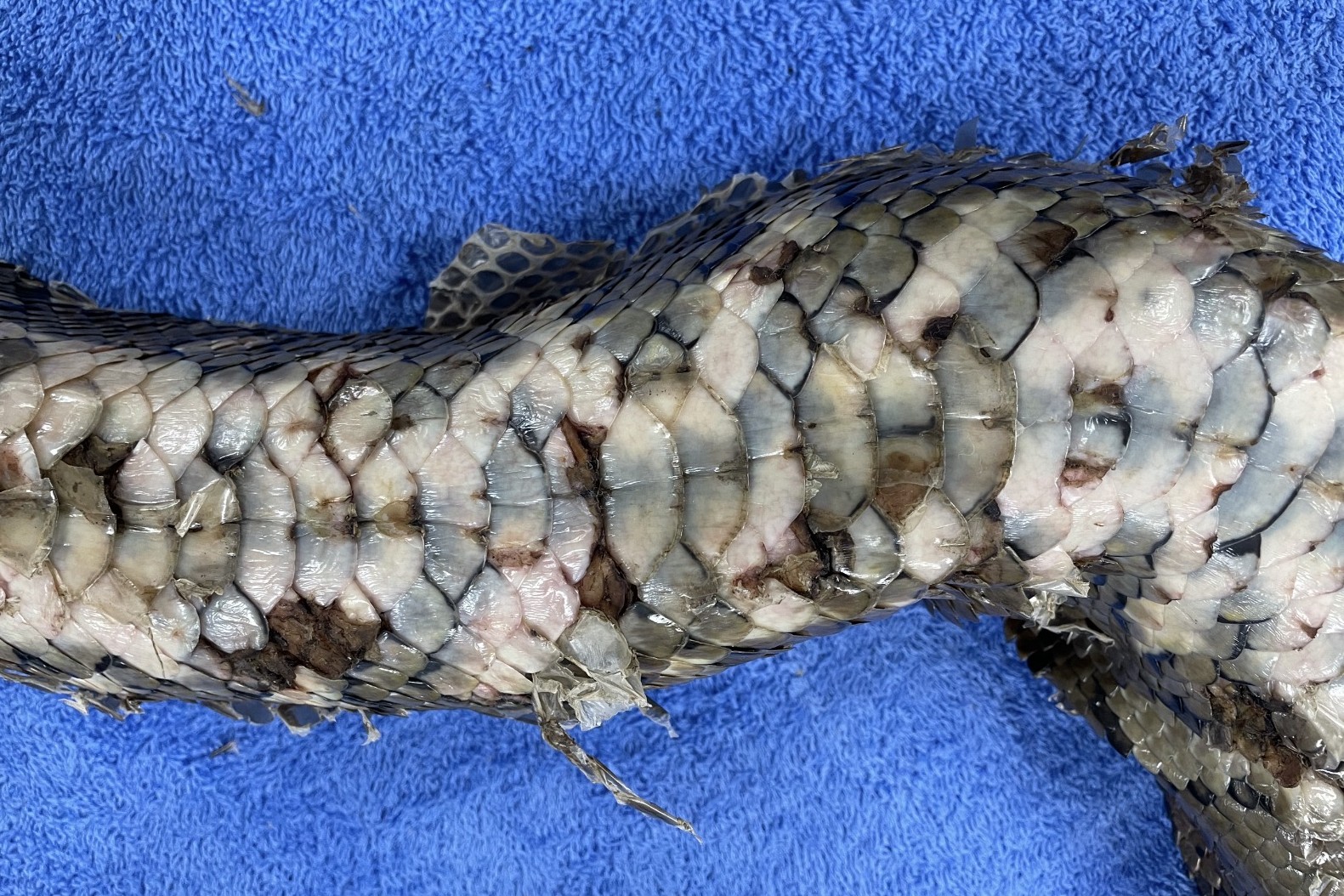
“The most concerning is snake fungal disease (caused by the fungus Ophidiomyces ophidiicola), which causes brown crusty skin lesions, prevents normal shedding and can be lethal,” Ms Woolston said.
She said the disease could be difficult to spot, with some symptoms hidden on the underside of reptiles.
“Look for brown or yellow crusty skin lesions, difficulty shedding skin, skinny animals, or unusually sluggish behaviour.
“The lesions often look like brown crusts or scabs across the reptile’s body. Sometimes they can be hard to see because they are often on the underside.”
The research is examining how common the diseases were in local snakes and lizards, which species were most at risk and what environmental conditions may be helping them spread.
“This fungal disease has been killing snakes overseas for years, but we only confirmed it in wild Australian snakes for the first time in 2024,” Ms Woolston said.
“We’re concerned the numbers are increasing. Our goal is to understand the problem so we can protect our reptiles.
“We’re definitely seeing more cases being reported, partly because community members are becoming more aware of the signs and seeking help.
“At this stage, it is unclear whether snake fungal disease has recently emerged in Australia or has been here for a long time, but the former seems most likely.”
Researchers are also investigating whether drought, flooding and other environmental pressures were contributing to outbreaks.
Dr Butcher said the disease could have serious consequences if left untreated.
“In severe cases, the infection spreads across the entire body, prevents normal shedding, causes extreme weight loss and weakness and can ultimately be fatal.
“Many affected reptiles we’ve seen have deteriorated so severely that euthanasia has been the most humane option.”
Researchers have identified snake fungal disease in six snake species on the Sunshine Coast, with carpet pythons and eastern brown snakes being the most common.
Dr Butcher said the disease could spread through direct contact between reptiles or through contaminated environments.
“This is why reporting sick animals and understanding transmission pathways is so important – it helps us predict and prevent further spread,” she said.
Researchers are also investigating whether drought, flooding and other environmental pressures were contributing to outbreaks.
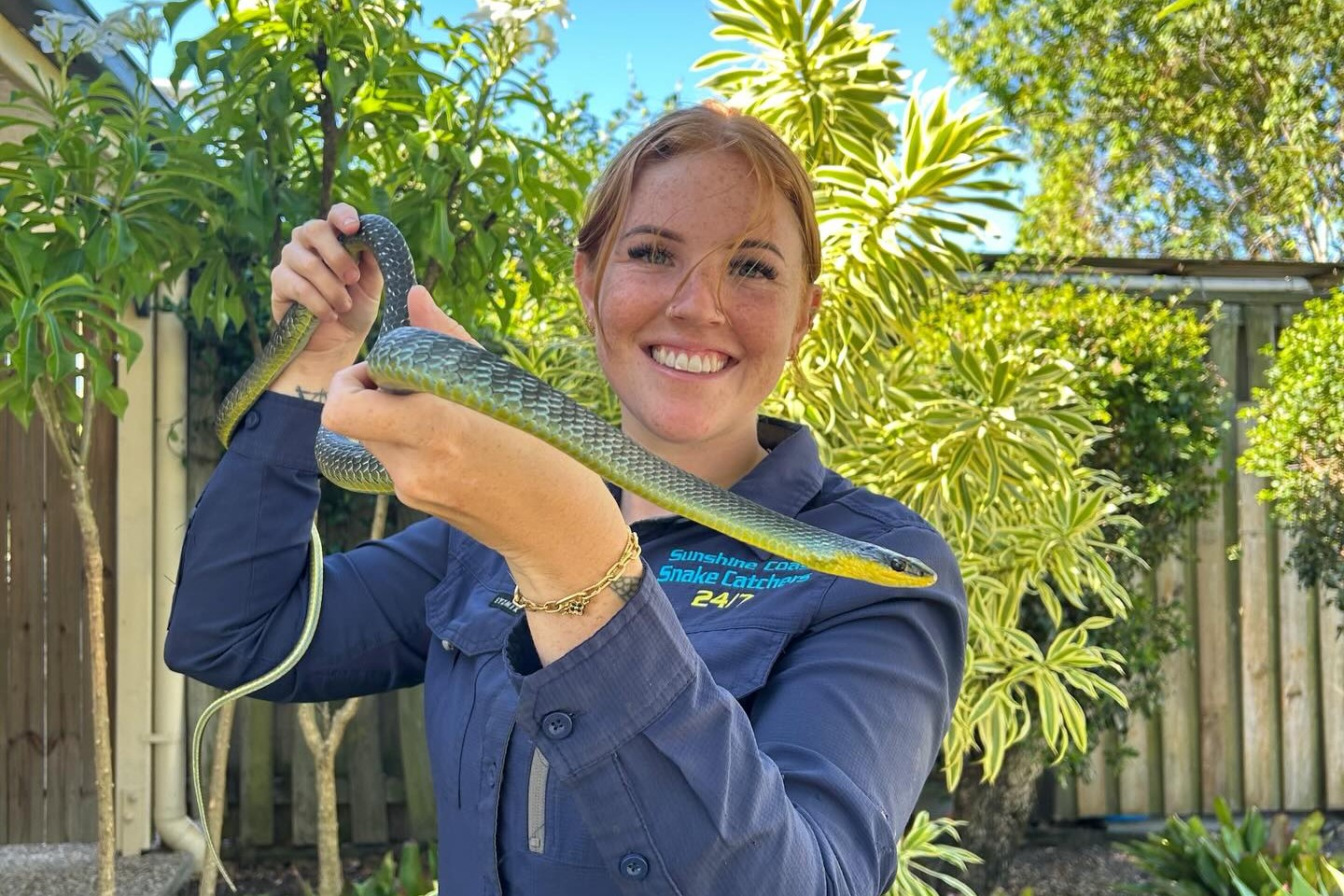
Ms Woolston warned residents against attempting to rescue or treat affected reptiles themselves.
“Handling sick reptiles risks spreading the fungus to other animals,” she said.
“Many local snakes are also venomous, so it’s dangerous to handle them without proper training.”
Instead, residents are encouraged to keep their distance, photograph the reptile if it is safe to do so and report the sighting to Sunshine Coast Snake Catchers 24/7 or a wildlife rescue group.
Help keep independent and fair Sunshine Coast news coming by subscribing to our FREE daily news feed. All it requires is your email at the bottom of this article.
“You can also report the sighting to iNaturalist or local wildlife authorities. Early reporting helps us track where these diseases are spreading and manage the problem more effectively,” Ms Woolston said.
“Your observation could be crucial for protecting our local reptiles and helping Shelly’s research to keep Australia’s remarkable reptile diversity safe.”
Sunshine Coast Snake Catchers 24/7 can be contacted here.