
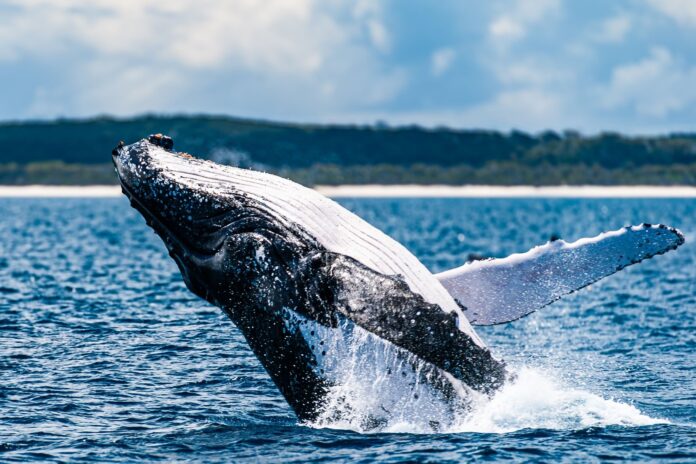
New acoustic devices are being tested at a renowned holiday beach to determine whether sound can help humpback whales avoid shark control nets.
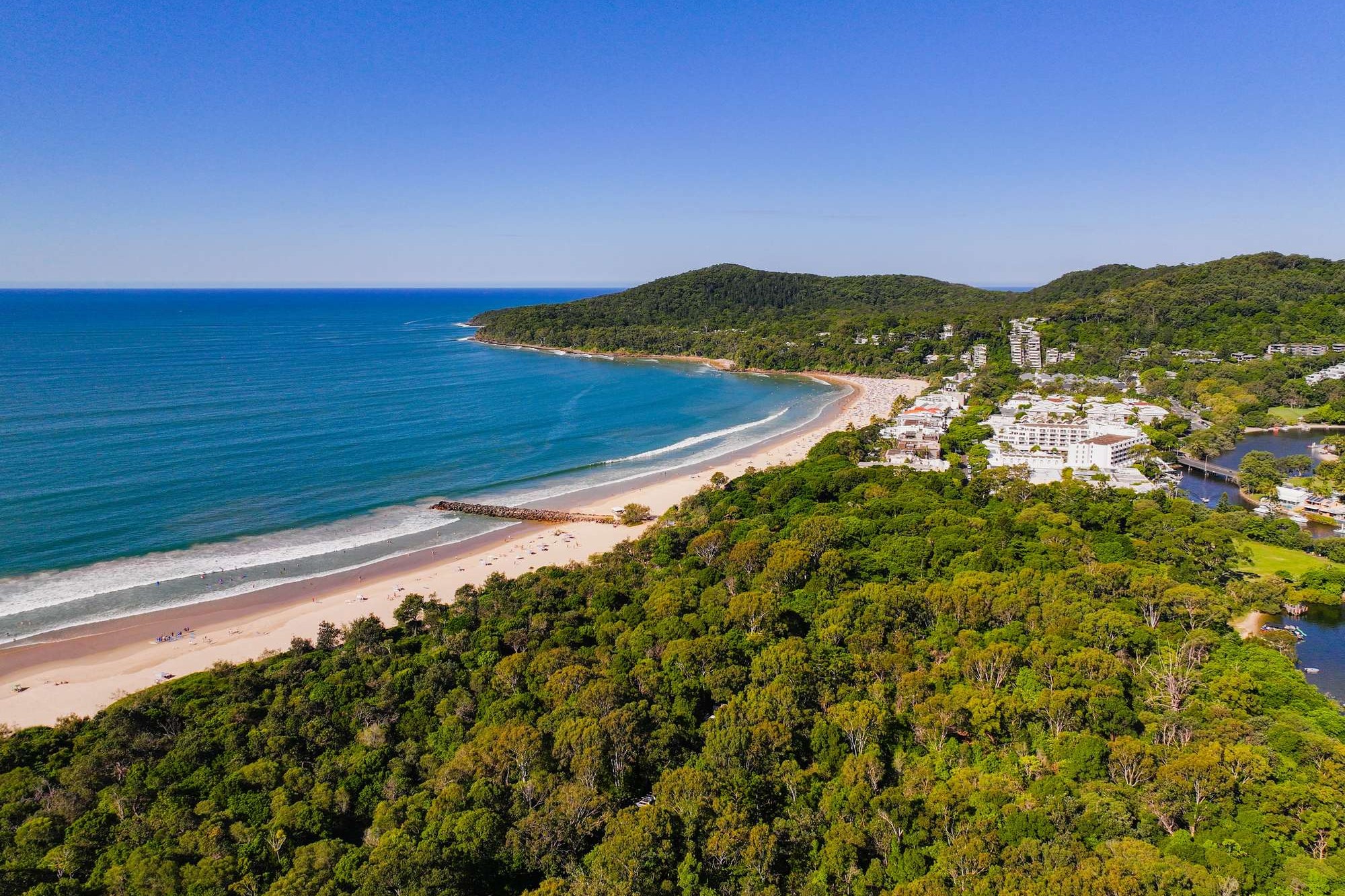
The state government is undertaking a five-week trial involving innovative technology at Noosa Main Beach.
The trial is part of the largest investment into Queensland’s Shark Control Program and is a commitment under the Shark Management Plan 2025-2029 to investigate drone surveillance and whale-deterrent measures.
Novel acoustic alarms have been set up on two nets, until October 11, to improve understanding of how humpback whales respond to sound in coastal environments and assess the effectiveness of new technology in the ocean.
A Department of Primary Industries spokesperson explained how they worked.
“The acoustic deterrent devices are attached to shark control nets and emit several signals per minute.”
“The purpose of the acoustic signals is to encourage whales to avoid the immediate area around shark control nets.”
The trial is being conducted in partnership with the University of Queensland and includes independent land-based observations from the Noosa headland to record whale behaviour in the area.
The Shark Control Program also funds the Marine Animal Rescue Team, a specialist team of 25 officers – based on the Gold Coast, Sunshine Coast, Redlands and Mackay – who respond quickly in the unlikely event whales become entangled in shark control gear.
The state government stated that the most recent information estimates that about 50,000 whales will migrate through Queensland’s waters this year, with only 0.02 per cent on average interacting with program equipment in previous years.
Minister for Primary Industries Tony Perrett said the trial reflected the state government’s commitment to swimmer safety and science-based innovation to drive decision making.
“Queensland’s Shark Control Program plays an important role in protecting beachgoers, and we are always looking at ways we can improve the program with contemporary technology and science,” he said.
“This trial is about using science and innovation to explore new ways of reducing interactions between humpback whales and shark control equipment, while maintaining important public safety measures.
“Queensland is home to an incredible marine environment, and this research will help us better understand whether this new acoustic technology can support improved outcomes for both marine wildlife and beachgoers.”
Sea World Foundation head of marine sciences Wayne Phillips said, while the research was still in its early stages, it was pleasing to see the project stimulating scientific investment and inform practical management actions.
“We hope this evidence-based work will contribute to developing future solutions that reduce the impacts of human activities on marine life,” he said.
Future Oceans CEO James Turner said the government’s investment in research and new technology was important to ensuring the Shark Control Program can continue to evolve while reducing its environmental impact.
“Delivering this very specific acoustic output from a durable, battery-powered device required considerable engineering. We are proud to put that technology into the water and have its effectiveness independently assessed through this Queensland trial,” he said.
Related stories: Another whale calf rescued from region’s shark nets and Group pushes for more shark drone patrols
The Independent Member for Noosa Sandy Bolton welcomed the trial.
“That this trial is now underway in Noosa following continued advocacy for practical measures that better protect our migrating whales while maintaining swimmer safety is another step forward in our communities’ efforts,” she said.
While welcoming the trial, Ms Bolton said broader questions surrounding the future of shark nets remain, with 75.06 per cent of respondents to her 2024 Noosa MP shark net survey not supporting their continued use at Noosa Main Beach.
“Our community has made its views very clear, and they continue to seek is a defined, measurable standard for when alternatives will be considered proven effective,” she said.
Ms Bolton said she will also seek clarity on how and when the trial results will be publicly released, whether any potential negative impacts on marine species will be assessed, whether successful technology could be expanded or trialled in future migration seasons, and how the findings will feed into the broader Shark Mitigation Alternatives Framework currently in development.
Scroll down to SUBSCRIBE for our FREE news feed, direct to your inbox daily.