
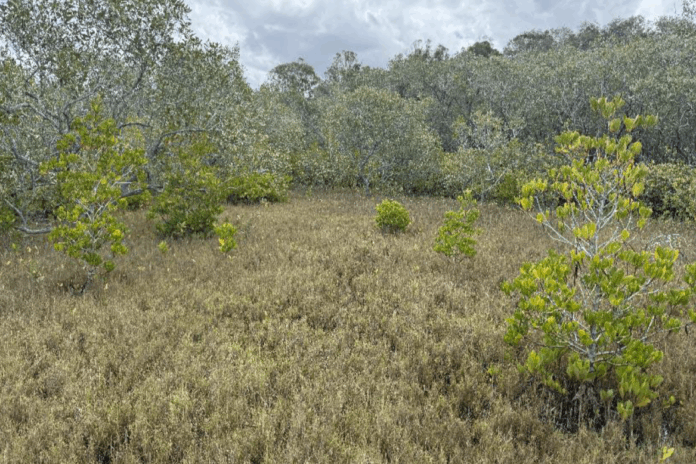
Thousands of marine plant plugs will be removed from land beside the Maroochy River under a new state government approval for a contentious 104-hectare development.
The State Assessment and Referral Agency, known as SARA, has approved developer Stockland’s application to collect and move 4190 salt couch divots from five donor areas at Pacific Paradise.
The work will create a combined disturbance footprint of about 132sqm and involve the incidental removal of juvenile mangroves.
Under the SARA approval, the plants will be used to help establish saltmarsh within a new marine plant area at the masterplanned community Twin Waters West, where replacement habitat is required because of environmental impacts associated with the development’s future lake system.
The development, which includes 450 low-density residential lots and a 17.4-hectare lake on former sugarcane land, has been almost two decades in the making.
It was approved by Sunshine Coast Council in December 2023 after earlier versions were twice refused and became the subject of court appeals.
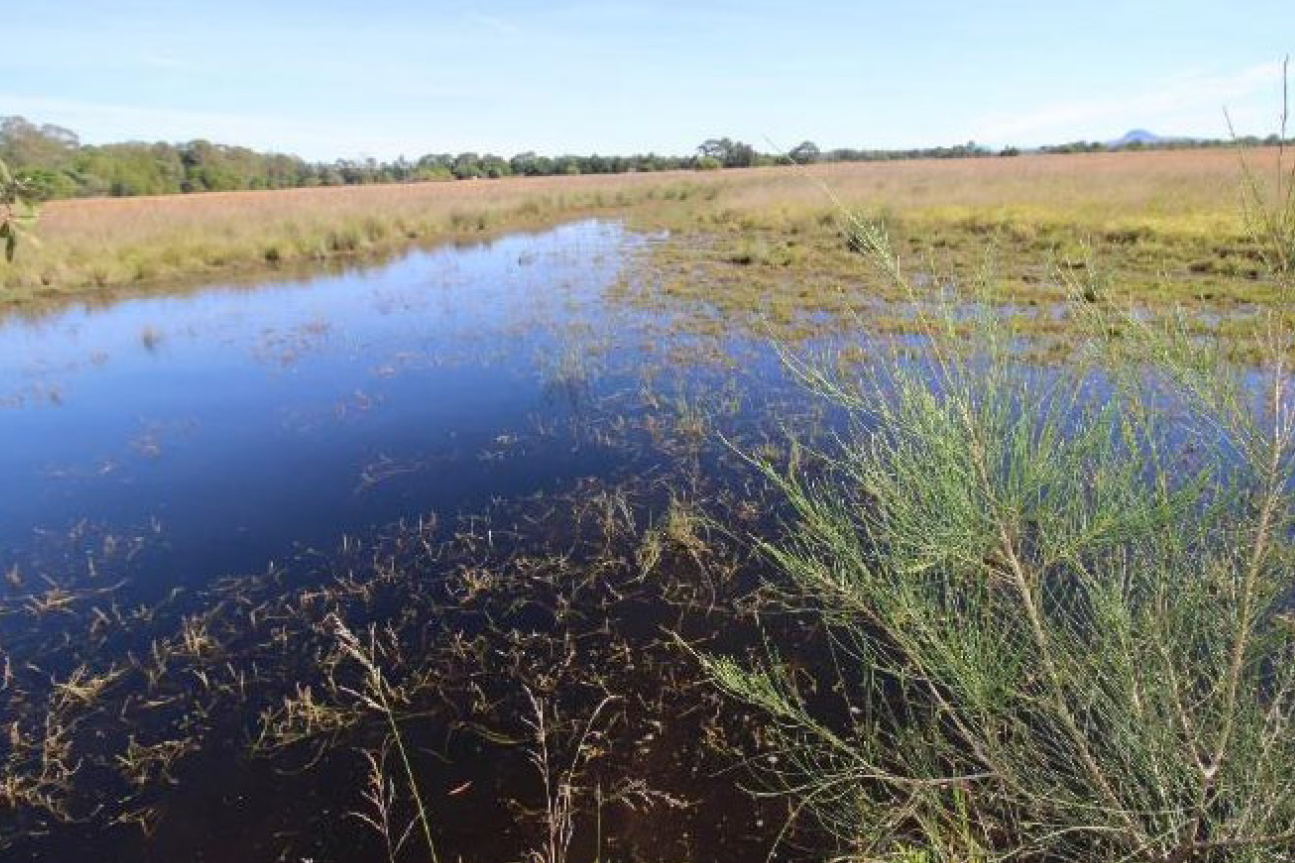
Existing SARA conditions allow 6176sqm of tidal fish habitat within the Twin Waters West development site to be permanently removed or modified as part of the project works.
Stockland is required to restore at least 2360sqm of marine plant habitat within the development, including about 1575sqm of saltmarsh and 785sqm of mangrove habitat.
A Stockland spokesperson confirmed the project was progressing in line with its approvals.
“As part of these requirements, Stockland is establishing a new marine plant area to offset the removal of any marine plants associated with the future lake system.”
SARA approved the latest works on June 22 subject to conditions covering the extent of the removal, restoration of the donor areas, monitoring, acid sulphate soil management and reporting to the Department of Primary Industries.
The approved work does not involve clearing one continuous 132sqm section of vegetation.
Instead, workers will hand-collect thousands of small plugs from the five salt couch areas, identified by Fishology Consulting, across three properties south of Twin Waters West.
Each plug will be about 15cm in diameter, with a maximum disturbance footprint of 20cm in diameter to allow for cutting and extraction.
No more than three divots are proposed to be removed from each square metre, with collection to be distributed throughout the approved areas.
“This area will include marine plants from within and adjacent to the Stockland Twin Waters site, to maintain the integrity of the surrounding environment,” the spokesperson said.
“The salt couch will be collected and temporarily held in an on-site nursery before being replanted within the new marine plant area.”
Stockland said nursery-propagated plants would also be used within the transition zone surrounding the Marine Plant Area.
Suitable marine plants that became available from other nearby approved work sites could also be used, subject to relevant requirements.
A Fishology Consulting report prepared for Stockland said workers would initially target higher, better-drained sections to reduce impacts on juvenile mangroves.
However, it acknowledged some plugs would need to be collected from waterlogged areas and described the incidental removal of juvenile mangroves as “inevitable”.
No mature mangroves are proposed to be removed.
Fishology said the smaller plugs could be collected by hand, avoiding the need for heavy machinery and allowing workers to be more selective around mangroves and other sensitive areas.
“Investigations have confirmed the marine plant collection areas avoid threatened ecological communities and high-risk areas,” the Stockland spokesperson said.
Fishology predicted the donor areas would recover naturally within three to five years if the holes were properly backfilled and existing surface levels were restored.
Stockland said the marine plant communities were expected to naturally recolonise the temporarily disturbed areas, with revegetation monitored in accordance with the approval conditions.
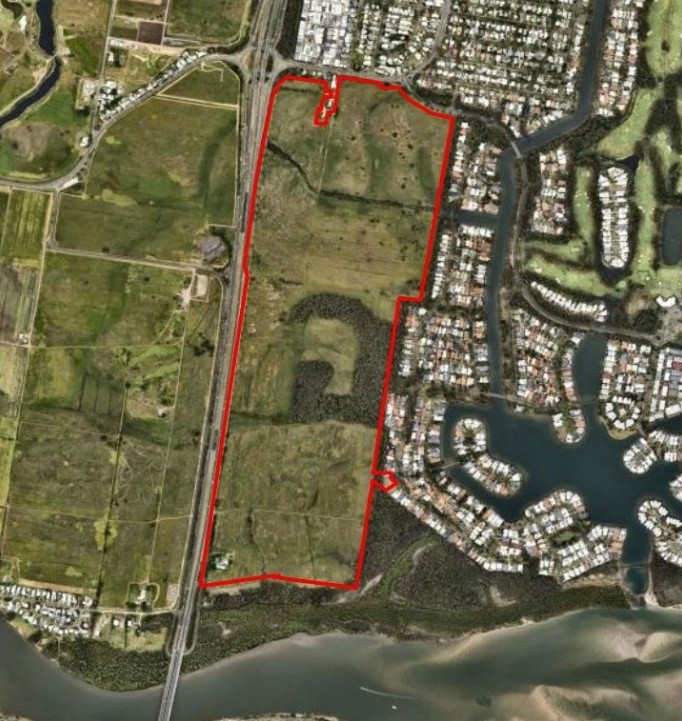
SARA’s conditions require the donor-site restoration work to be completed within four months of the plugs being removed.
Disturbed tidal land profiles must be returned to their pre-work levels within 10 business days of the work finishing, while monitoring must be conducted by an appropriately qualified person, with reports submitted to DPI.
“Timing for future collection works is still being finalised, and monitoring will be undertaken in accordance with approval conditions, with reporting provided to the relevant authorities as required,” the spokesperson said.
“Stockland remains committed to delivering positive environmental outcomes and meeting all development obligations.”
Twin Waters West, which Stockland officially launched in May, has faced sustained community opposition.
Two earlier proposals, lodged in 2008 and 2018, were refused by Sunshine Coast Council in 2009 and 2020 respectively. Stockland appealed both decisions, but the Planning and Environment Court ultimately dismissed the appeals in 2013 and 2022.
Do you have an opinion to share? Submit a Letter to the Editor at Sunshine Coast News via news@sunshinecoastnews.com.au. You must include your name and suburb.
A third, scaled-back proposal for about 450 low-density residential lots and a 17.4-hectare lake was lodged in May 2023.
Council approved the development in December 2023 by six votes to four, subject to 100 conditions including a water-quality monitoring program, a kangaroo management plan and a flood evacuation centre.