

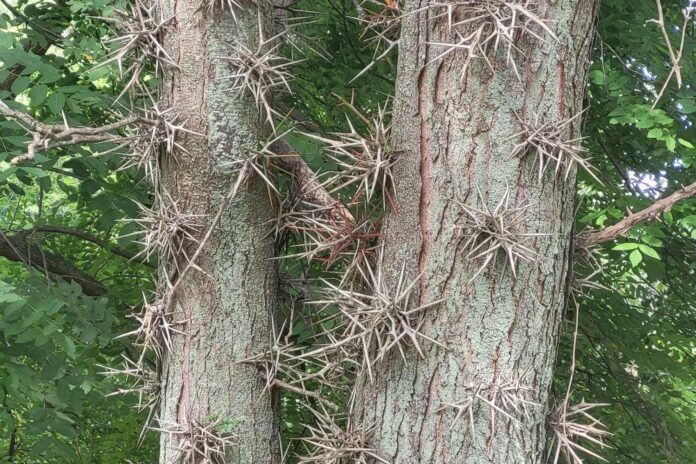
A high-risk invasive plant has been detected in the Sunshine Coast hinterland, prompting a warning from the council and renewed calls for residents to report sightings.
In a Facebook post on March 19, Sunshine Coast Council revealed honey locust plants had been found near Kenilworth Bluff, raising concerns about the spread of the fast-growing species.
A council spokesperson said the plant had also recently been found around Kenilworth township and the Mary River south of Conondale.
“Honey locust (Gleditsia triacanthos, including cultivars and varieties) is an invasive plant prioritised for eradication in our region,” they said.
“It is fast-growing and difficult to manage. The plants are covered in spikes that are strong enough to puncture a car tyre, posing a danger to livestock and people, especially anyone working to remove the plant.
“Honey locust forms dense, spiny thickets that can out-compete native vegetation, provide a haven for pests, and injure stock and humans. It is a major threat to the environment and sustainable pasture production.
“Despite the spikes, livestock may eat the seeds of the plant and spread it further. Seeds can also spread through floodwaters and ornamental plantings.”
The spokesperson said honey locust was first found 30 years ago but had not become established in the region through monitoring and management efforts.
Under Queensland regulations, honey locust is managed by local governments and classified as restricted matter, meaning residents must take reasonable steps to minimise its spread.
The Department of Primary Industries website says the plant is native to North America but had been planted in Australia as a fodder tree and garden ornamental.
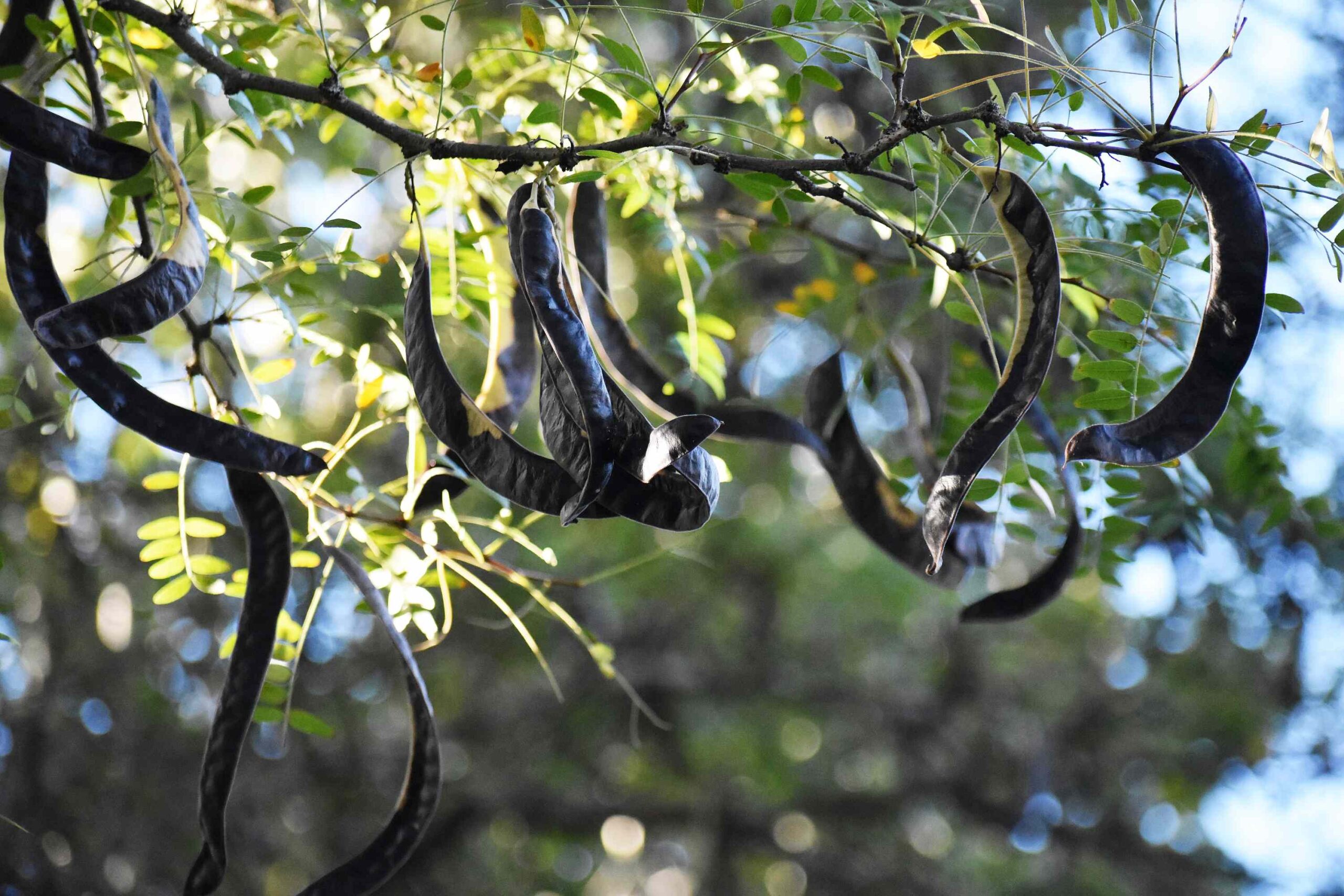
It is known for its rapid growth, distinctive fern-like leaves and long seed pods, as well as the dense spines. It can grow up to 20m high.
Authorities are now working to contain the latest detections, with private landholders also being reminded of their legal responsibilities.
“Contractors are working to remove honey locust in public areas,” the spokesperson said.
“Private landholders must eradicate honey locust from their properties, in accordance with state-legislated general biosecurity obligations.
“By eradicating outbreaks of honey locust, we can help keep our region safe for people, livestock and wildlife while supporting our farmers and natural areas.”
Any suspected honey locust outbreaks can be reported to the council.



