
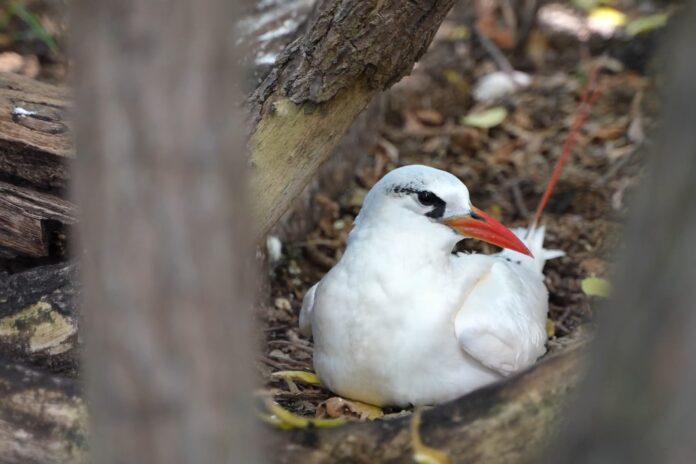
Testing by the University of the Sunshine Coast has revealed that a tiny colony of birds maintains healthy genetic diversity by travelling vast distances to find a mate.
Lady Elliot Island, at the southern tip of the Great Barrier Reef, is home to Australia’s newest and smallest colony of red-tailed tropicbirds. The colony formed in the 1980s after early revegetation efforts began to restore habitat damaged by historical guano mining.
But convincing others to join their island life over the decades has proved difficult. Today, it still only boasts around 6 to 10 breeding pairs.
With so few residents and strong nest-site loyalty, researchers suspected the birds might be at risk of inbreeding.
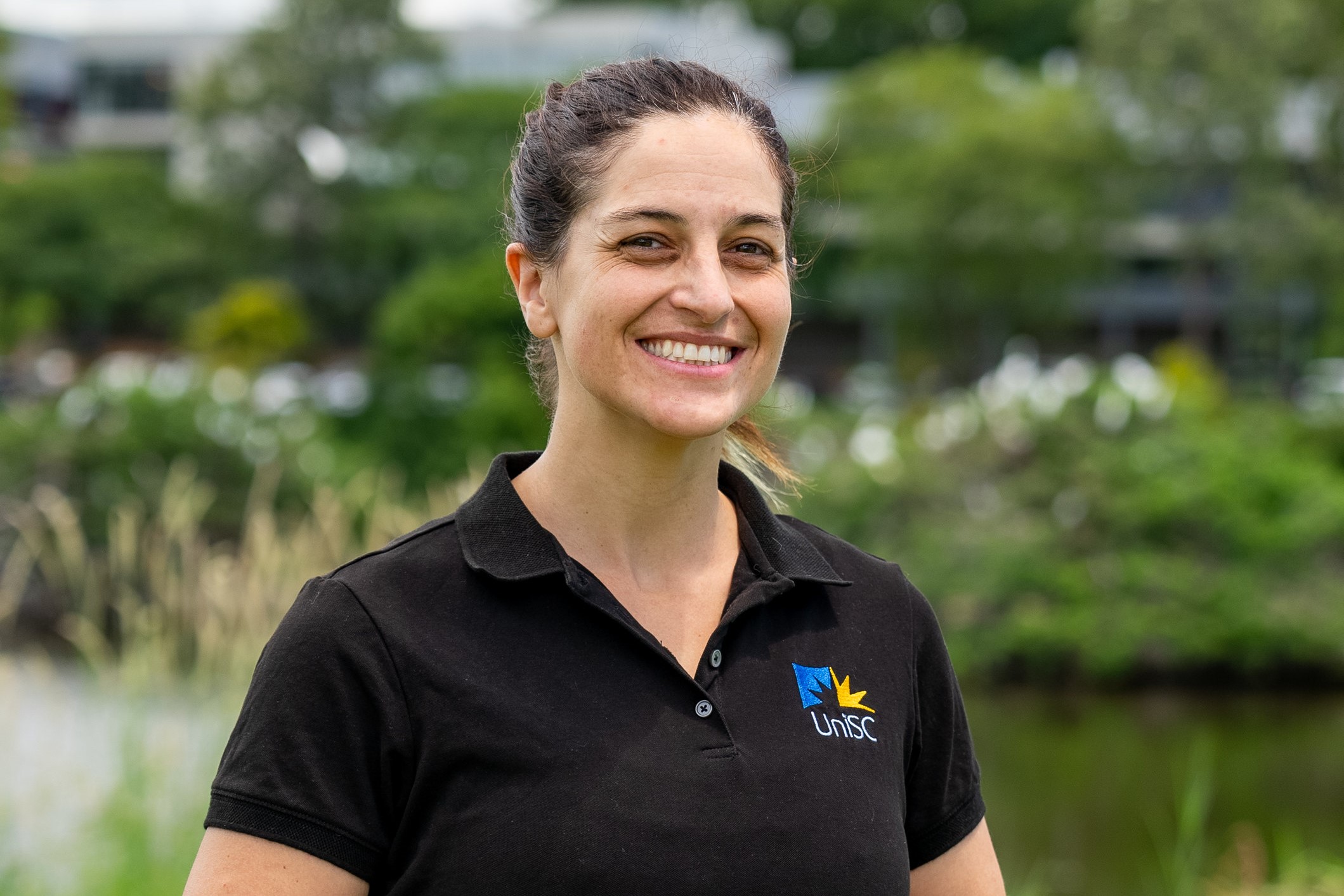
UniSC animal ecologist Associate Professor Dominique Potvin said her team was surprised to find the opposite.
“We expected some genetic challenges in such a small, isolated colony,” Dr Potvin said.
“Instead, Lady Elliot Island’s birds had genetic diversity just as high as the much larger colonies at Ashmore Reef in Western Australia and Raine Island in Far North Queensland.
“This suggests some birds from this little colony may be travelling extraordinary distances – thousands of kilometres – to mate with other populations, while birds from these big colonies are also occasionally making the move to this quiet little island to raise their chicks.”
She said the findings were encouraging for seabird conservation across Australia.
“The Indian Ocean subspecies that breeds off North West Australia is listed as ‘vulnerable’. Knowing that these birds actually choose to move between distant colonies and maintain genetic diversity gives us a stronger foundation for protecting these populations.”
For more local news videos SUBSCRIBE to our YouTube channel. Just click here.
Dr Potvin said the Lady Elliot Island colony was also a powerful example of what habitat restoration can achieve.
“Restoring this island’s vegetation opened the door for seabirds to return after decades of degradation. To now see a thriving, genetically healthy colony shows the long-term value of that work,” she said.
The work is part of the broader Leaf to Reef initiative, an integrative program researching the biodiversity and unique ecosystem of Lady Elliot Island and its connection and importance for the wider Great Barrier Reef.
Leaf to Reef was made possible thanks to funding from the Reef Trust Partnership between the Australian Government’s Reef Trust and the Great Barrier Reef Foundation, the Queensland Government, Lendlease and the Fitzgerald Family Foundation.