
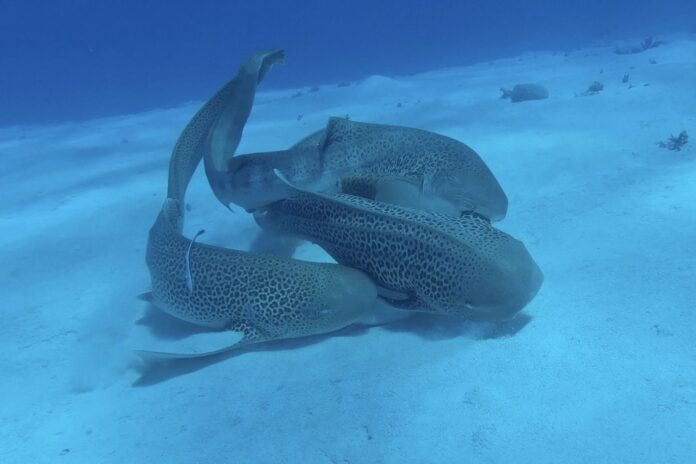
A University of the Sunshine Coast academic has filmed a rare leopard shark mating sequence in waters off the New Caledonian coast.
It is believed to be the first documented instance of two male endangered leopard sharks mating sequentially with a female in the wild.
UniSC marine biologist Hugo Lassauce captured the rare event during a weekly snorkel at the site as part of a monitoring program. The three sharks were about 2.3m long.
“It’s rare to witness sharks mating in the wild, but to see it with an endangered species – and film the event – was so exciting that we just started cheering,” Dr Lassauce said.
“It was over quickly for both males, one after the other. The first took 63 seconds, the other 47. Then the males lost all their energy and lay immobile on the bottom while the female swam away actively.”
The species, also known as zebra sharks because pups are born with stripes that gradually turn into spots, is listed as endangered by the International Union for Conservation of Nature and has mostly been studied in captivity.
Researchers said the footage identified a critical mating habitat, which could guide conservation strategies and artificial insemination efforts aimed at boosting population numbers.
Dr Lassauce snorkelled with the sharks 15km off the New Caledonian coast every week for a year as part of the monitoring program.
“This evidence suggests the site in New Caledonia is a critical mating habitat,” said co-author Christine Dudgeon, a senior research fellow at UniSC.
“From a genetic diversity perspective, we want to find out how many fathers contribute to the batches of eggs laid each year by females.”
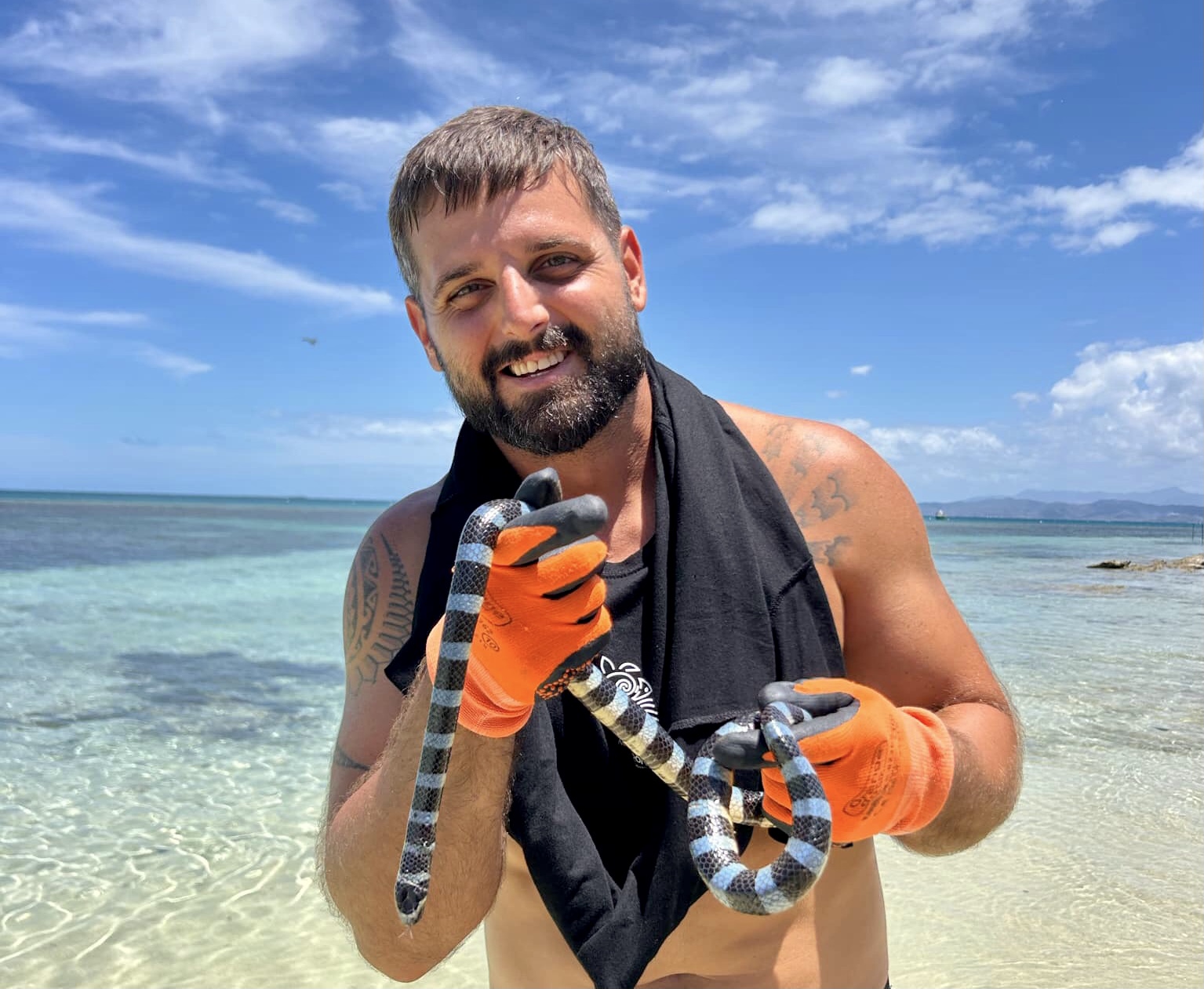
The researcher’s findings were outlined in a paper published in the Journal of Ethology.