
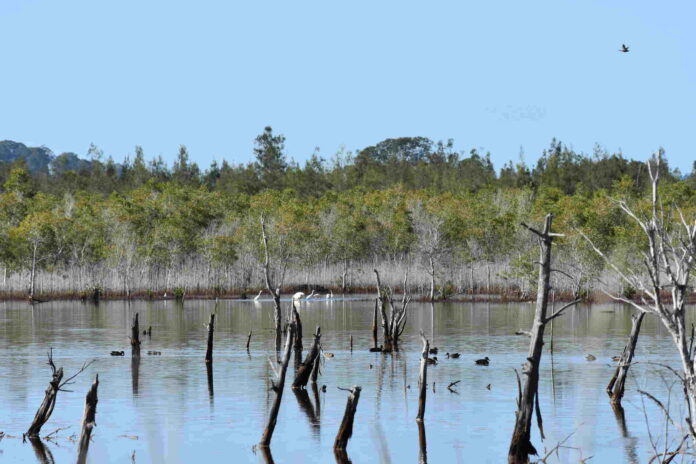
New remote-sensing technology has measured the restoration of 200ha of abandoned sugar cane farmland back to thriving wetland.
Five years of research, led by the University of the Sunshine Coast, has documented the expansion of mangroves, saltmarsh and she-oak clusters in Unitywater’s Yandina Creek Wetland.
Ecology PhD graduate Ash Rummell, who was one of seven members of the research team, said it was exciting for the environment and the community.
“This ecosystem of the Maroochy River works to improve water quality, store ‘blue’ carbon and provide habitat for birds, mammals and reptiles and commercially and recreationally targeted fish and crustaceans,” Dr Rummell said via a UniSC media release.
“It can also buffer against wave action along the low-lying areas of estuaries by forcing waves to break early.”
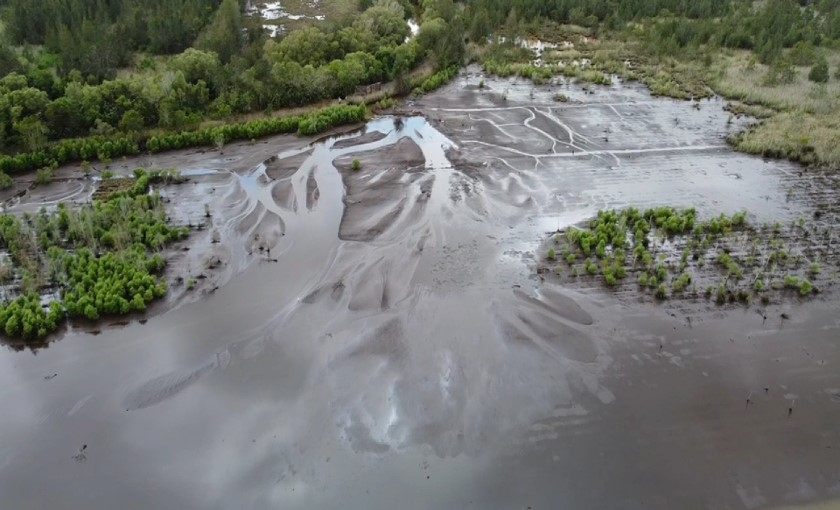
Unitywater executive manager sustainable infrastructure solutions Daniel Lambert said the wetland demonstrated Unitywater’s commitment to sustainability.
“The wetland acts as a natural filter, taking up nutrients and sediments from the water to improve water quality and overall river health,” he said.
“This can help offset the nutrients discharged to Maroochy River following treatment at our Coolum, Nambour and Maroochydore wastewater treatment plants.
“The wetland removes about 5.3 tonnes of total nitrogen and 0.5 tonnes of phosphorous each year.
“It’s a win for the environment and a way to embrace the wonders of nature, creating a fantastic space for locals, tourists and keen bird watchers to enjoy.”
The project is within the Blue Heart area, a natural floodplain of more than 5000ha in the Maroochy River catchment, including 1400ha of public land.
Dr Rummell said the latest results, published in the journal Remote Sensing, showed that the team’s use of advanced resolution satellite imagery produced land cover maps with greater detail and higher accuracy (91 to 95 per cent) than currently available methods.
“We also adopted machine learning to better differentiate between vegetation communities,” he said.
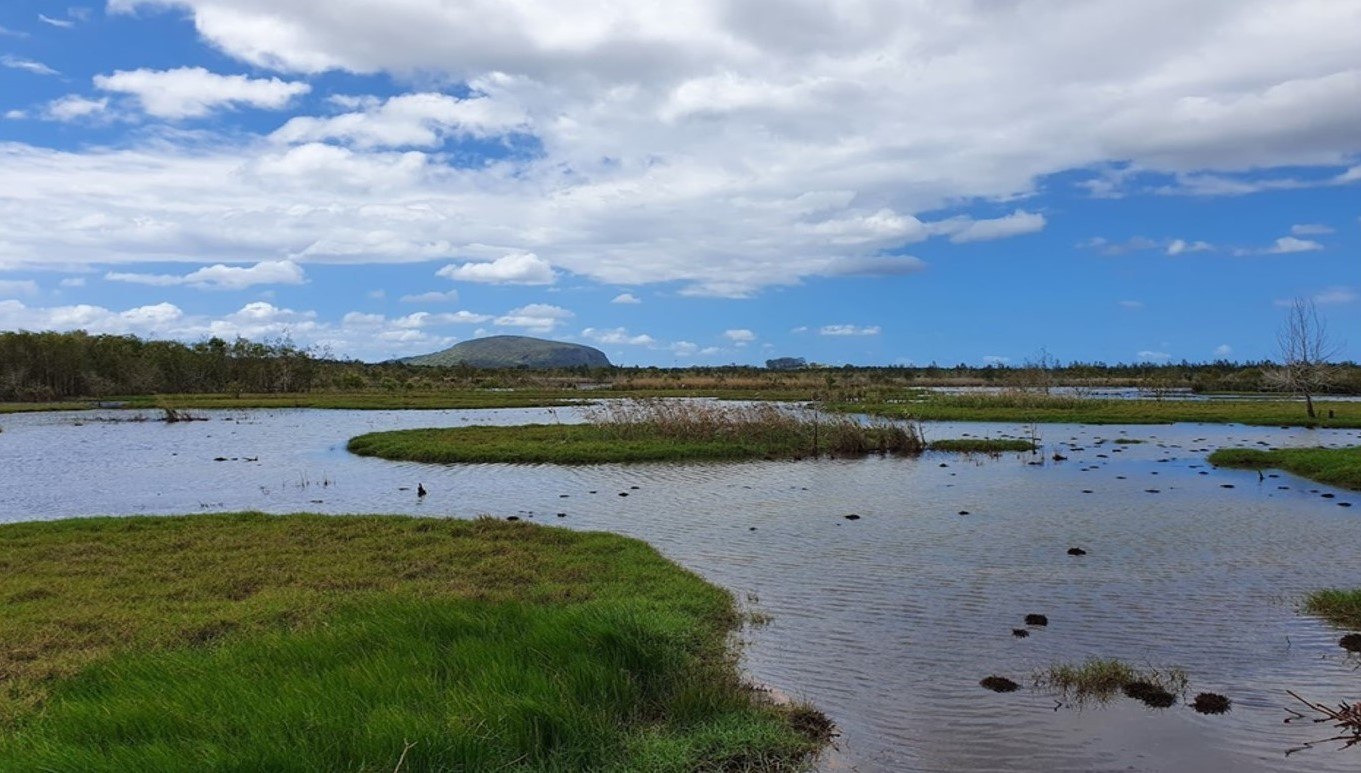
The maps enabled the early detection of increases in mixed she-oak and paperbark (10ha), mangroves (0.91ha) and saltmarsh (4.31ha) during the five-year monitoring period.
UniSC research supervisors Dr Javier Leon and Dr Andrew Olds said the research method could now be applied more broadly to improve conservation along coastlines and quantify blue carbon (the carbon stored by marine and coastal ecosystems).
Dr Rummell, a former fisheries scientist from Hervey Bay with previous UniSC degrees in Environmental Science and Science Honours, has facilitated multiple coastal monitoring and mapping projects of animals and plants.
He will recently officially received his PhD at a UniSC graduation ceremony on campus at Sippy Downs. His research focused on wetland restoration.
The Blue Heart project was established through a partnership between Unitywater, Sunshine Coast Council and the Queensland Government’s Department of Environment and Science.
Like stories that inform, connect and celebrate the Sunshine Coast? So do we. Join an independent local news revolution by subscribing to our free daily news feed: Enter your name and email at the bottom of this article.