

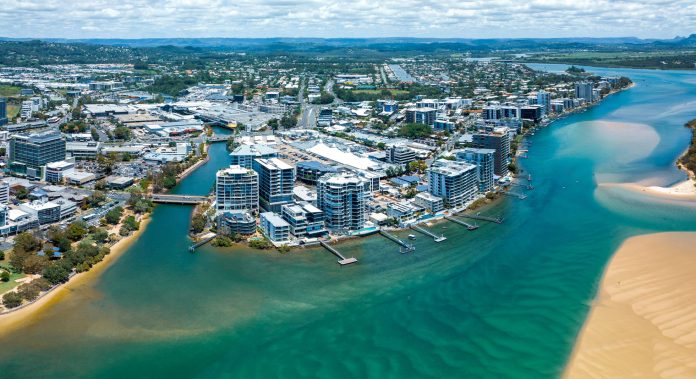
The growing desire for a beach lifestyle has contributed to Sunshine Coast house prices surging higher than any region in Queensland — and the third highest in Australia.
As people rush to escape the capital cities, house values rose a staggering 32.3 per cent on the Coast in the past year, according to CoreLogic’s latest Regional Market Update.
Unit prices also soared by 29.1 per cent, the second-best performing unit market in Australia after the Wide Bay region (29.2 per cent).
Brisbane’s annual price increase was about 22 per cent, well below the Sunshine Coast’s.
The housing trend is in keeping with an apparent exodus from metropolitan areas to cheaper and more relaxed regional towns, especially near the ocean.
Australia’s top performing regions were the Southern Highlands and Shoalhaven region in NSW (up 35.9 per cent), followed by the Richmond–Tweed region in northern NSW (32.8 per cent) and the Sunshine Coast.
But analysts have warned that if regional house prices continue to outpace the capital cities, regions like the Coast could lose their affordability advantage.
“We can already see this trend taking shape in some of the most popular regional coastal markets such as Byron Bay where median house values are $1.7 million and Noosa on the Sunshine Coast in Queensland, where median house values are $1.2 million, much higher than comparable capital city values,” said CoreLogic’s Research Director Tim Lawless.
Like stories that inform, connect and celebrate the Sunshine Coast? Get more by subscribing to our free daily news feed: Go to SUBSCRIBE at top of this article to register
The latest data analysed Australia’s 25 largest non-capital regions and found 24 of them recorded double-digit annual growth.
Seven regions recorded a lift in house values of more than 30 per cent for the year to 31 October 2021.
Mr Lawless said key drivers were a shift away from capital cities, low interest rates and access to credit, higher household savings and relatively affordability housing.

“There has been a broad demographic shift where more Australians are prepared to consider housing options outside of the capital cities, which has seen net internal migration rates to regional Australia reach record highs,” he said.
“Working from home looks to have some degree of permanency post-COVID and is one of the catalysts of this trend, with more people basing themselves in regional locations to work remotely or balancing office work with home working.”
“The top performing regional areas were all coastal or lifestyle markets generally within a two-hour commuting distance of a capital city,” Mr Lawless said.
“These areas fit within the broad trend where demand has surged for lifestyle properties that offer a blend of liveability and commutability.”
At the other end of the scale, the Townsville region saw the lowest yearly growth rate for houses, increasing by just 8.0 per cent, despite moving through the strongest housing market conditions since 2007.
Houses on the Gold Coast were the quickest to sell with a median time on market of 18 days, a reflection of tighter stock levels compared to strong buyer demand.
Mr Lawless noted advertised listings across regional Australia were currently 37 per cent below the five-year average compared to the number of home sales, which was about 24 per cent above the five-year average.
“This mismatch between available supply and demand has created a heightened level of urgency amongst buyers, generating strong selling conditions where homes are snapped up quickly with minimal levels of negotiation,” he said.
Mr Lawless said the longevity of regional Australia’s boom would largely depend on affordability.
However as more employers allowed a mixture of working from home, places within commuting distance of the major capitals were likely to remain the most highly sought after.



