
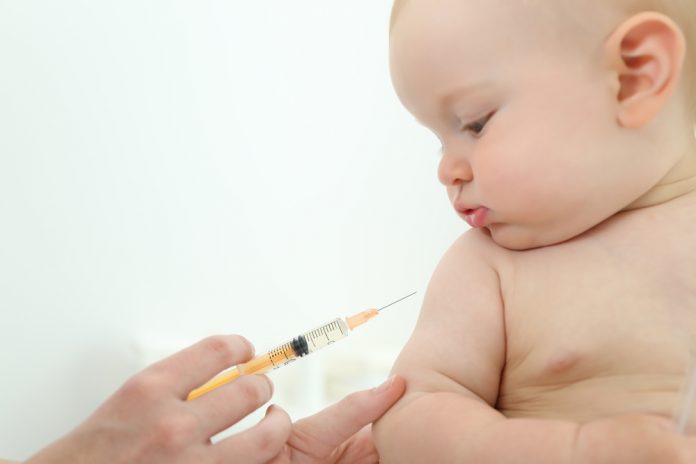
The Sunshine Coast has long had the dubious reputation of being an anti-vax capital, with one of the lowest childhood vaccination rates in Australia, but that appears to be changing.
The latest childhood immunisation figures from the December 2020 quarter show more parents are having their young children inoculated, with most areas of the Coast improving.
The higher vaccination rates were especially noticeable in the one-year age group during the year of the pandemic when most areas of the Coast achieved at least 90 per cent coverage.
The Sunshine Coast historically lagged behind the rest of the country when it came to vaccinating babies and toddlers, especially in hinterland areas where rates were as low as 84.4 per cent just five years ago.
The Gold Coast hinterland now holds the unenviable crown of having Queensland’s lowest vaccination rates while the area around Mullumbimby in northern NSW is among the worst in Australia.
The Sunshine Coast vaccination coverage is still not as high as the 95 per cent required for herd immunity against diseases like measles which has been achieved in many other parts of Qld.
Do you have an opinion to share? Submit a Letter to the Editor with your name and suburb at Sunshine Coast News via: news@sunshinecoastnews.com.au
But compared to five years ago, the Coast has improved markedly and the rates rose further again during the year of the coronavirus in 2020.
However Noosa, perceived as an affluent area which would not be expected to have low vaccination rates, showed much less improvement.
Figures for 2015 / 2020 for 12-month to 15-month-olds on the Sunshine Coast show the changes:
- Caloundra 90.09 / 94.55
- Maroochydore 90.3 / 87.89
- Nambour-Pomona 87.68 / 90.46
- Noosa 89.13 / 90.46
- Sunshine Coast Hinterland 86.36 / 90.34
These figures show the changes from 2015 / 2020 for 24-month to 27 month-olds on the Sunshine Coast:
- Caloundra 87.31 / 90.98
- Maroochydore 88.28 / 86.52
- Nambour – Pomona 85.03 / 87.6
- Noosa 85.56 / 85.17
- Sunshine Coast Hinterland 84.4 / 86.5
The Australian government has a target of 95 per cent which is considered achieving “herd immunity’ and effectively eradicating a disease. This was achieved this year for the first time with five-year-olds.
Australian Medical Association (AMA) Sunshine Coast branch president Dr Roger Faint said the Coast’s vaccination rates of around 90 per cent were “very healthy” and he was “impressed with those numbers”.
Dr Faint said the increased awareness of disease and the importance of vaccines during the coronavirus pandemic may have made parents more conscious.
“I think the (anti-vax) publicity that’s been around has probably been drowned out by what’s happening overseas with people dying and what’s happening in Europe and the UK and US,” he said.
Get more local news direct to your inbox by subscribing to receive our FREE daily news feed. Go to SUBSCRIBE at top of this article to register
Public Health physician Dr Rosie Muller, from the Sunshine Coast Public Health Unit, said it was hard to pinpoint the reasons behind the upward trend.
“Over the last few years there has been a gradual, small increase and there are probably a lot of influences, including the ‘No Jab Play and No Jab Pay’ policy introduced in 2016,” Dr Muller said.
“We did see a response on the Sunshine Coast and other areas and it did prompt people who might have been late to hurry and get it.”
Dr Muller said reasons for falling behind include not being able to find the time, inconvenience of accessing a GP, not understanding the importance of scheduled milestones, other illness or no access to bulk billing.
“There are lots of reasons why people may not be up-to-date; only a small number of people are vaccine objectors,” she said.
The ‘No Jab No Pay’ policy was linked to receiving the Federal Government’s childcare rebate and family tax benefit.
The Queensland government also gave childcare directors the discretion to refuse or cancel enrolment or attendance for children who were not fully immunised, known as ‘No Jab No Play’.
Dr Muller said vaccination rates in areas with small populations tended to fluctuate more as the population rose and fell which made it difficult to pick trends.
“Looking at the Sunshine Coast data over time, you’ll see our rates do jump around quite a bit which sometimes reflects the small populations we’re talking about,” she said.
“However the trend over time, there is a gradual upward increase, particularly in the 12 to 15 months age group which is harder to see for the 24-month age group but that can just be low numbers which make it less stable.”
Do you have an opinion to share? Submit a Letter to the Editor with your name and suburb at Sunshine Coast News via: news@sunshinecoastnews.com.au