

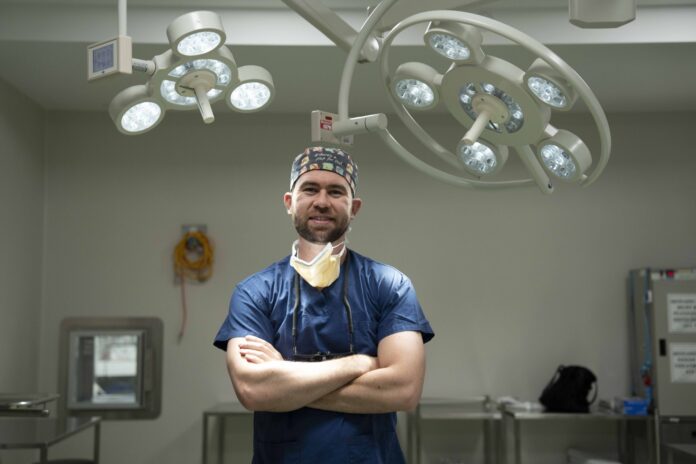
Women seeking facial cosmetic surgery are increasingly looking for subtle, natural-looking results rather than dramatic transformations, according to a leading Australian plastic surgeon.
At his Maroochydore practice, Fraser-Kirk Plastic Surgery, Dr David Sparks said the same concerns came up repeatedly during consultations with women, most aged between 50 and 70.
Loss of jawline definition, sagging skin around the neck and heavy eyelids that create a permanently tired appearance are among the most common concerns raised.
But facial ageing rarely affects just one feature.
As skin loses elasticity, deeper tissues descend and facial volume changes over time, treating a single area in isolation can produce an unbalanced result.
“We have to address the rest of the face as a composite,” Dr Sparks said.
“Otherwise, it can be somewhat noticeable that you’ve had something fixed and something else not fixed.”
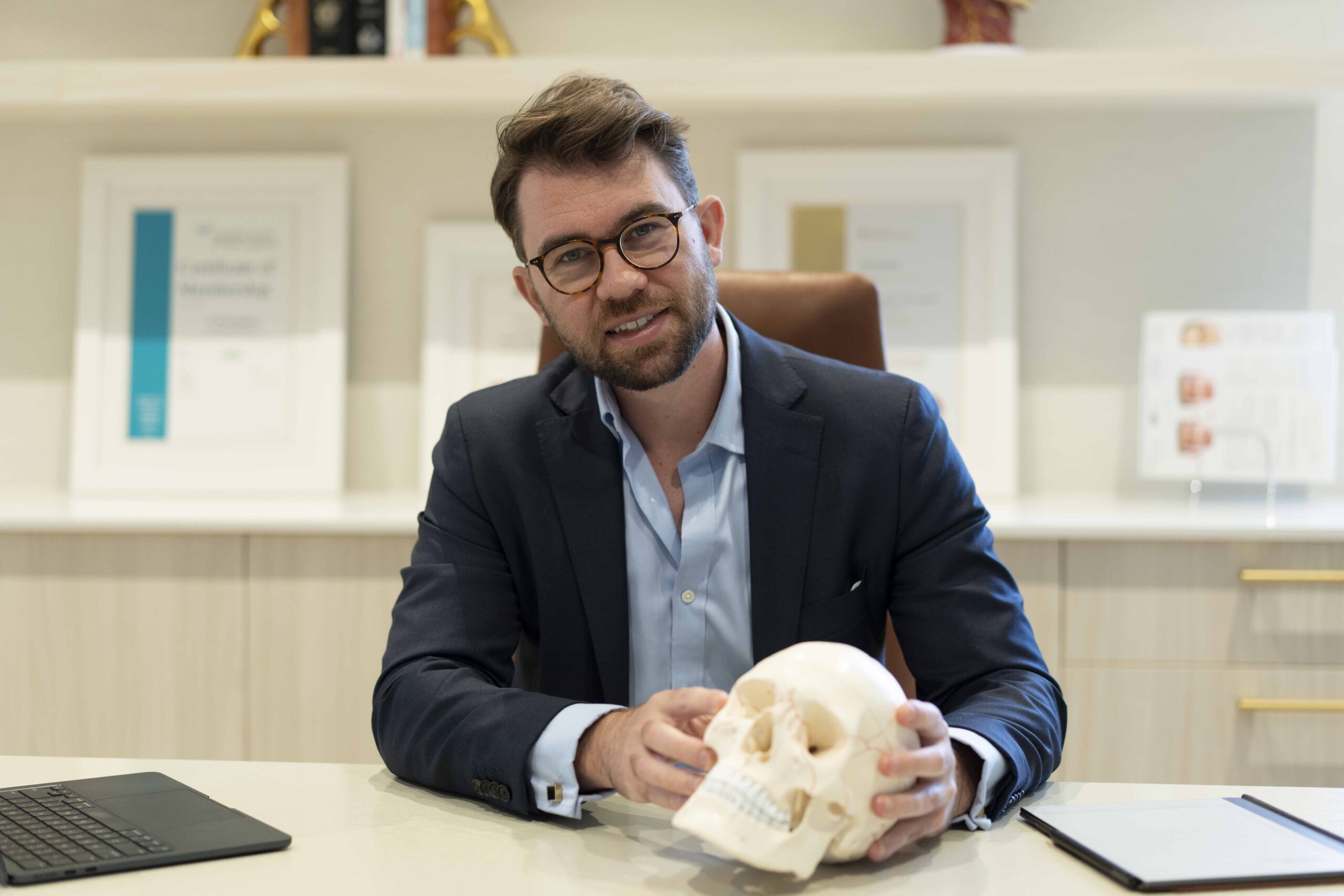
The approach reflects a broader shift in facial cosmetic surgery towards restoring balance and facial harmony rather than simply tightening skin.
Earlier this year, Dr Sparks completed a six-month fellowship in Canada, gaining advanced experience in craniofacial surgery, head and neck surgery, facial palsy surgery, rhinoplasty and facial aesthetic surgery.
He also spent time training with leading facial surgeons in Vancouver, London, Beverly Hills, San Francisco and El Paso.
The experience allowed him to introduce modern preservation deep plane facelift techniques and more refined jawline and neck contouring procedures to his practice.
To explain the concept, Dr Sparks uses an analogy borrowed from a London plastic surgeon, Dr Greg Bran.
“The skeleton is the bed frame, the deeper tissue layer known as the SMAS (Superficial Musculoaponeurotic System) is the mattress and the skin is the duvet,” he said.
“As you age naturally, the bed frame stays where it is, but the mattress and the duvet kind of slide off the end.
“The whole idea of doing a deep plane facelift is that you pick up the mattress, put it back where it needs to be, and tighten the duvet relative to that mattress.”
The result is softer, more natural-looking and longer-lasting effects.
Dr Sparks also performs revision facial surgery for patients seeking corrective procedures after disappointing cosmetic surgery, including operations performed overseas.
He said while excellent cosmetic surgeons practise around the world, patients should carefully consider the risks of travelling abroad for cheaper procedures.
“I think we’re at an advantage in Australia in that we have a very tightly regulated cosmetic surgery sector,” he said.
Australia’s cosmetic surgery industry operates under strict standards covering surgeon qualifications, informed consent, advertising, patient assessment and follow-up care.
Dr Sparks said one of the biggest drawbacks of medical tourism was dealing with complications after returning home.
“It’s false economy,” he said.
“If you think you’re getting a good deal overseas, then you have problems, you have to pay for surgery to get it fixed.”
Australia’s current regulations also require all cosmetic surgery patients to undergo screening for body dysmorphic disorder before surgery.
“It’s to protect the patients from themselves… and from having surgery which is not in their best interest,” Dr Sparks said.
Patients identified as needing further assessment are referred to an independent psychologist before surgery proceeds.
“It’s like a safety check, basically, to make sure that everybody’s on the same page.”
Dr Sparks encourages prospective patients to carefully research surgeons before making a decision.
He said qualifications remained one of the most important considerations, with Fellowship of the Royal Australasian College of Surgeons in Plastic Surgery regarded as the benchmark in Australia.
Patients should also ask about post-training fellowships, facial surgery experience and how frequently a surgeon performs facial rejuvenation procedures.
Beyond cosmetic practice, Dr Sparks also performs complex craniofacial, head and neck reconstructive and cancer surgery on the Gold Coast.
He holds a PhD in regenerative medicine focused on bone reconstruction and tissue engineering, is a senior lecturer at Griffith University and has authored more than 20 peer-reviewed scientific publications.
“I’ve got a strong academic background, which helps me make evidence-based decisions for what I think is the most appropriate thing for patients that I see and treat,” he said.
Dr Sparks believes successful cosmetic surgery depends as much on communication as technical expertise.
For women contemplating facial rejuvenation, understanding the procedure, asking questions, feeling heard and having realistic expectations remain just as important as choosing the right surgeon.
For more information, contact Fraser-Kirk Plastic Surgery.



