
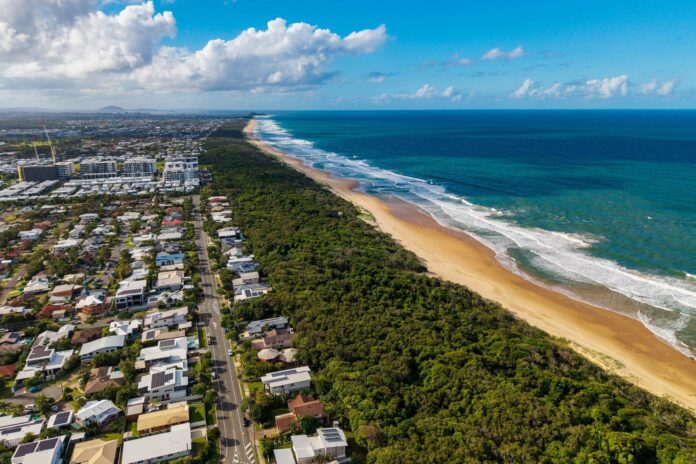
Sunshine Coast property prices continued to rise in the opening months of 2026 but growing economic strain and weakening confidence are starting to cloud the market outlook.
The region’s home values, and most of Queensland’s, continued an upward run through the March quarter, with the median prices rising for houses and units.
Real Estate Institute of Queensland’s (REIQ) data showed the property market continued to move forward, underpinned by tight supply conditions and strong underlying demand, even as rising interest rates, global uncertainty, tax reforms and weakening consumer sentiment create uncertainty.
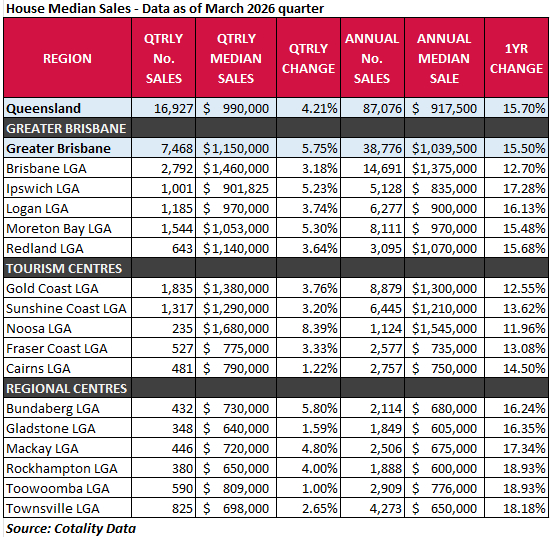
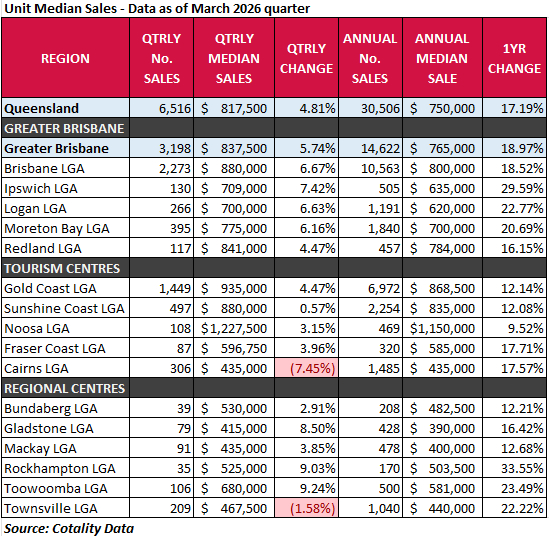
The Sunshine Coast’s median house price rose 3.2 per cent over the quarter to $1.29 million and was 13.62 per cent higher over 12 months. For units, the median increased 0.57 per cent over the quarter and 12.08 per cent over a year.
The statewide median house price rose 4.21 over the quarter to $990,000 and, for units, the median increased 4.81 per cent over the quarter to $817,500.
House price growth was much more significant at Noosa, where it rose 8.39 per cent to $1.68 million. Unit values lifted 3.15 per cent to $1.22 million.
REIQ CEO Antonia Mercorella said Queensland’s market had proved resilient but stronger headwinds were starting to gather.
“Up until the end of March, there were no obvious signs of a slowdown just yet,” she said.
“Price growth has continued right across the board and Queensland is outperforming many other parts of the country but the mood in the market is becoming more cautious.
“We’re seeing more fear and trepidation creep into decision making.
“People are asking what comes next if they make a move, how much further borrowing costs could rise, and what broader economic pressures might mean for their household budget.
“Meanwhile, existing and prospective investors are still reeling from recent federal budget announcements proposing changes to negative gearing and capital gains tax reforms.
“These material and unexpected taxation changes have created nervousness amongst the investor community and anecdotal feedback is that investor confidence has taken a dent.
“This is creating a market that is still performing strongly on paper but is increasingly shaped by caution.”
But Ms Mercorella said the fundamentals that have been driving the market remained.
“Listings remain tight, new housing supply is still not where it needs to be, and Queensland’s strong population growth continues to sustain demand,” she said.
“The question now is not whether Queensland property has proven to be strong, but how the market will handle the global and local headwinds on the horizon.
“Affordability constraints are deepening, consumer confidence has taken a hit, and that may start to moderate the pace of growth, even if supply pressures continue to place a floor under prices.”
Recent national housing data showed Queensland was making progress but remained off pace in housing delivery.
Under the National Housing Accord, Queensland was expected to contribute around 49,300 homes each year. Based on the performance of 32,900 completed dwellings over the 12 months to December, Queensland was about 33 per cent behind target.
Building approvals in Queensland’s pipeline were running at 3975 dwelling units in trend terms in March (3 per cent below the monthly target of about 4100 dwellings), while elevated construction costs and capacity constraints continue to challenge feasibility.
Do you have an opinion to share? Submit a Letter to the Editor at Sunshine Coast News via news@sunshinecoastnews.com.au. You must include your name and suburb.
Ms Mercorella said Queensland property continued to absorb shocks better than many expected.
“Queensland has built a reputation for resilience over recent years, but resilience should not be mistaken for invincibility,” she said.
“If governments want to preserve a pathway to home ownership while maintaining a healthy property market, supply has to remain the priority.
“We need sustained action to boost housing delivery, improve productivity, and make it easier to bring the right mix of homes to market.
“Pathways to home ownership should be a focus but continued investor activity is also a key priority to ensure the rental population is catered for and rental prices are kept in check.”