
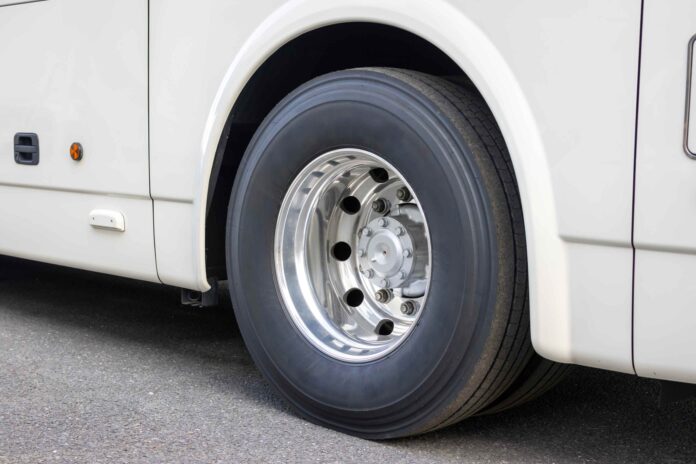
A tow truck driver has been awarded more than $2.5 million in damages after being seriously injured beneath a broken-down bus.
Colin Anderson successfully sued his employer, Sunshine Coast-based Claytons Towing Service Pty Ltd, along with bus driver Edward van der Veer and the Victorian Government-owned Transport Accident Commission over the incident on the Burnett Highway near Ban Ban Springs in August 2019.
The Supreme Court decision, delivered by Justice Michael Copley on March 5, followed a four-day trial in December 2025 and further submissions earlier this year.
The court heard Mr Anderson was called to assist after Mr van der Veer noticed a warning light in the Victorian-registered Mitsubishi bus he was driving and pulled into a roadside stopping area.
After inspecting the vehicle, the pair agreed it would need to be towed. While Mr Anderson was underneath the bus preparing to attach towing equipment, the vehicle suddenly rolled forward off wooden blocks, pinning him beneath it.
After being trapped for 15-20 seconds, Mr Anderson used a remote control device to lift the vehicle enough to free himself.
In his evidence, he said he had given clear instructions that the handbrake must remain engaged while he was working underneath the bus.
However, Justice Copley found the driver had released the handbrake, despite those instructions.
“I am satisfied that the second defendant’s negligent act of releasing the handbrake was a cause of the plaintiff’s injuries,” he said.
The driver denied doing so, arguing it would have been “common sense” to leave the brake applied. But the judge rejected that account, finding the evidence pointed to him being the only person with the opportunity to release it.
Help keep independent and fair Sunshine Coast news coming by subscribing to our FREE daily news feed. All it requires is your email at the bottom of this article.
The court also found Claytons Towing, as Mr Anderson’s employer, had failed to provide a safe system of work.
“At the commencement of the trial, the first defendant admitted breach of duty in that it did not have in place a system of work which required the plaintiff to apply the handbrake of the vehicle to be towed and also to chock the wheels of the vehicle to be towed,” Justice Copley said.
Mr Anderson had been trained “on the job” and had never been given written instructions about towing procedures. He understood the process to be either applying the handbrake or chocking the wheels, not both.
“The first defendant had a defective system of work,” Justice Copley said.
The defence argued Mr Anderson should share responsibility for the incident but the court rejected claims of contributory negligence.
“The defendants have failed to persuade me that, considered objectively, the plaintiff did not take reasonable care for his own safety,” Justice Copley said.
“The plaintiff followed one of the two work methods he had been taught to adopt when preparing to tow a vehicle (and) he had instructed the second defendant, the only person in a position to interfere with the operation of the handbrake, that it was not to be released.”
Mr Anderson suffered multiple rib fractures, nerve damage, a bruised kidney and ongoing chronic pain. He also developed post-traumatic stress disorder.
The court heard his injuries had caused permanent damage, requiring ongoing treatment, including the use of a spinal cord stimulator to manage pain.
Justice Copley apportioned liability between the parties, ordering Claytons to pay $546,175.09, while the Transport Accident Commission was ordered to pay $1,970,874.41 as the compulsory third party insurer of the bus.