
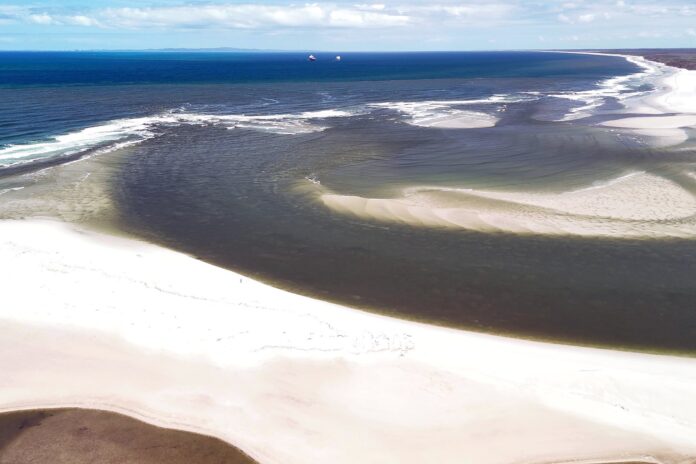
The state government has started environmental investigations and planning assessments to explore filling a major tidal breakthrough with sand, as a crucial dredging project is completed.
Authorities could seal the expansive gap that formed at Bribie Island in early 2022 and left mainland communities exposed to the elements.
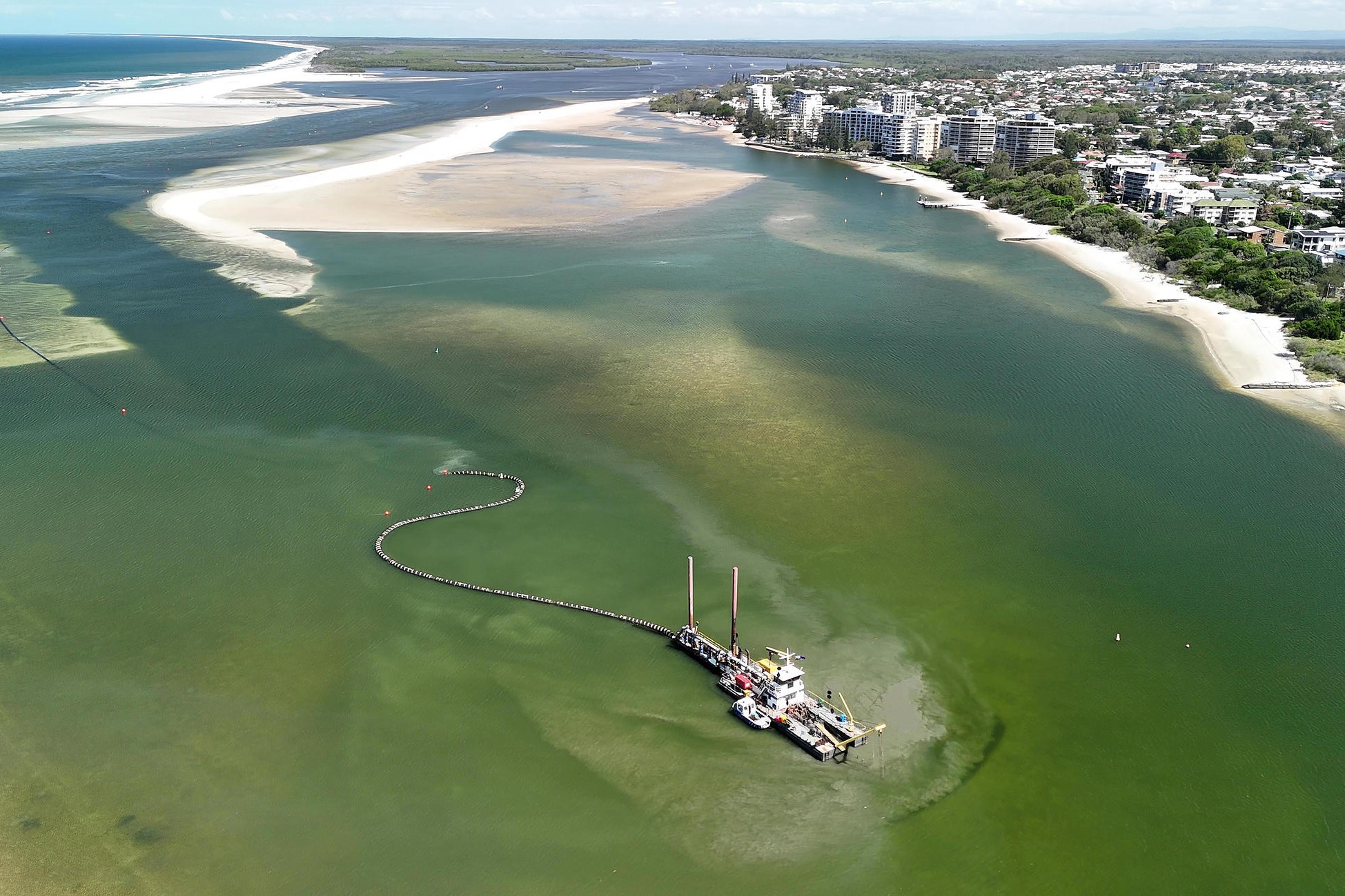
Emergency works, conducted during the past six months, have included filling two smaller breakthroughs with sand and fortifying a narrow stretch of the island. The works also included dredging a channel in the Pumicestone Passage – an operation that was, on Wednesday, announced complete, weeks ahead of schedule.
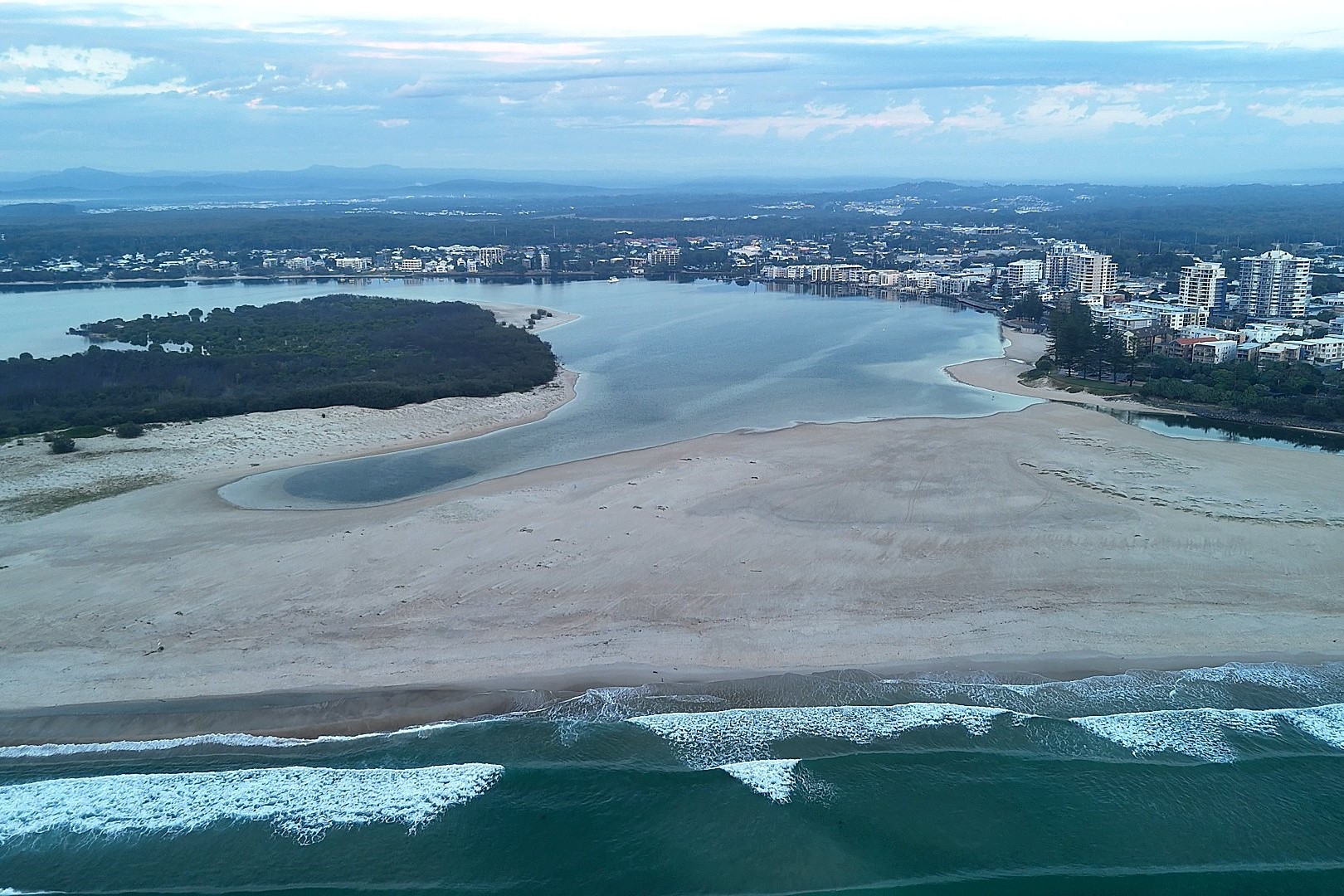
An independent review by coastal experts RPS and International Coastal Management, conducted last year, also suggested large-scale solutions, including plugging the main breakthrough and reopening the sand-clogged Caloundra Bar.
“Reinstating the island and reopening the historical entrance offers a pragmatic and lower-risk option,” it stated.
“It is more consistent with the objectives to: stabilise tidal regimes and wave conditions; improve navigation and water quality; protect critical coastal assets; and buy time for the development of fully integrated, long-term solutions.”
For more local news videos SUBSCRIBE to our YouTube channel. Just click here.
“In this context, restoring the system closer to its pre-breakthrough condition is not merely a return to the past, but a strategic step toward a more resilient and manageable future.”
The independent report also identified a range of even longer-term strategies including multipurpose reefs, artificial headlands, buried walls, ecological restoration, channel realignment and dune buffers.
“Reinstating Bribie Island, as it once was, is not enough to meet future challenges,” it said.
“It (the report) proposes a proactive, resilience-focused approach that combines natural processes with targeted structural enhancements to better withstand future storm impacts, sea-level rise and coastal erosion.”
The recommendation to close the main breakthrough, estimated to be more than 1km wide last year, was supported ‘in principle’ by officials, who are now taking the proposal further.
The government has started the extensive environmental investigations required to support a referral under the Environment Protection and Biodiversity Conservation Act 1999 and the required further detailed design and planning assessments, which essentially means they could act to fill the breakthrough with the right procedures and permissions.
Queensland’s Coordinator-General Gerard Coggan said the emergency works laid the groundwork for long-term solutions.
“Now we will prepare a plan for the long-term works,” Mr Coggan said.
“Following the recommendations of the independent Bribie Island Erosion and Breakthrough Expert Review, we are progressing planning and investigations to develop options, supported by engineering advice, coastal modelling and broader economic and environment considerations, with community engagement also playing a key role.”
A local community group, the Pumicestone Passage Catchment Management Body, has previously backed the recommendation to plug the large gap.
“We need to close breakthrough No.1 and build back a strong barrier island to protect the Caloundra community,” the group said last year.
“(And) we need to reopen the old bar in a safe, stable and navigable way, in the vicinity of its traditional location at Bulcock Beach.
“This is also necessary to re-establish water flow and restore the tidal prism to pre-breakthrough conditions, as these were the conditions around which we built our community.”
Meanwhile, channel dredging in the passage finished about a month ahead of schedule.
The dredger Arnhem started deepening the channel between the northern end of the passage and the main breakthrough in early February.
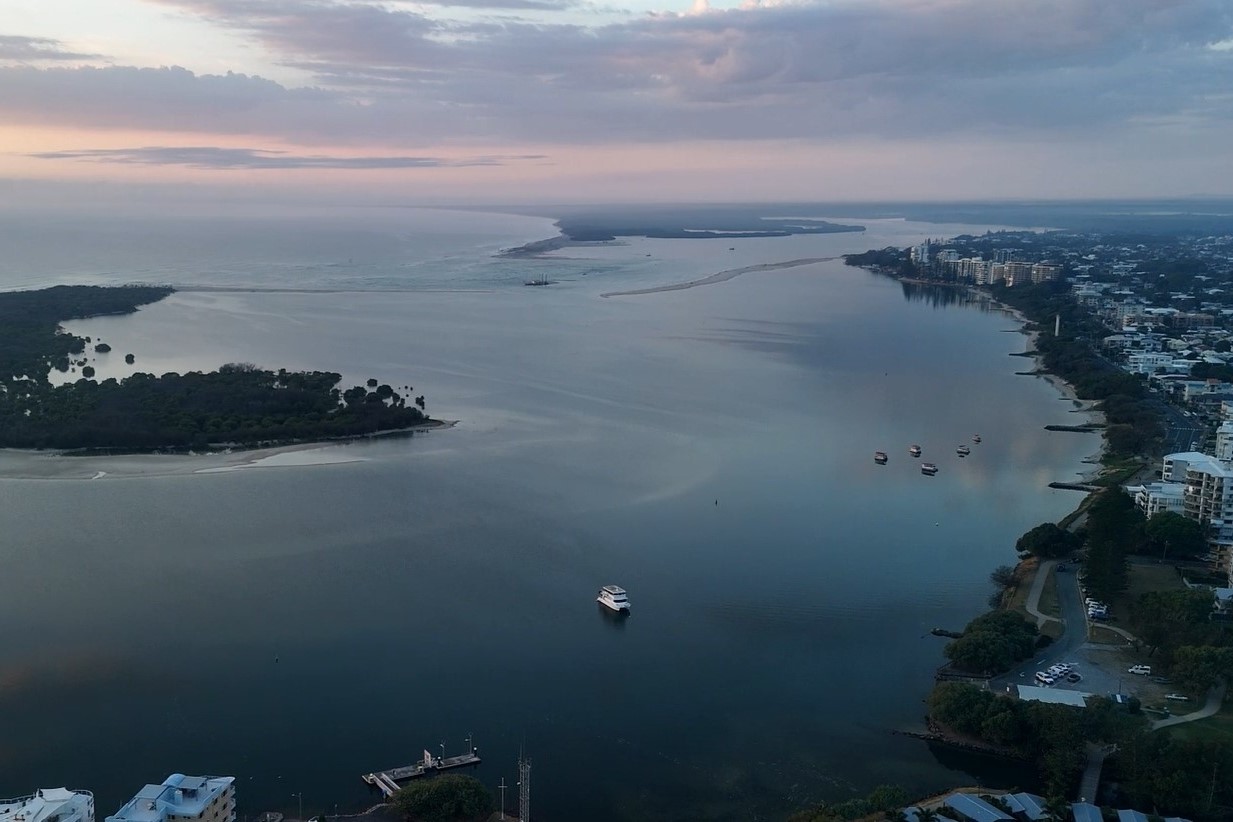
The dredging is set to improve water circulation, water quality and navigational access for all boaties and allow the Caloundra Coast Guard to return to its permanent headquarters at Bulcock Beach (from a secondary base at Pelican Waters).
Beach nourishment works on Bribie Island have also occurred, with dredgers pumping sand along a 2km stretch to create a vital erosion buffer and strengthen coastal resilience.
Restoration works by local business Hall Contracting have been running 24/7, dredging over 1.1 million cubic metres of sand to close the two breakthroughs, reinforce the coastline and deepen the internal northern channel.
Deputy Premier Jarrod Bleijie said the works were essential.
“These works are improving access and conditions for boaties and supporting better water circulation and water quality in the passage – important immediate benefits while we develop the long-term protections this system needs,” he said.
“The final (emergency works) stage is to stabilise the newly constructed erosion barrier with sand fencing and vegetation, so it can perform over the long term and help build resilience along the coastline.
“We’ll keep working to deliver a long-term solution that protects Bribie Island, strengthens Golden Beach and keeps the Pumicestone Passage open and resilient, guided by the recommendations of the independent Bribie Island Erosion and Breakthrough Expert Review.”
Member for Caloundra Kendall Morton said the early completion of dredging was good news.
“This is an outstanding result for one of Queensland’s most iconic coastal systems – strengthening protection for Golden Beach and improving conditions in the Pumicestone Passage,” she said.