

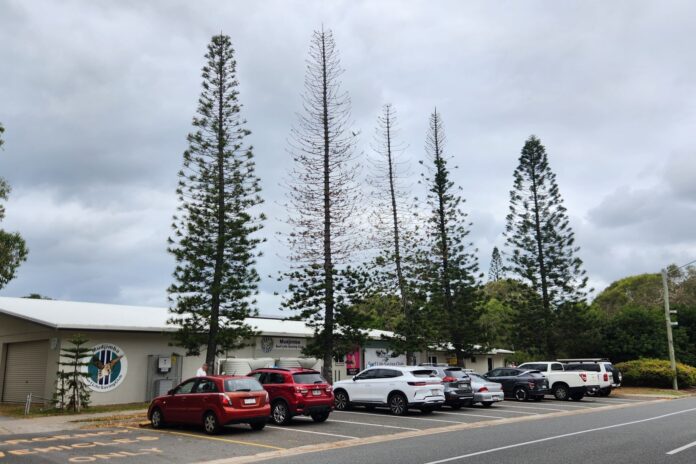
A row of pine trees near a busy surf club is being affected by a soil-borne pathogen, with plans underway to remove the worst-affected tree.
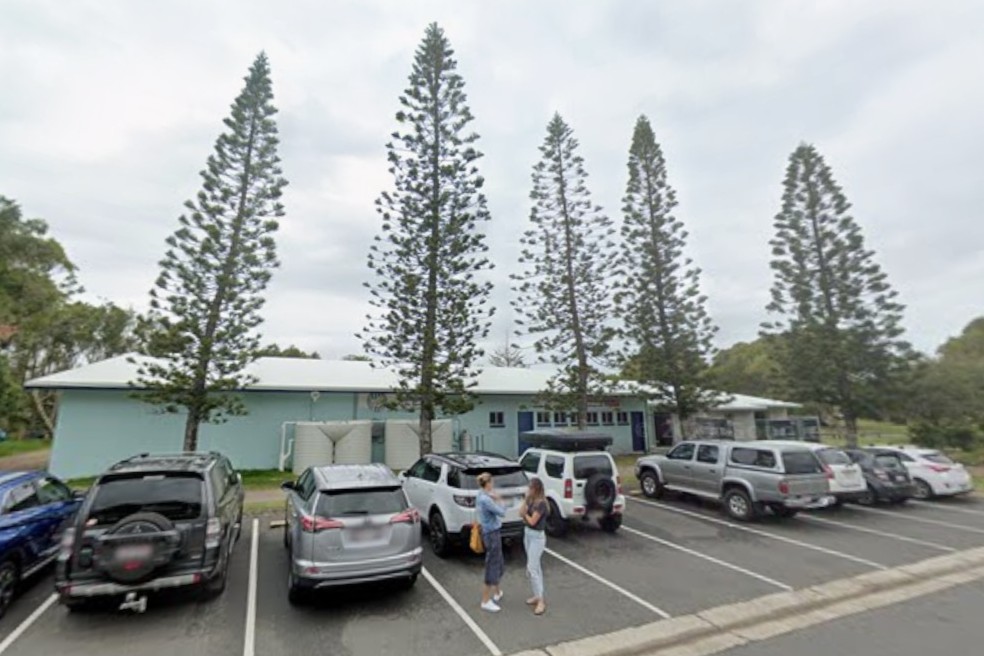
The Cook pines near the Mudjimba Surf Life Saving Club are showing signs of top-down dieback, likely because of the phytophthora pathogen.
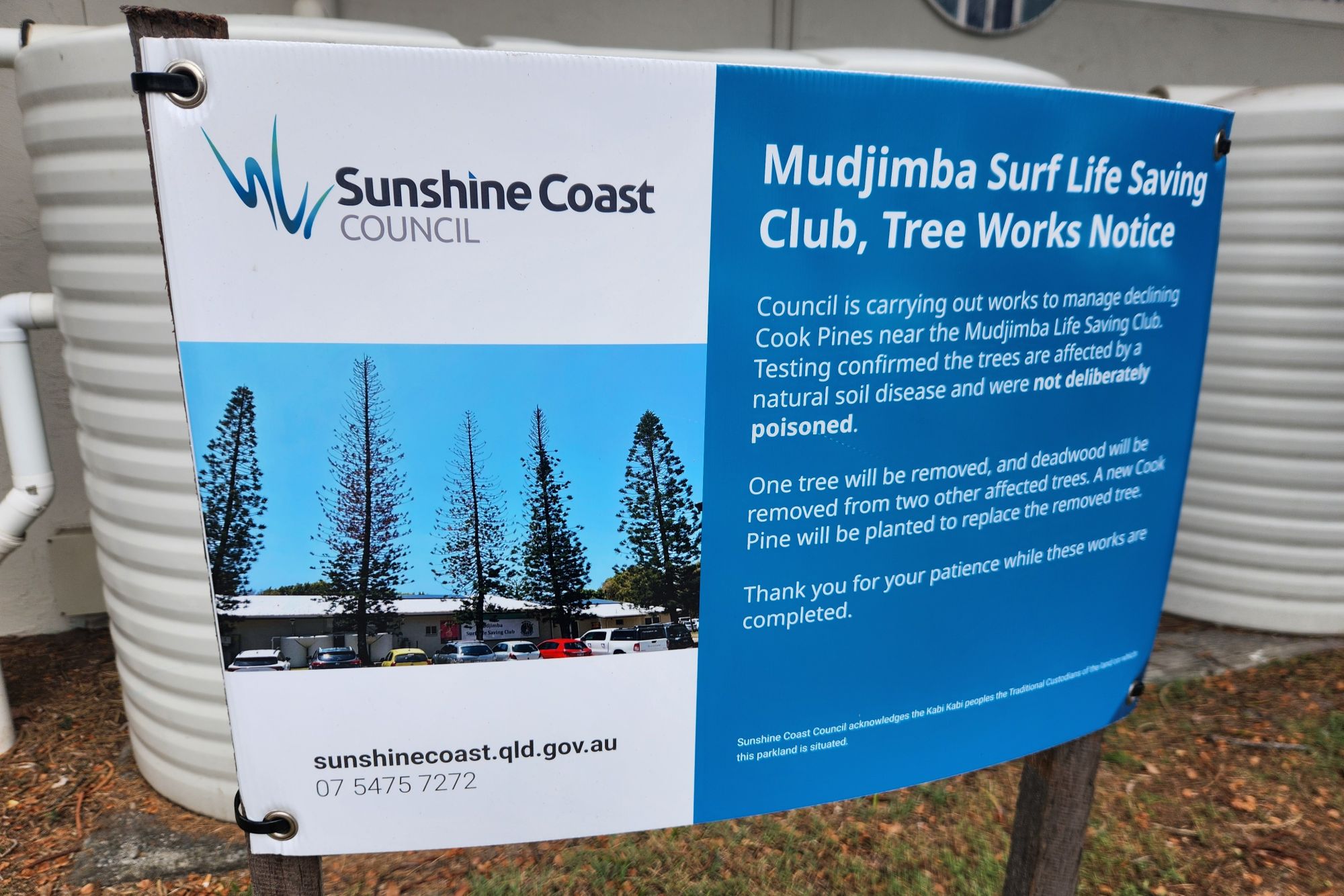
One tree will be removed and replaced, while two others will be reduced to minimise the risk of falling branches.
A Sunshine Coast Council spokesperson said authorities first became aware of the trees’ deterioration mid-last year and had been monitoring the site since.
“Phytophthora has been identified as the likely cause of the decline based on a variety of symptoms at the site, including the top-down dieback and previously detected phytophthora in the area,” a spokesperson said.
“An independent soil analysis is currently underway to determine a definitive diagnosis.
“An independent lab analysis was also conducted, ruling out intentional poisoning.
The spokesperson said the tree to be removed would be replaced with a juvenile Cook pine, after native alternatives were considered.
“A Cook pine is the most appropriate replacement due to strong onshore winds, salt spray and proximity to retained trees,” they said.
“This species choice will maintain the existing coastal wind-buffer function while preserving the landscape character of the park.
Help us deliver more news by registering for our FREE daily news feed. All it requires is your email at the bottom of this article.
“Two impacted trees will be reduced, which involves removing the dead portion of the tree to reduce the risk of branch failure. They will also undergo a program to improve soil nutrition and biology.
“Council will continue regular testing and work to increase the health of the existing trees and soil. A healthy living soil is the best defence against a pathogen like phytophthora.”
A post from divisional councillor Taylor Bunnag explained more about the disease.
“This is a soil-borne pathogen known to impact tree health, particularly in coastal and high-use environments,” he said.
“Our arborists are also looking into options to treat the site with trichoderma to counteract the phytophthora.”
Signs have been placed at site informing residents of the situation and upcoming works.



