
Australia’s biggest citizen-science event has uncovered more than 105 species of birds in Maleny.
The Aussie Bird Count, held from October 20-26, saw Sunshine Coast Council staff, consultants and volunteers making the discoveries as part of the early investigation and planning phase for the 65-hectare Sunshine Coast Ecological Park.
The local community is also involved in the park’s early evolution including activities such as revegetation planting and bird surveying.
This month, a dedicated team of BushCare volunteers took the chance to visit the site for training from council staff on how to spot, identify and record local bird species.
These surveys are designed to help the council better understand the ecological park site and help inform future habitat conservation and restoration efforts.
The current cleared pasture site will be transformed over decades into a living laboratory for scientific study, cultural storytelling and learning.
Want more free local news? Follow Sunshine Coast News on Facebook, LinkedIn and Instagram, and sign up for our FREE daily news email.
Council has shared just a few of the remarkable species already cited at the ecological park.
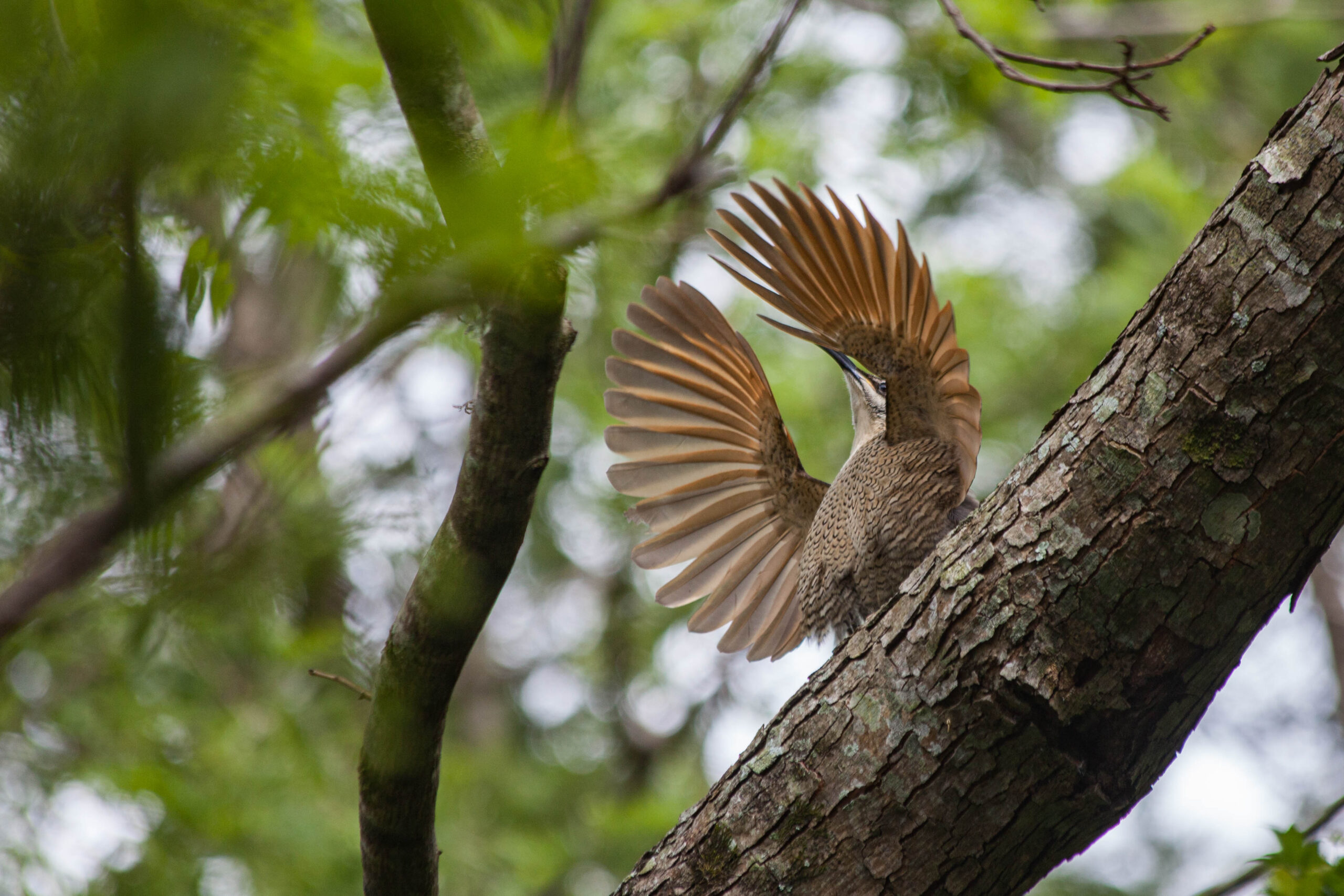
Paradise riflebird: The adult male paradise riflebird is jet black with an iridescent blue-green crown and breast. In courtship dances, it raises and fans its wings to reveal oily blue-green under-feathers. Adult females are rufous-brown above and with light-cinnamon underparts patterned with dark brown chevrons.
Rose-crowned fruit dove: This dove is a vision of pastel beauty, with soft green feathers and a striking rose-pink crown. Despite its vivid colours, it’s surprisingly hard to spot due to its excellent camouflage among the leaves.
Rufous fantail: With its fiery orange tail and energetic movements, the rufous fantail is a delight to watch. It flits through the undergrowth in search of insects, constantly flicking and fanning its tail. Breeding pairs build a small cup nest made of fine grasses bound with spider webs, suspended from a tree fork.
Wompoo fruit dove: Large and unmistakable, the wompoo fruit-dove boasts a deep purple chest and a booming “wom-poo” call. Like many birds, it plays a vital role in seed dispersal across the rainforest. Its call is so loud it can be heard up to a kilometre away.
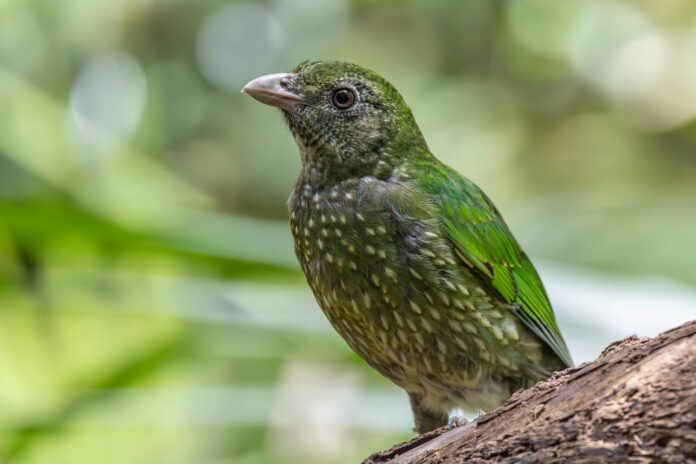
Green catbird: Named for its eerie, cat-like wailing call, the green catbird blends into the foliage with its mossy green feathers. Despite its camouflage, the green catbird highly vocal and is usually heard before it’s seen.It’s part of the bowerbird family but doesn’t build bowers: instead, it decorates its nest with leaves. This bird’s iconic “whip-crack” call is a signature sound of the Australian bush.