
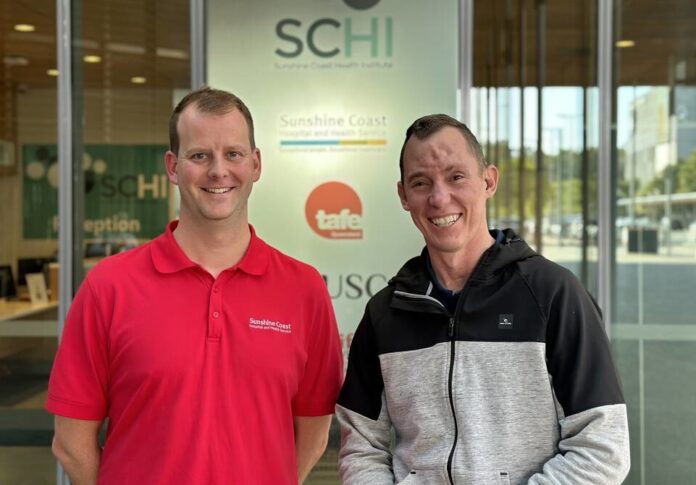
Health experts have heard from a Sunshine Coast man who fell up to 15m, as they look to improve the level of care to neurotrauma patients at Sunshine Coast University Hospital.
The hospital was the third busiest trauma service in the state last year, with more than 400 people with life-changing trauma being managed by a team of medical, nursing and allied health specialists.
Sunshine Coast Health medical director trauma service Dr Andrew Hobbins King said it was important to find ways to improve the level of care there.“Across the health service, blunt traumatic injuries from falls and transport collisions make up most of our trauma patients, with males more commonly sustaining injury, with an average patient age of 60 years,” he said.“Emerging trends in injury patterns and demographics, including e-scooter-related head trauma in teenagers and young adults, highlights the potential for lifelong disability that is changing how we must resource and manage our trauma patients.”
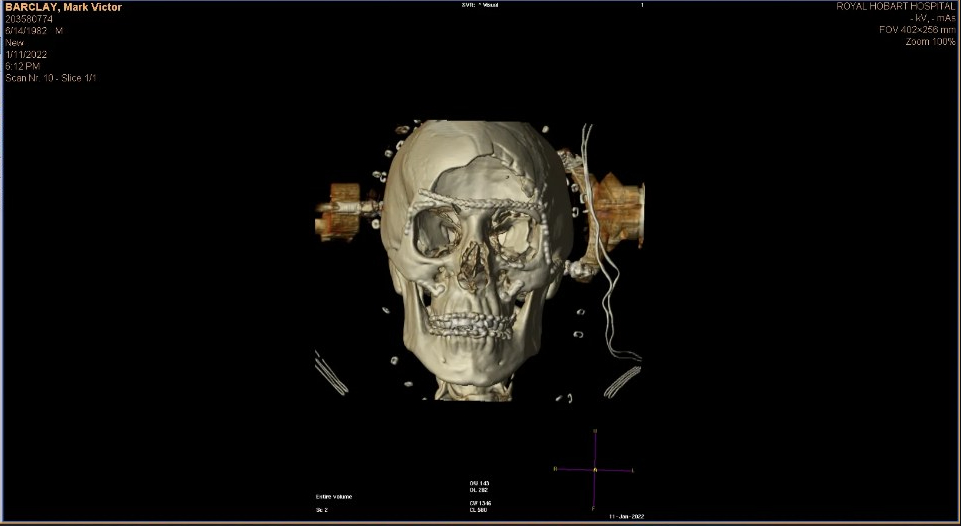
The Sunshine Coast Health Trauma Service collaborated with the Royal Brisbane and Women’s Hospital Neurosurgical Department to host a seminar to explore the critical decision making in neurotrauma on the Sunshine Coast. The panel of presenters included local traumatic brain injury survivor Mark Barclay, who fell 10-15m when the ground gave way while he was bushwalking with family in Tasmania in December 2021.
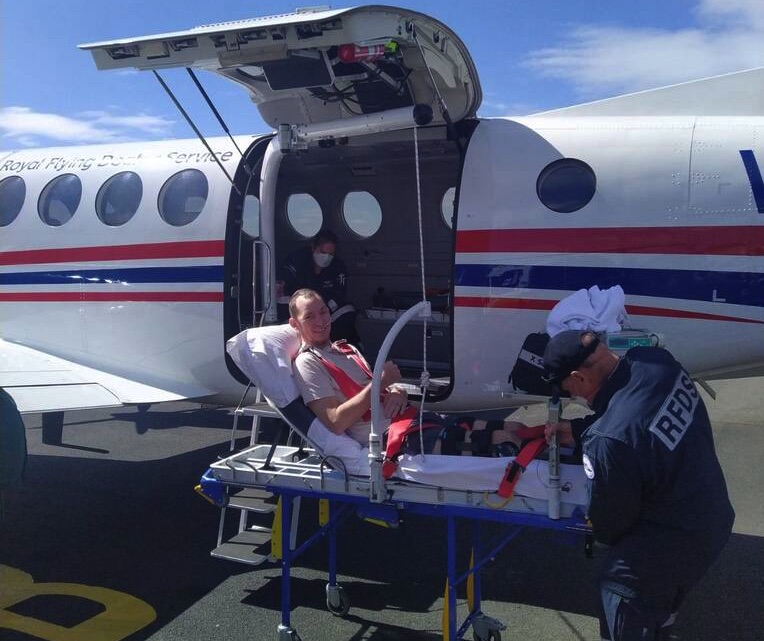
He shared his experience of being put in a coma in Tasmania, the retrieval to a Brisbane hospital and then his recovery with the SCHHS Rehabilitation Service.
“Dr Hobbins King said he wanted to hear from someone who has been through a traumatic brain injury, to help educate the staff who handle these types of cases and give them valuable feedback,” Mr Barclay said.“It was an opportunity for me to share the positives and negatives of my whole experience and what could be improved, especially because I moved between different hospitals and then became an outpatient as well.”Mr Barclay said he was grateful for the SCHHS Rehabilitation Service, as he was initially going to do private rehab when he was discharged from Brisbane but struggled with availability and wait periods.“I thought my progress is going to start dropping because up until that point I had been doing rehab every day in a ward,” he said.
“Then I got a call from SCUH and they were just starting the pilot program and I could come in each day for four weeks, do my rehab, then I got to go home at the end of the day and it was amazing.”
Mr Barclay recently returned to work with the police service.
The seminar was followed by a bespoke craniectomy skills workshop for surgeons and anaesthetic and theatre staff using 3D-printed skulls manufactured by the Herston Bio Fabrication Institute and equipment supplied by Medtronic.“Currently, after initial management in our heath service, certain types of traumatic brain injuries will need to be transferred, by ambulance or helicopter, to Brisbane for specialist neurosurgical care not available at SCUH,” Dr Hobbins King said.“This event highlights the collaborative nature of trauma care, from resuscitation to rehabilitation, and represents another step forward in the journey to SCUH becoming a Level Two Major Trauma Service that can provide the full spectrum of trauma care to our growing population on the Sunshine Coast.”
Scroll down to SUBSCRIBE for our FREE news feed, direct to your inbox daily.