
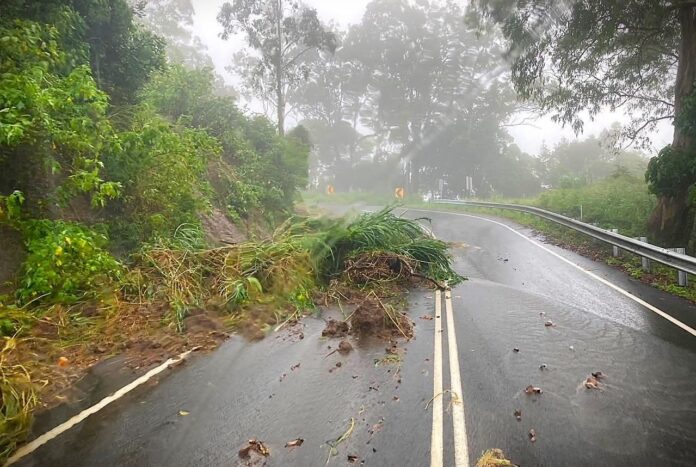
Heavy rain has continued to batter the Sunshine Coast, with more than 100 road closures reported across the region as flash flooding causes widespread disruption.
As of midday on Thursday, October 22, Sunshine Coast Council’s Disaster Hub recorded 118 closures across council and state-controlled roads, up from 64 at 10am.
Intense rainfall has prompted flash flooding warnings across parts of the southern Sunshine Coast, with Beerburrum, Coochin Creek and Glass House Mountains among the areas identified as potentially affected.
According to the Bureau of Meteorology, a total of 58.2mm of rain fell between midnight and midday today at the Sunshine Coast Airport with a total of 83mm recorded in the 24-hour period from Wednesday.
At Elimbah, 159mm of rain was recorded at Rose Creek Road in just three hours to 8.12am, while Sheep Station Creek at Morayfield recorded 168mm in three hours.
The bureau also issued a severe thunderstorm warning for heavy rainfall across parts of South-East Queensland, including Nambour, warning that more flash flooding could occur in the coming hours.
Council and emergency services have urged motorists to avoid unnecessary travel and flooded roads, with conditions continuing to change as heavy rain moves across the region.
Meanwhile, Sunshine Coast Council has brought forward the opening of Currimundi Lake after heavier-than-expected rainfall caused water levels to rise across the connected lake system.
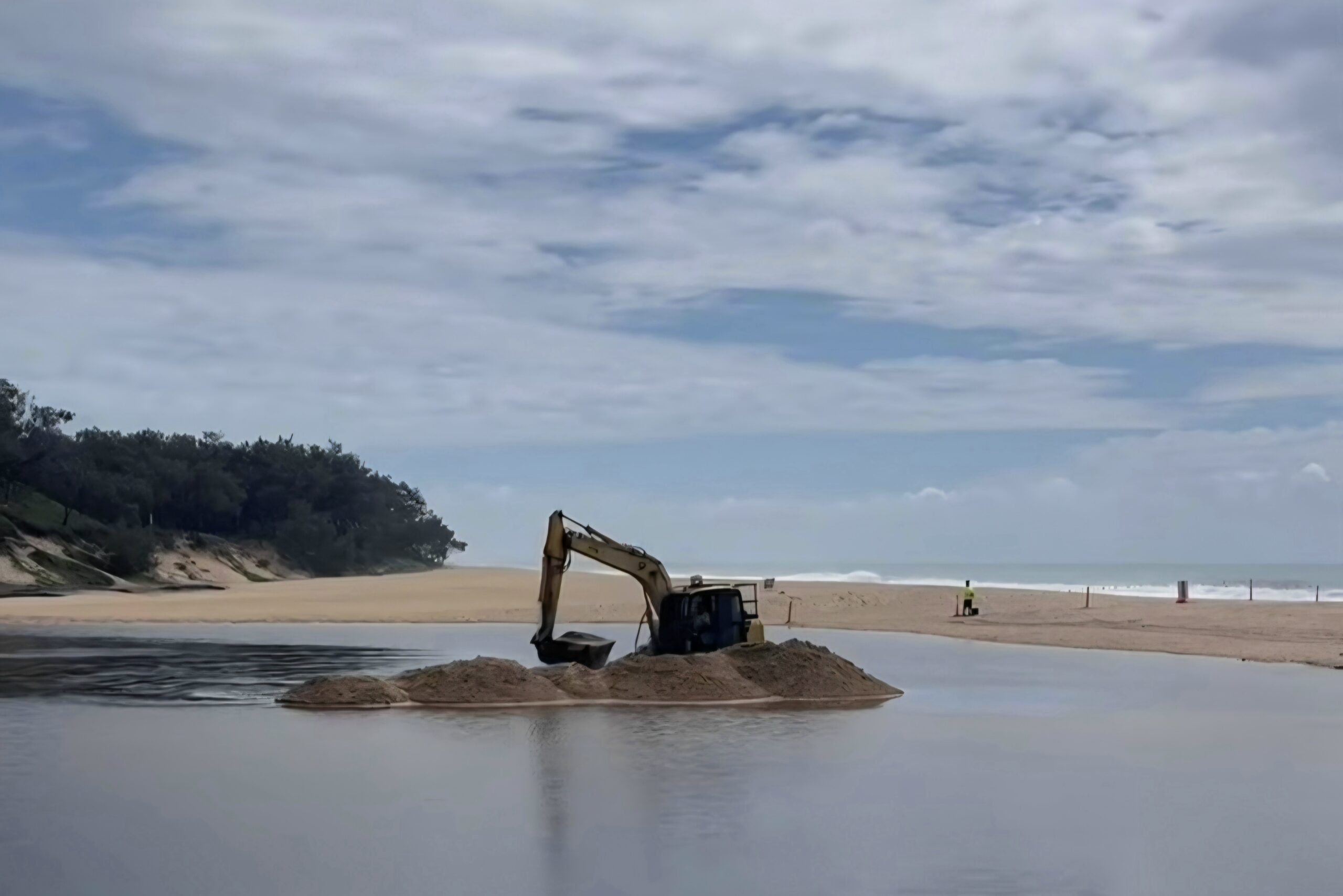
Councillor Tim Burns said crews had originally planned to open the lake on Friday, but the decision was brought forward after rainfall on Monday far exceeded forecasts.
“Monday the forecast was for 40mm for that catchment and we got 120mm,” he said.
“By Tuesday, we had machines down there, by Tuesday night we had an effective opening at the lake.”
Cr Burns said the lake, which connects to the Kawana and Birtinya residential areas, naturally opens and closes depending on ocean conditions, with council intervening only when public safety becomes a concern.
“In the instance of the lake, often what that means is the lake level gets to certain heights and starts to impact on pathways around Lake Kawana,” Cr Burns said.
He said some public pathways had been inundated with water, but no private homes or properties had been affected.
Cr Burns also explained why council could not simply open the lake ahead of forecast heavy rainfall, saying it was a fine balancing act to get the conditions right.
“We try not to open the lake when the water level is too low, as it’s not effective… it doesn’t stay open more often than not,” he said.
Like stories that inform, connect and celebrate the Sunshine Coast? So do we. Join an independent local news revolution by subscribing to our FREE daily news feed at the bottom of this article.
With the entrance now open, water from the catchment can flow into the ocean, relieving pressure on the connected lake system.
Cr Burns said the lake could remain open for months, depending on swell direction, tides and other ocean conditions.
For updated road closures, power outages and emergency warnings, visit the Sunshine Coast Disaster Hub.