

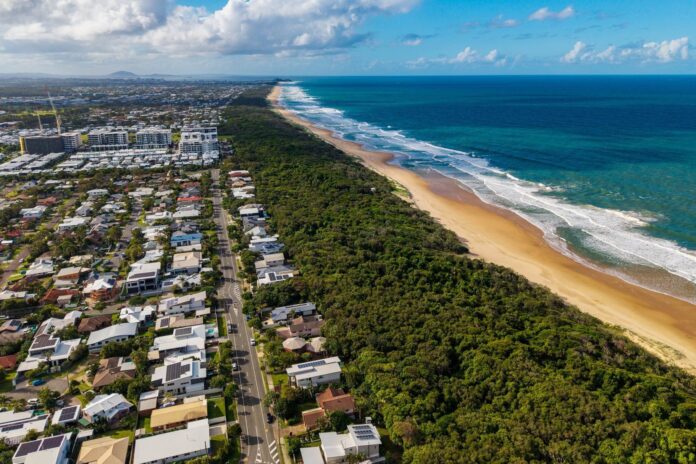
The Sunshine Coast’s property market has started to cool, with home values falling from peaks reached earlier this year after an extraordinary period of growth.
REA Group data shows the region’s home values fell 1.3 per cent, to $1.213 million, since a high in April, and prices could continue to dive in coming months.
Realestate.com.au senior economic analyst Megan Lieu said there has been a noticeable shift.
“The Sunshine Coast saw immense growth over the past five years, which was well above the national level (49 per cent compared to 28 per cent) and well above what was typically seen across the state,” she said.
“This may be contributing to the recent price decline as housing affordability continues to be a challenge.
“For the remainder of the year, we expect prices to fall further, especially if another interest rate hike is to take place.
“(But) shortages in new housing construction, compared to population growth, are quite pronounced in Queensland. This may offset some downward pressure.”
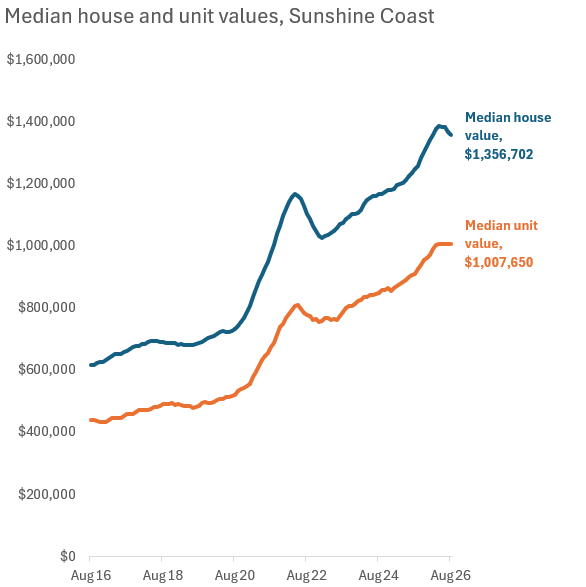
The latest REA Group data to August revealed that houses on the Sunshine Coast had a median value of $1.34m and units were $973,000.
Cotality research director Tim Lawless also detailed why home values had changed.
“Initially, the slowdown was more about worsening affordability factors that were blocking a progressively larger portion of prospective buyers from participating in the market,” he said.
“But we have also seen a slowdown in population growth impacting on demand, as well as macro factors like high interest rates, extremely low levels of consumer sentiment and further dampening pressure from the federal budget.”
The latest figures from Cotality, release on Monday, had the median dwelling value on the Sunshine Coast at $1.265m, with houses at $1.35m and units at $1m.
Mr Lawless also expected the decline was set to continue.
“The Sunshine Coast market is likely to navigate a downturn, like most markets around the country. It seems this downturn is in its very early phases at the moment, and likely to persist through the rest of the year at least.”
Ray White figures also revealed the rollercoaster ride the local property market has had in recent years.
Its median house price in December 2019 (before the COVID pandemic) was $630,000, before it soared to $1.03 million in April 2022 (during the pandemic). There was then a “post-boom correction” of $957,000 in December 2022. A second boom saw the median house price reach $1.31 million in February, before falling to $1.23 million by August.
Ray White economist Atom Go Tian said the current slowdown “was triggered by multiple factors coming together at the same time to affect buyer sentiment”.
“The first factor is that the 2025 interest rate cuts were reversed at the start of this year after inflation exceeded expectations.
“Then the Strait of Hormuz closed in March, causing significant supply shocks that lifted inflation even higher. Buyer sentiment was already very weak by this point.
“Then, in May, changes to negative gearing and capital gains tax were first announced.
“In the last two months, we’ve seen more expensive areas like the Sunshine Coast affected the most due to their higher price points and greater investor concentration.”
Want more free local news? Follow Sunshine Coast News on Facebook, LinkedIn and Instagram, and sign up for our FREE daily news email.
He said local real estate could go through some changes in coming months.
“The market is currently in the first of three phases.”
“Uncertainty about interest rates and the impact of the Budget is keeping buyers on the sidelines. This is a market with very little activity rather than one being driven by widespread distressed selling.
“The second phase will begin when another interest rate increase becomes very unlikely. The market does not need an immediate rate cut to improve. Greater certainty around the peak should be enough to bring some buyers back.
“The third phase will begin when the RBA starts cutting rates, although a recovery is likely to have already begun in at least some markets by then.
“Replacement costs provide a further constraint. The cost of building a new house is now 51 per cent higher than at the end of 2019 and rose by a further 5.9 per cent over the past year.
“Existing home prices can fall while the cost of building continues to rise, but the gap cannot keep widening indefinitely.
“Once established housing becomes materially cheaper than delivering new supply, projects stop stacking up and buyers are redirected towards existing homes.”



