
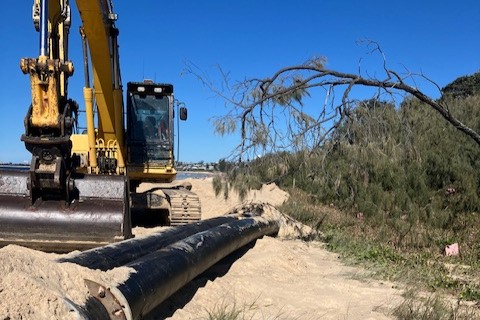
A community coastal advocacy group has raised concerns that sand pumping at Maroochydore Beach is attracting bull sharks closer to shore, a claim Sunshine Coast Council says is unsupported by evidence.
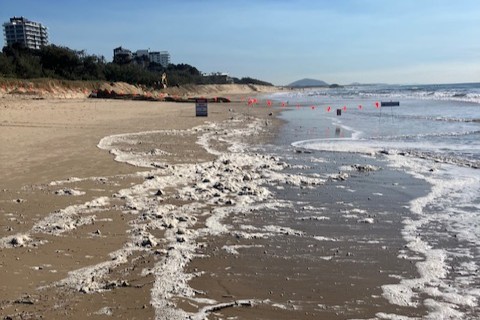
Beach Matters’ committee member Trent Brumby said murky water has been created by the current beach renourishment program and drawing sharks into the area, potentially increasing risks for surfers and swimmers.
Council, however, says it has received no reports linking this year’s works to an increase in shark sightings and maintains the program is essential to protect the coastline.
Mr Brumby believes the sediment plume created during the pumping process disturbs marine life that can attract bull sharks.
“The sand pumping water … stirs up the sediment, stirs up a lot of the nutrients and … organic material in the sand and the seabed could be small fish, worms, crustaceans, all sort of things that the bull sharks would consider a food source,” he said.
“The bull sharks are going to be chasing those nutrients in that cloudy plume area that the sand pumping pipes are creating.”
A Sunshine Coast Council spokesperson said there was no evidence to support Beach Matters’ claims.
“Council is aware of claims that sand pumping may attract sharks; however, no evidence or substantiated reports have been provided to demonstrate a link between the current sand nourishment program and increased shark activity,” the spokesperson said.
The spokesperson said council’s lifeguard service had not reported an increase in shark sightings during this year’s works and that the project had not prompted any specific assessment into shark behaviour.
Council said the renourishment program, undertaken about every two years, transfers naturally accumulated sand from the Maroochy River mouth back onto Maroochydore Beach to improve beach amenity and help protect community assets.
“Without this ongoing nourishment program, harder coastal protection measures, such as a seawall, may ultimately be required,” the spokesperson said.
Mr Brumby said the possibility of increased shark activity was only one of several concerns the group had with the renourishment program.
“I think it’s obviously just the temporary thing while they’re pumping sand. It’s not going to lead to a long-term bull shark increase in activity once the sand’s been pumped,” he said.
He said Beach Matters also believed the works were disrupting surf breaks, damaging dune vegetation and were unnecessary.
UniSC senior lecturer in animal ecology Dr Bonnie Holmes said data collected during dredging works in the Pumicestone Passage suggested a different response from bull sharks.
“The detection data from our receivers at this time from tagged sharks indicates that the sub-adult and juvenile bull shark detection actually decreased when the works were underway, and they shifted approximately 200-500m further down the passage,” Dr Holmes said.
“Presumably, the noise of the operations caused the displacement here. So our results indicate the opposite, at least for these estuarine bull sharks.”
Do you have an opinion to share? Submit a Letter to the Editor at Sunshine Coast News via news@sunshinecoastnews.com.au. You must include your name and suburb.
Dr Holmes said it was too early to say whether adult sharks behaved the same way in coastal waters.
“I can’t make an informed comment about whether this same behaviour is occurring on the coastal side with adult sharks at this stage,” she said.
Earlier this month, Beach Matters held a rally opposing sand pumping and other coastal management projects.
Surf Life Saving Queensland was contacted for comment.