
Soaring property prices have pushed the Sunshine Coast into one of Australia’s tightest housing markets, with demand increasingly driven by local buyers as interstate migration slows.
Industry analysts describe the local market as having moved through a rapid maturation phase, where strong post-pandemic growth has permanently shifted price benchmarks and buyer expectations.
What was once considered a more affordable coastal alternative is now, in many segments, comparable with metropolitan markets – fundamentally changing who can buy and why.
While it’s widely assumed that interstate buyers are driving the surge in demand, the data tells a more nuanced story.
To better understand what’s really happening on the ground, Sunshine Coast News spoke with industry experts about who’s buying, how demand is evolving, and what’s shaping prices in 2026.
Who is buying?
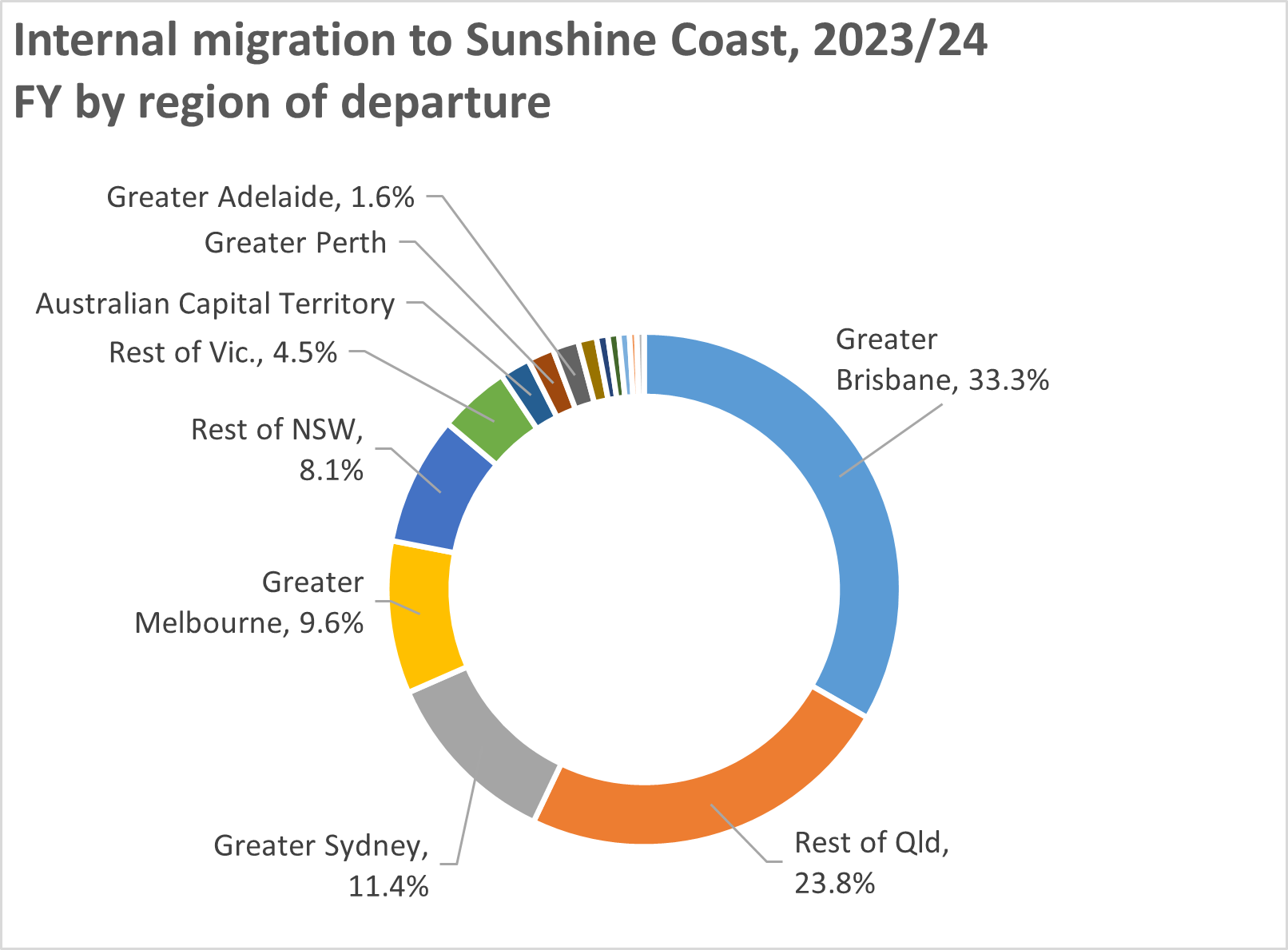
Recent analysis shows buyer demand has increasingly shifted away from long-distance interstate migration towards more localised demand within Southeast Queensland.
A spokesperson from property analytics firm Cotality said: “There is a clear trend towards less net interstate migration to Queensland.”
“Based on the most recent interstate migration data from the ABS (Australian Bureau of Statistics) Q3 2025, interstate migration to Queensland hasn’t been this low in a decade (since Q3 2015).”
Want more free local news? Follow Sunshine Coast News on Facebook, LinkedIn and Instagram, and sign up for our FREE daily news email.
Despite the slowdown, Queensland continues to attract the highest share of interstate migration nationally, although rising housing costs are now seen as a contributing factor.
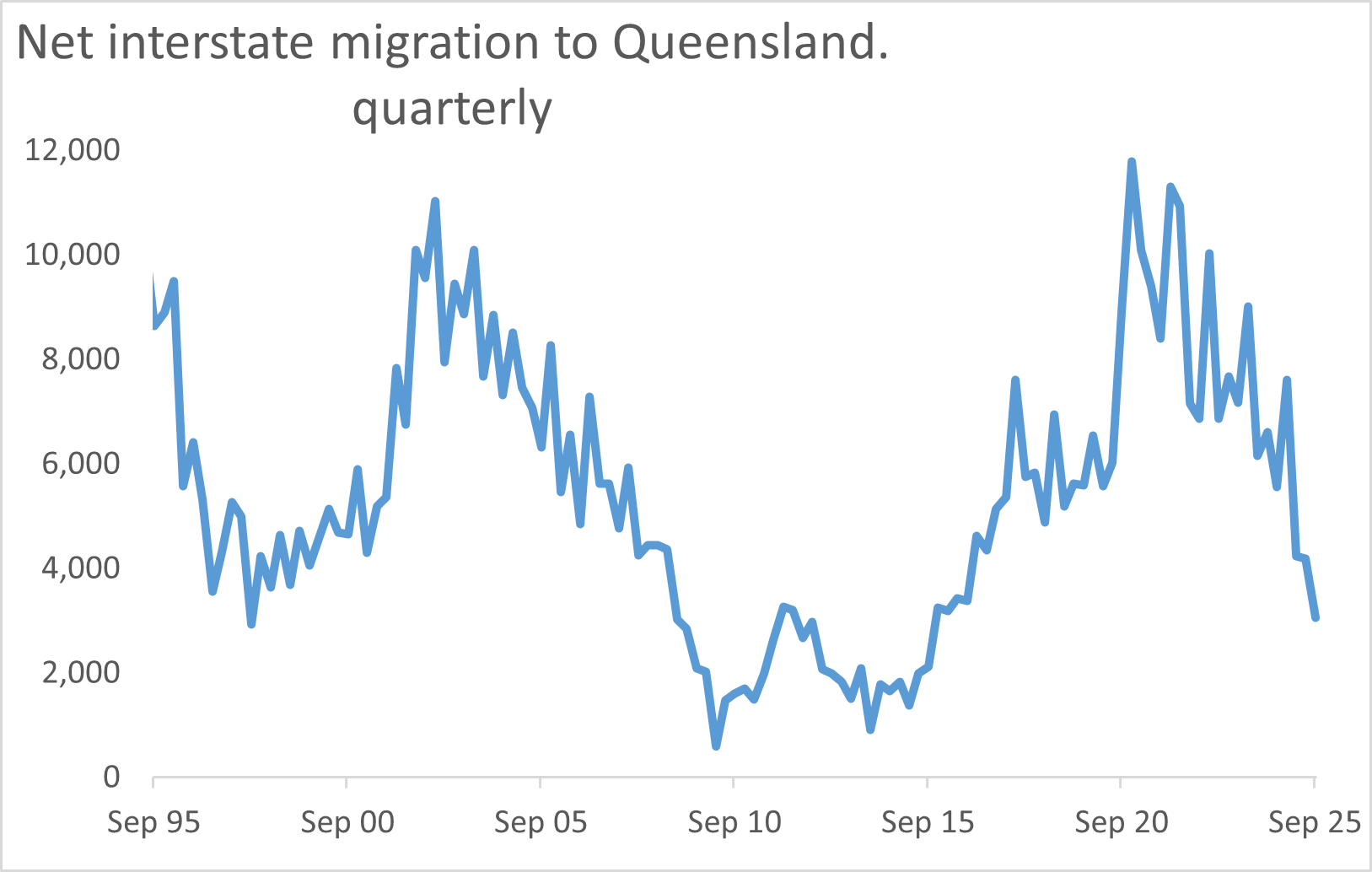
“While there are likely to many factors contributing to the slowdown in interstate migration to Queensland, high housing prices are likely to be playing a role,” the Cotality spokesperson said.
“Southeast Queensland no longer has as much of an affordability advantage relative to levels five years ago.”
Who is the typical Sunshine Coast buyer in 2026?
Nerida Conisbee, head of research at Ray White, said the buyer profile has shifted decisively toward established purchasers with greater financial capacity.
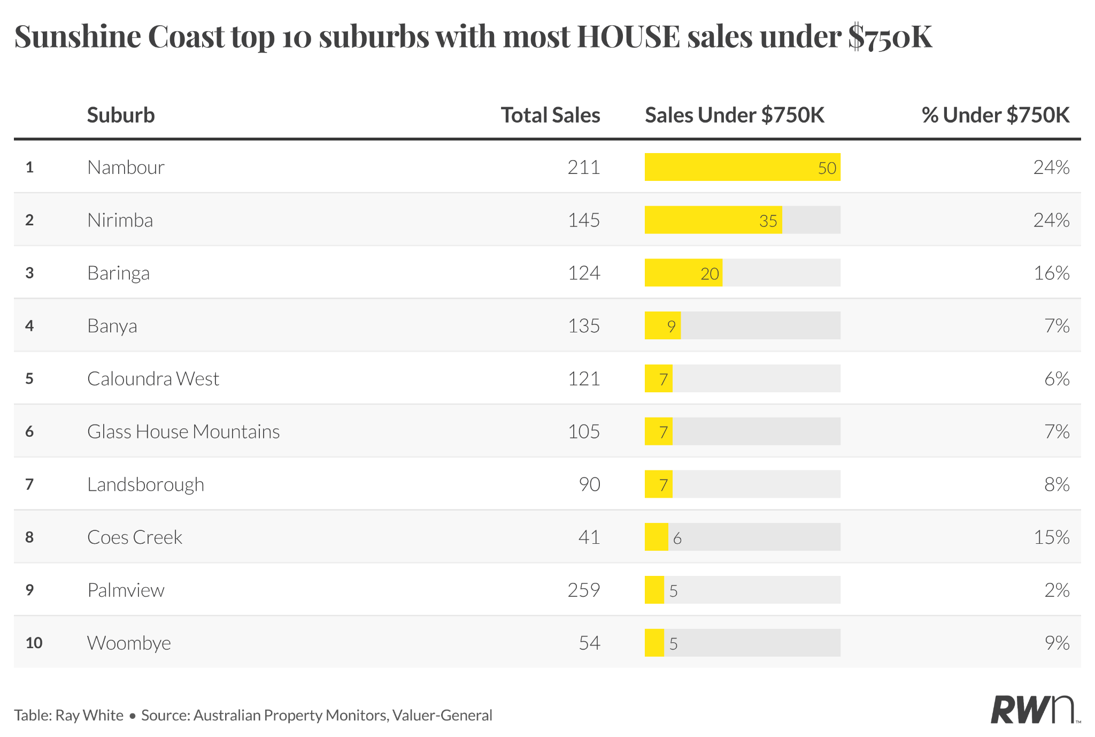
“The typical Sunshine Coast buyer in 2026 is more likely to be an upgrader, equity-rich owner-occupier or higher-end buyer than a first-home buyer,” she said.
“The reason is that even the Sunshine Coast’s so-called affordable tier is no longer especially affordable in absolute terms. Rolling annual house sales under $750,000 have fallen from a little over 5000 in 2016–17 to only around 250 by January 2026.”
Has the Sunshine Coast lost its affordability advantage?
The Cotality spokesperson said the region has seen a substantial re-rating in housing costs, with affordability pressures now firmly embedded in the market.
“The Sunshine Coast has become substantially more expensive over the past five years, with the 62.9 per cent rise in values equating to an increase of $475k,” they said.
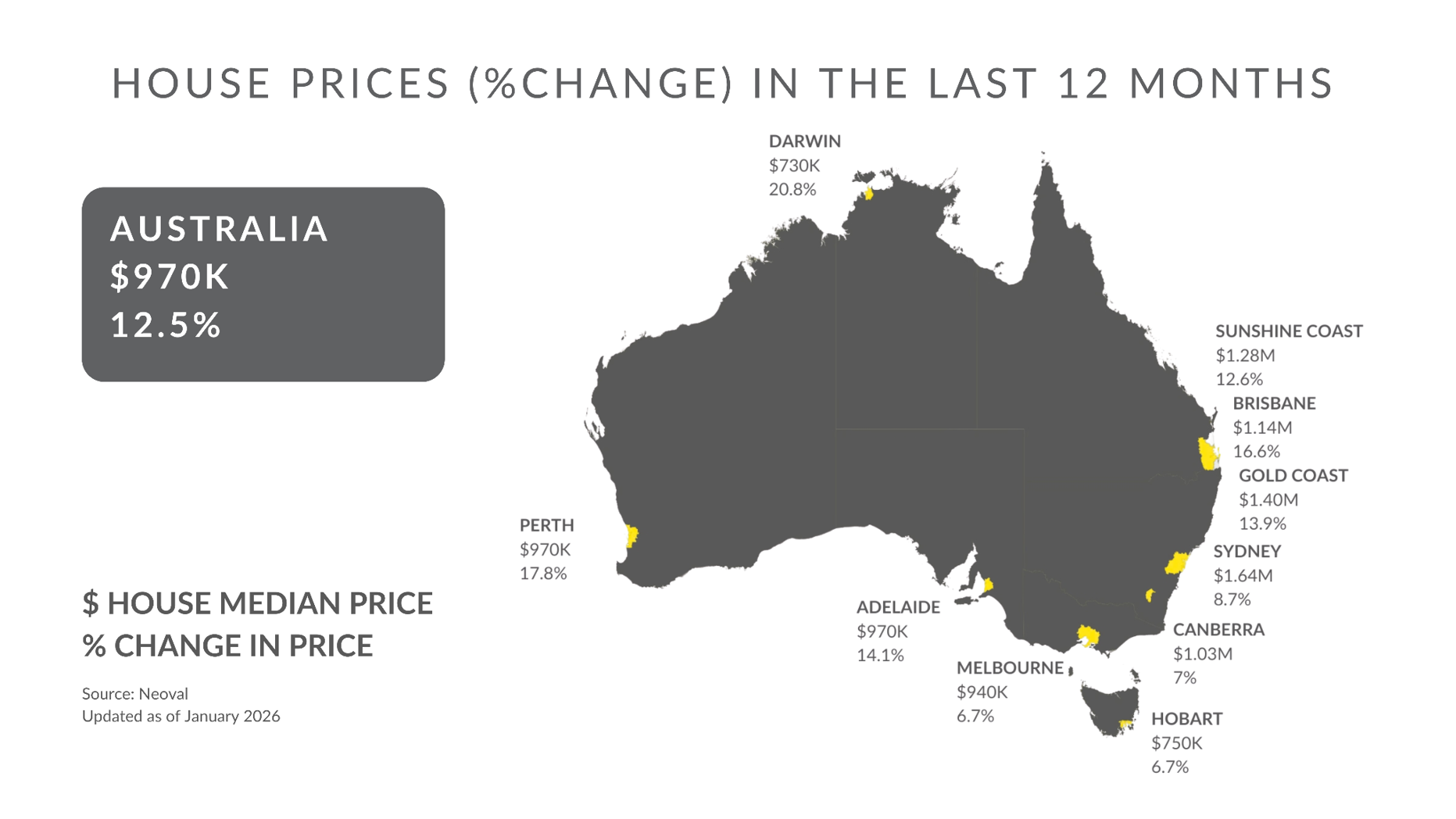
“While the median dwelling value was virtually on par with Melbourne’s five years ago, the median is now almost 50 per cent higher.
“The gap between Sydney and Sunshine Coast values has narrowed to the lowest level in at least 10 years.”
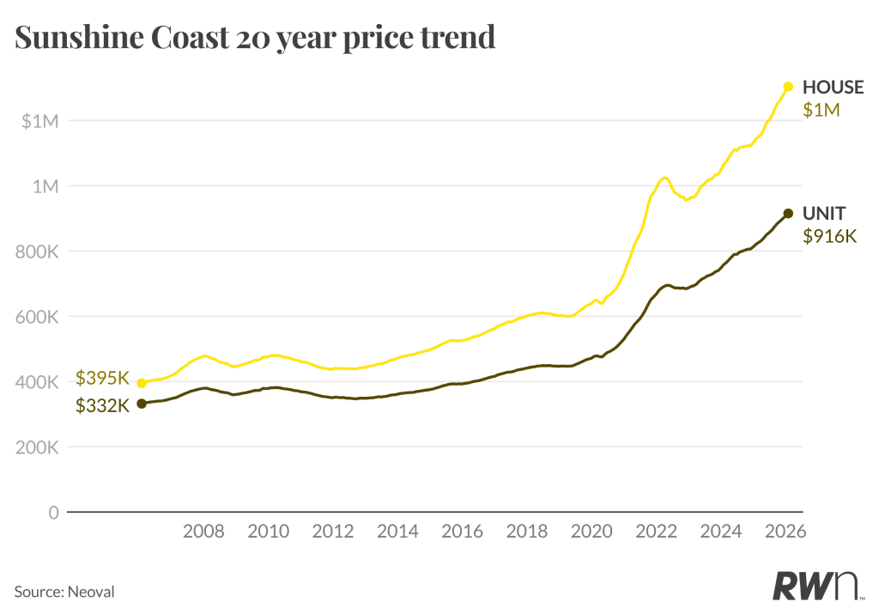
Despite affordability pressures, the spokesperson said demand had remained resilient so far.
“The substantial rise in housing costs and growing affordability challenges don’t seem to have had a remarkable slowing effect on the Sunshine Coast market so far, with the monthly rate of growth holding above 1 per cent and the annual pace of gains in double-digit territory at 12.6 per cent.”
But they expect conditions to ease.
“However, with interest rates rising and demand likely to slow, we do expect housing growth rates to ease through 2026.”
Supply constraints remain a critical factor.
REIQ zone chair for Sunshine Coast Mark McGill said that much like the rest of the state, the Sunshine Coast residential sales market was undersupplied – particularly in the high-demand $800,000- $1.2 million range, where market conditions remain in favour of sellers.
“The REIQ’s latest Residential Vacancy Rate Report (December 2025 quarter) shows the Sunshine Coast is sitting at 0.7 per cent vacant, compared to 1.0 per cent statewide, and far below what the REIQ considers to be a healthy benchmark between 2.6-3.5 per cent,” he said.
Outlook: a more expensive, more localised market
Taken together, the data suggests the Sunshine Coast is transitioning into a higher-priced, more locally driven housing market, with affordability constraints reshaping buyer access, but not yet significantly dampening demand.
With interstate migration cooling and price gaps between capitals narrowing, analysts suggest future growth may be more dependent on local income growth, infrastructure delivery and interest rate settings than on large-scale migration waves seen during the pandemic.