
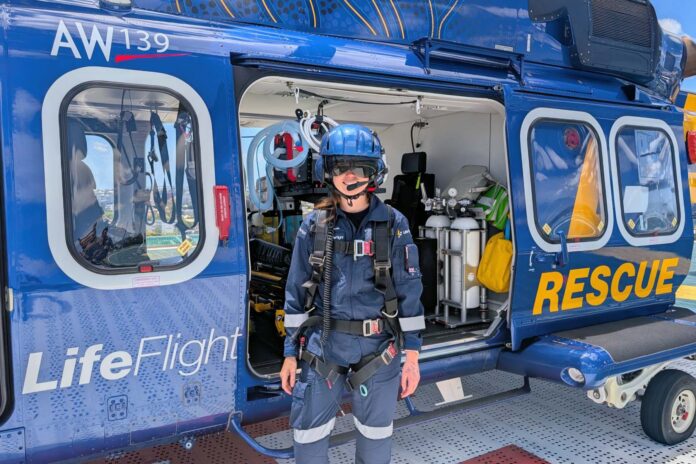
Four new critical care doctors are about to take up roles with LifeFlight at its Sunshine Coast base.
Dr Brooke Pollock, Dr Conall Gormley, Dr Inge Van Dijk and Dr Kate Langtree are among the 33 doctors about to take flight with the rescue helicopter service across the state.
For Dr Pollock, she first knew she wanted to work for LifeFlight when she was only 15.
She was working in an administration position at the Dalby Hospital Emergency Department when the LifeFlight crew came to airlift a critically unwell patient.
“When they walked in, I was just in awe,” she said.
“I remember thinking, ‘Wow, I want to do that’, and that’s why I did medicine and I haven’t looked back since.”
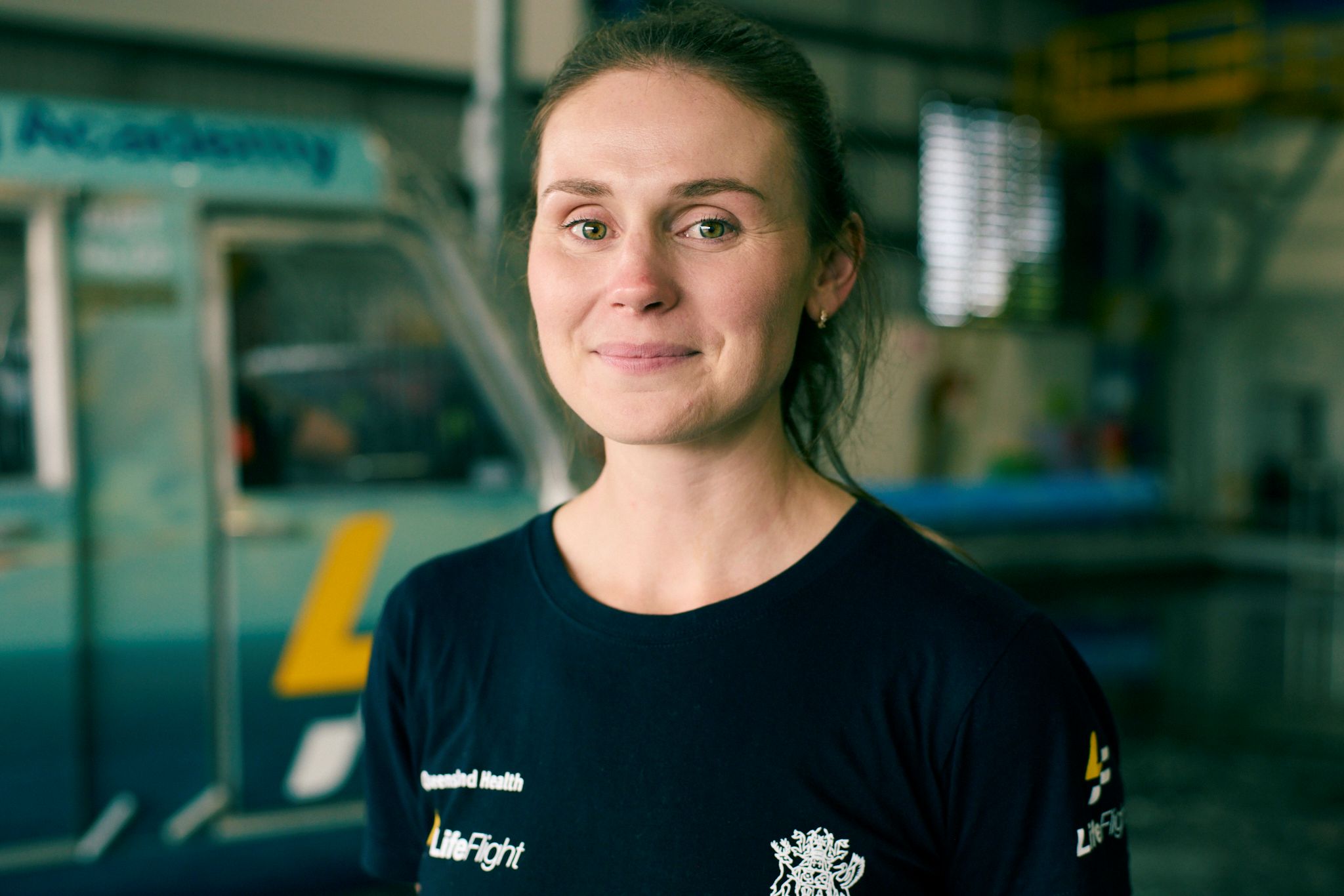
Dr Pollock said her rural background meant she was familiar with the aeromedical organisation’s impact on her community.
“One particularly notable example is of a father of a very well-respected farming family in my community,” she said.
“He had a massive heart attack on his property. LifeFlight flew in, landed on the farm and performed lifesaving interventions before flying him to the critical cardiac services that he needed.
“LifeFlight makes us feel safe. They make us feel secure, and they have reminded us that help is never far away.”
Like stories about Sunshine Coast people doing great things? Help us deliver more by registering for our FREE daily news feed. All it requires is your email at the bottom of this article.
Dr Pollock had a week of intensive aeromedical training at the LifeFlight Training Academy at Brisbane Airport in preparation for her new role.
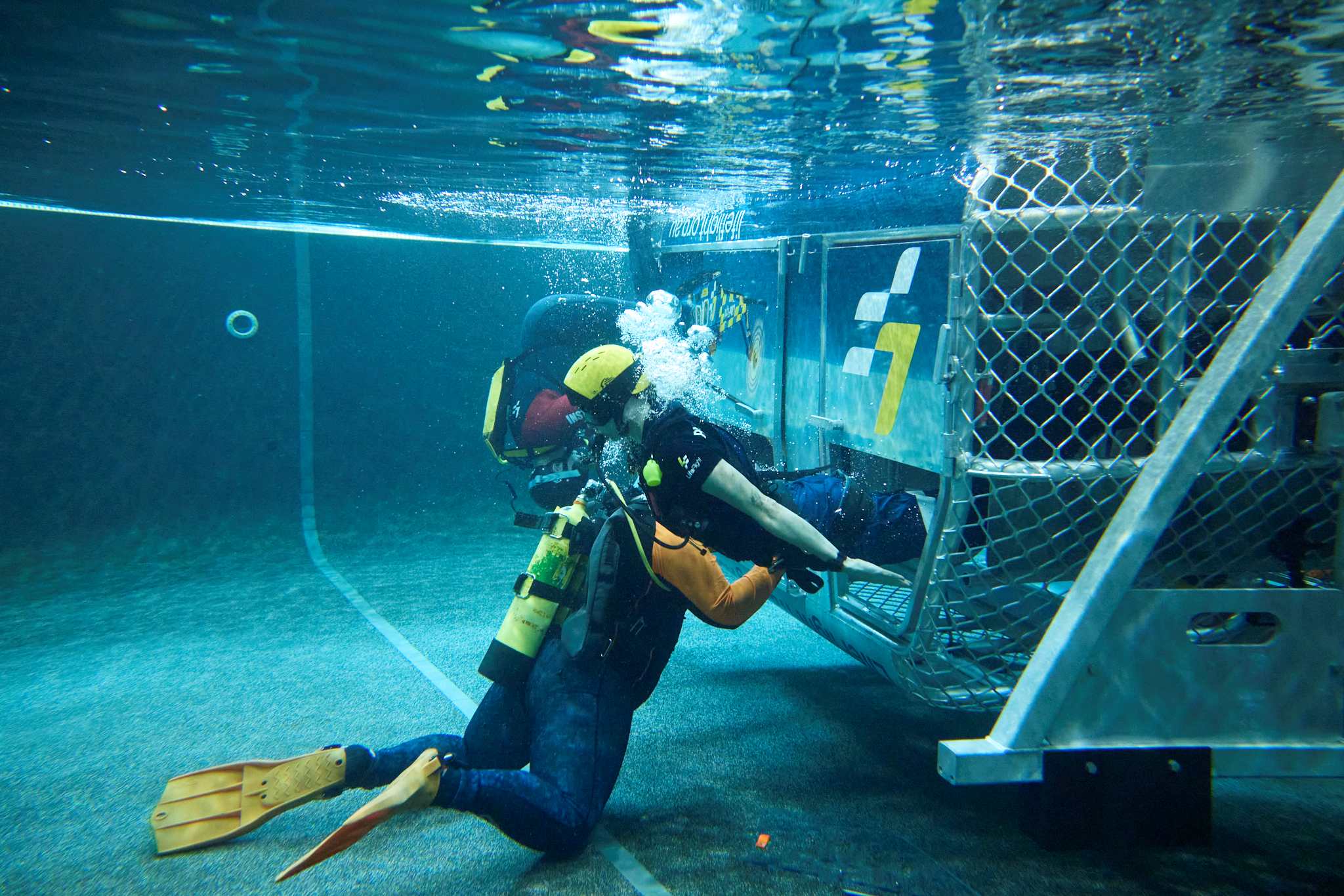
From Helicopter Underwater Escape Training (HUET) and sea survival to rescue winching and clinical scenarios, the program put the new doctors through their paces to get them mission ready from day one.
During HUET, the retrieval registrars were taken through multiple scenarios to simulate a helicopter crash into water and how to safely exit the aircraft.
LifeFlight HUET manager Mick Dowling said the specialised training provided the necessary skills to aid the doctors while working on board a helicopter.
“Our mission is to have the doctors skilled with the confidence to be able to deal with any aviation situation that they may be faced with,” he said.
“The common response we get from them after the completion is that it was challenging and uncomfortable, but overall, an amazing experience.
“It’s highly unlikely the aircraft will be required to be ditched into the water, however all crew are trained should they face that situation.”
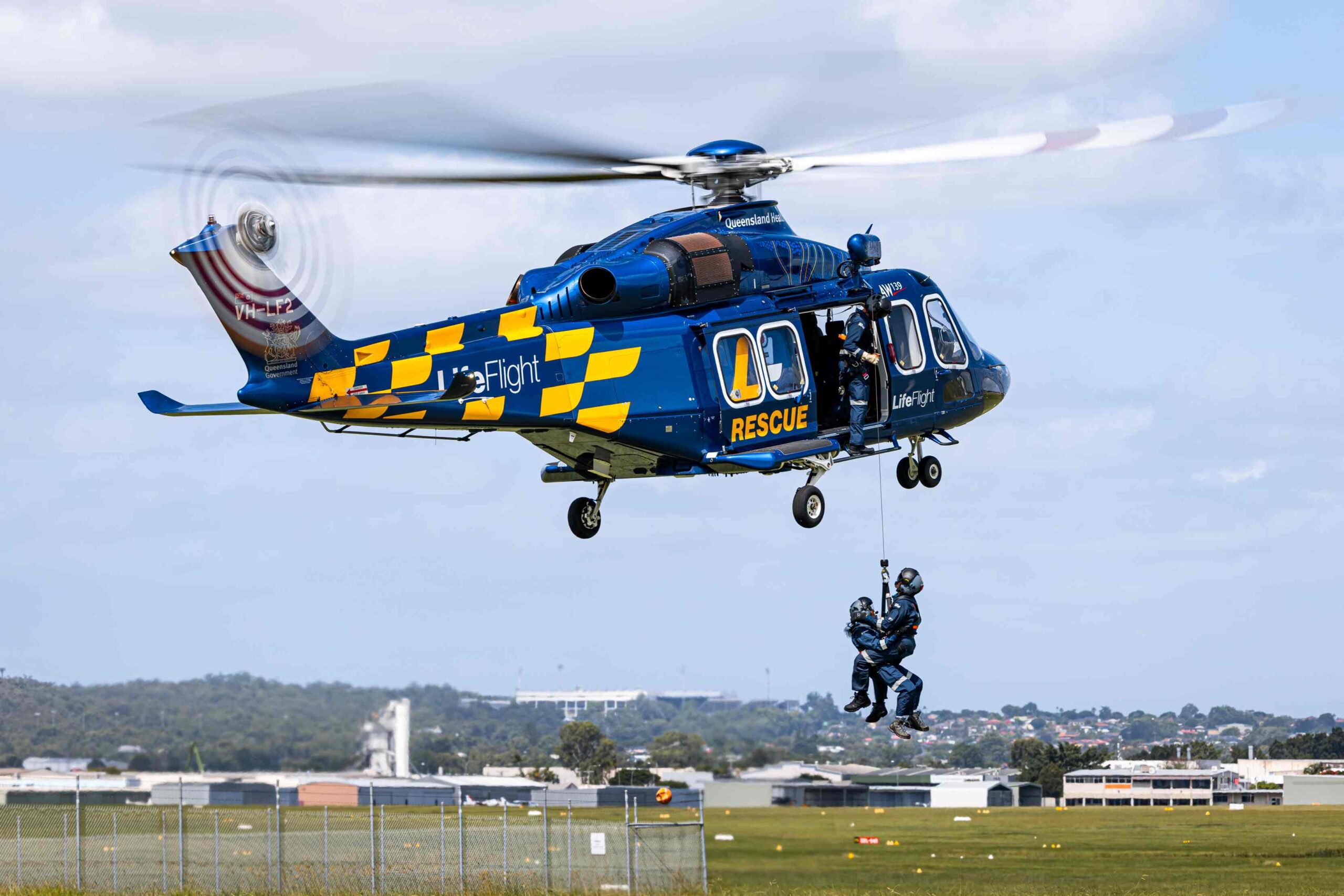
After being tumbled upside down through the water and learning how to survive out on the open water, the doctors were taken through winching procedures.
LifeFlight deputy chief aircrew officer Todd Seymour said the winch training prepared them for the unpredictability of the role.
“The doctors learn multiple exercises. They learn how to be winched out of the aircraft by themselves, how to be winched out of the aircraft with a rescue crewman or paramedic and learn how to accompany a stretcher into the aircraft,” he said.
“They’re going to remote areas across Queensland and they could be in dense bushland or out to sea off a cruise ship, so it’s important they’re delivered the training they need to perform these roles to a high and safe standard.
“No two days are the same for us at LifeFlight.”
The doctors also had their clinical skills pushed to the limit at the Queensland Combined Emergency Services Academy, with realistic simulated scenarios such as a multi-vehicle collision.
The new recruits were also taught how to extract a patient from a road accident by Queensland Fire Department personnel.
LifeFlight employs more than 180 medical professionals, including doctors, nurses and paramedics, making it Australia’s largest employer of aeromedical doctors.
LifeFlight came to the aid of 8838 Queenslanders in 2025 – 4.2 per cent higher than the previous year. The Sunshine Coast crew helped 672 people in that time.
The majority of LifeFlight critical care doctors’ work is performed on behalf of Queensland Health, tasked by Retrieval Services Queensland, within Queensland Ambulance Service.