
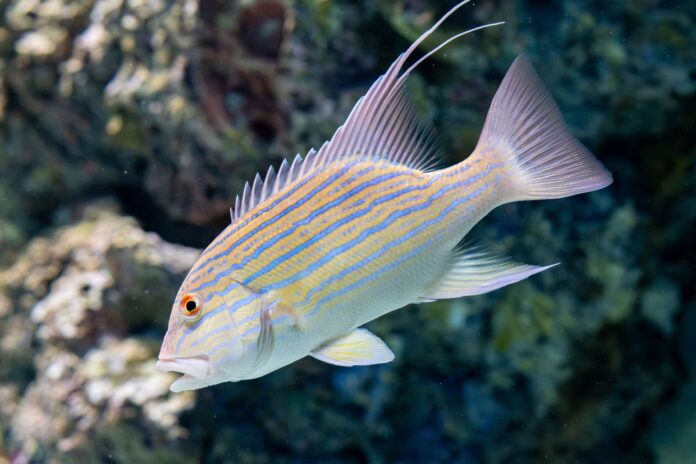
Local fishers are being urged to be on alert after a toxic fish was caught off the Sunshine Coast, sparking a warning about the risks of ciguatera poisoning.
Mike Cartos caught the chinaman fish, which is also known as the thread-finned sea perch and has the scientific name Symphorus nematophorus, off Caloundra on September 13.
The fish can contain the ciguatera toxin, which may cause a form of food poisoning if consumed. Symptoms can last from days to months and range from mild stomach upset to more severe neurological symptoms such as itching, tingling, sensory disturbances, dizziness, heart issues, muscle pain and even death.
The species is typically found in the warmer waters of northern Australia but it was the first time Mr Cartos, who is part of a Caloundra jet ski fishing club, has seen one.
“I caught the fish about one nautical mile offshore from Kings Beach,” he said.
“I haven’t caught or seen any around the Sunshine Coast before. I have heard fishermen talk of them but I haven’t seen one.
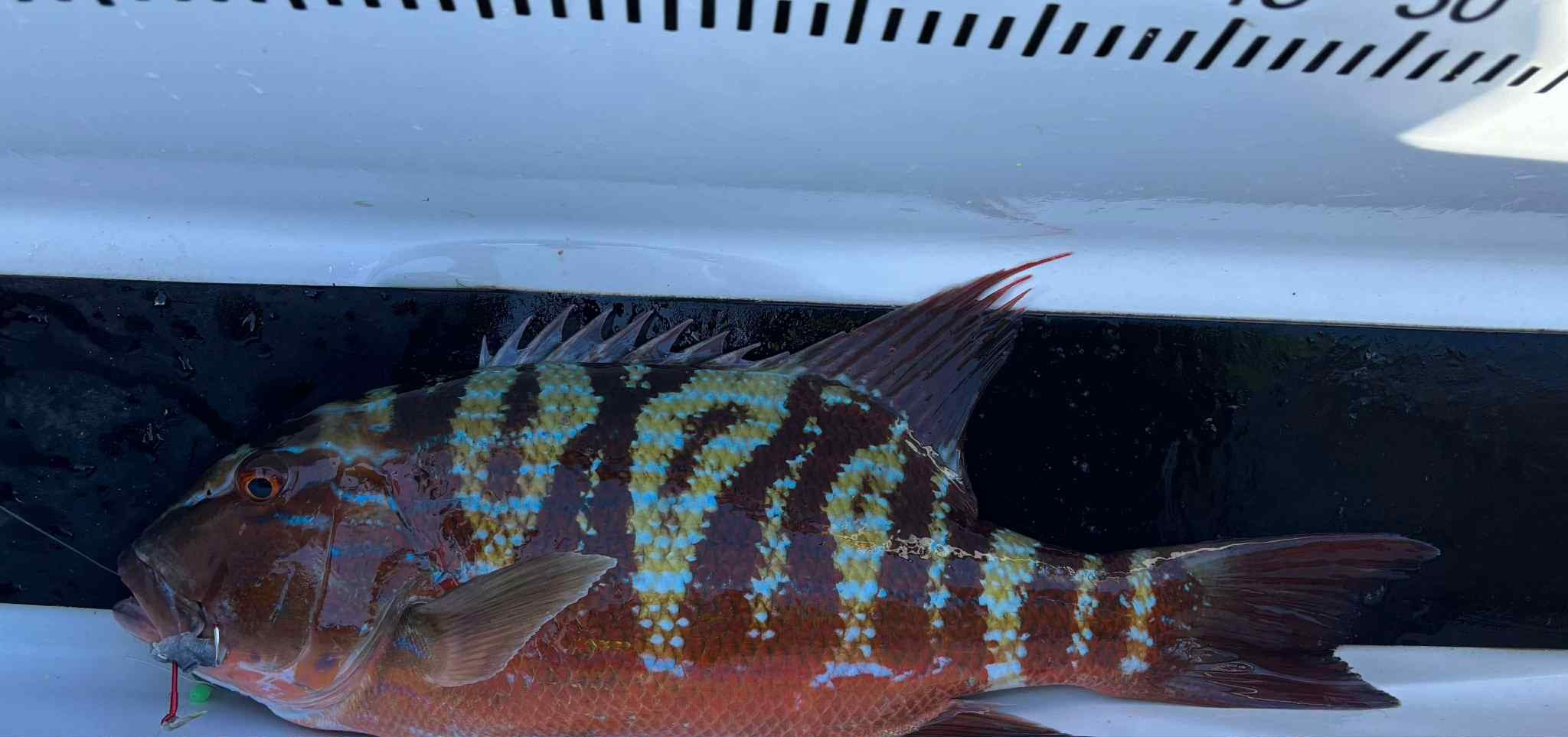
“I didn’t recognise the fish. It looks slightly similar to a coral trout but had something different about it. I took a photo of it and looked it up on the Qld Fishing 2.0 app. It gave me a 60 per cent rating of being a coral trout. I didn’t accept that due to my not very good photo.
“I got on to my Fishing Australia pro fisherman mate Rob Paxevanos, who identified it 100 per cent for me and told me it was a ‘no take’ fish so I released it back into the waters.”
A spokesperson for the Department of Primary Industries (DPI) said the fish are legally required to be released immediately.
“Chinaman fish are listed as a ‘no take’ species in Queensland, due to them being a known carrier of the ciguatera toxin, which can cause food poisoning in humans,” they said.
“Chinaman fish are a relatively common catch along Queensland’s east coast and are caught as far south as Moreton Bay. Current legislation requires the fish to be returned to the water immediately upon capture.”
Scroll down to SUBSCRIBE for our FREE news feed, direct to your inbox daily.
An image of Mr Cartos’ catch was shared on social media by the popular TV show Fishing Australia, which is hosted by Mr Paxevanos.
“A chinaman has been caught on the Sunshine Coast, a long way south of their usual range, where locals may not realise the danger,” the post said.
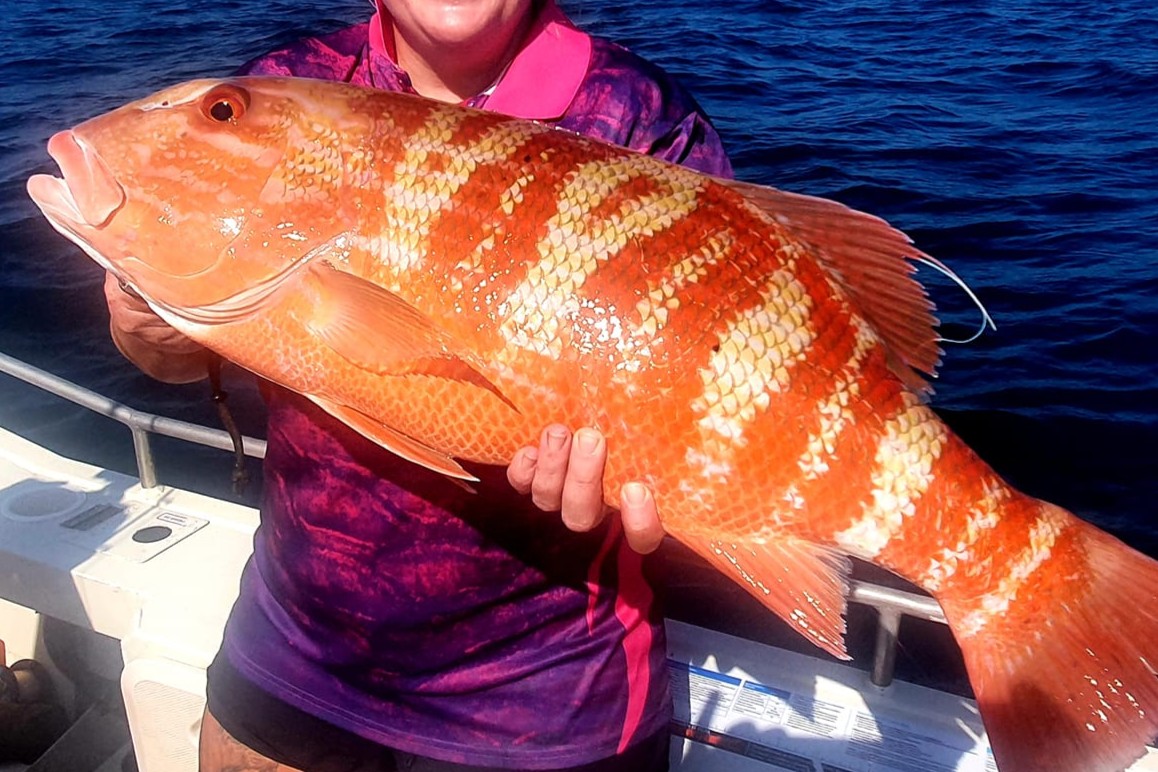
“They are loaded with ciguatera and will make you crook as a dog, and in some cases it has killed people. The toxins accumulate, making you more susceptible to future poisoning.
“My old rule – if in doubt, let it back out – always applies.”
The Queensland Health website says ciguatera poisoning is caused by eating finfish from warm ocean waters that carry the toxin.
“This poison is produced by a very tiny organism called a dinoflagellate, which attaches itself to algae growing in warm ocean water reef areas,” it says. “Small plant-eating fish eat this toxic algae and in turn are eaten by larger predatory fish, which are eaten by humans.
“There are no specific rules that can be followed to detect ciguatera-carrying fish.”
Any fish that feed in warm ocean waters are potential carriers, but chinaman, red bass and paddletail pose the highest risk. Coral trout, spanish mackerel, red emperor, wrasse, coral cod, trevally and yellowtail kingfish can also potentially carry it.
Mr Cartos said fishers should also be on alert for other potentially dangerous species.
“One should be aware of the fish called happy moments (Siganus fuscescens), which are found in Sunshine Coast waters,” he said.
“These fish fins can inflict horrendous pain on the fisher’s skin. It is given the name ‘happy moment’ due to the excruciating, hours-long pain caused by its venomous spines if one is punctured.”
For more information on identifying chinaman visit the government website or download the Qld Fishing 2.0 App.