

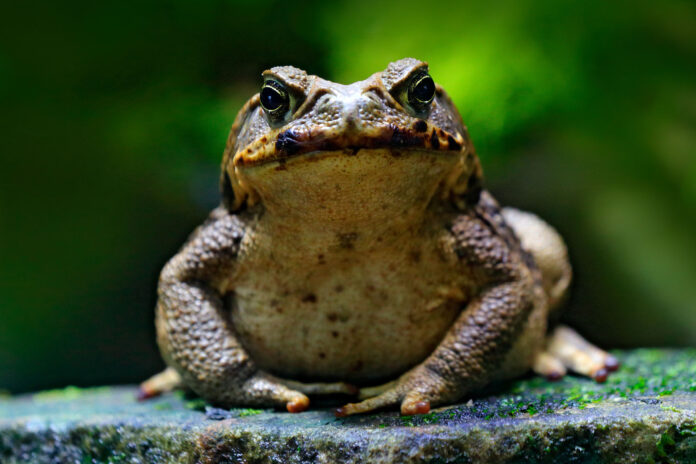
People around Queensland and beyond are gearing up for Australia’s biggest toad busting event.
The second cane toad busting competition, The Great Cane Toad Bust, will be held from January 13 to 21.
This event is co-ordinated by Watergum Community Inc and held in collaboration with community groups. It was first held last year.
Cane toads are an invasive pest in Australia that cause widespread impacts due to their toxicity, massive appetite and prolific breeding rate.
Every year, cane toads cause declines in wildlife population, poison domestic pets and even impact local agriculture by eating bees and dung beetles.
Nikki Tomsett, Watergum’s Invasive Species Project Officer, said it was important to remove these pests from affected areas.
“Some studies show that cane toad busting can remove up roughly a third of the local cane toad population,” she said.
“A single female cane toad can produce up to 70,000 tadpoles a year, so we recommend removing adult toads and tadpoles to have the greatest impact.
The Great Cane Toad Bust represents a difference, but consistency is key to seeing results long term.
Cane toads are most active during warm summer months.
People have been urged to get involved and get a toad busting kit together, with gloves, a torch and a bucket.
This is the first year that tadpole trapping tallies will be included in the Bust, so is an option for people at properties with dams, streams, or ponds: anywhere cane toads breed. This can remove hundreds of cane toads at a time before they have a chance to further develop and cause damage.
Participants have been encouraged to count their catch and submit their data.
Previous Great Cane Toad Busts have resulted in the removal of more than 50,000 cane toads in a week.
One toad buster said they had seen a lot more native frogs and species returning to their property.
“I noticed a huge drop in cane toad numbers since the event.”
“I loved being part of this. I feel that I have made an impact on reducing the local cane toad population.”
Miss Tomsett encouraged newcomers to get involved.
“Toad busting might seem unconventional, but it’s immensely rewarding,” she said.
Participants have been urged to brush up their cane toad identification skills before heading out, and to make sure they have a plan for euthanising their toads afterwards.
“It’s important to practice humane euthanasia with cane toads,” Ms Tomsett said.
“Remember, their presence here is a consequence of human intervention; they’re merely trying to survive, just like any other species.
Cane Toads can be humanely euthanised using the Cooling and Freezing Method.
See Great Cane Toad Bust for more.



