
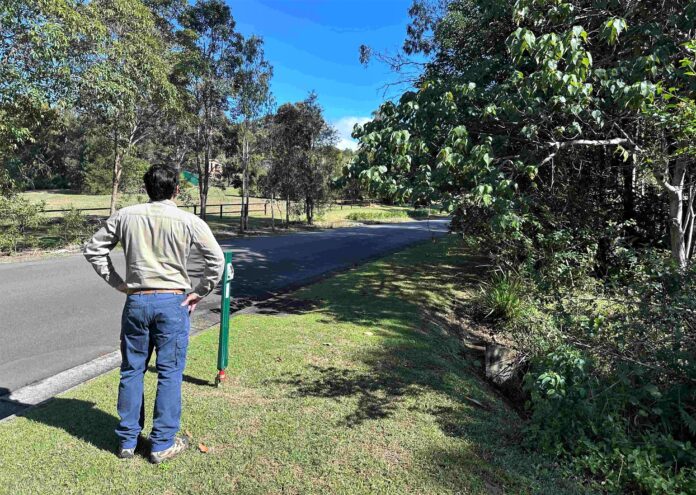
A special fence that emits light and sound technology is the latest measure taken to help reduce wildlife deaths and improve driver safety in the region.
The line of 100 discreet green posts combine on Ninderry Road, Verrierdale, to make a unique and low-impact wildlife deterrent called a virtual fauna fence.
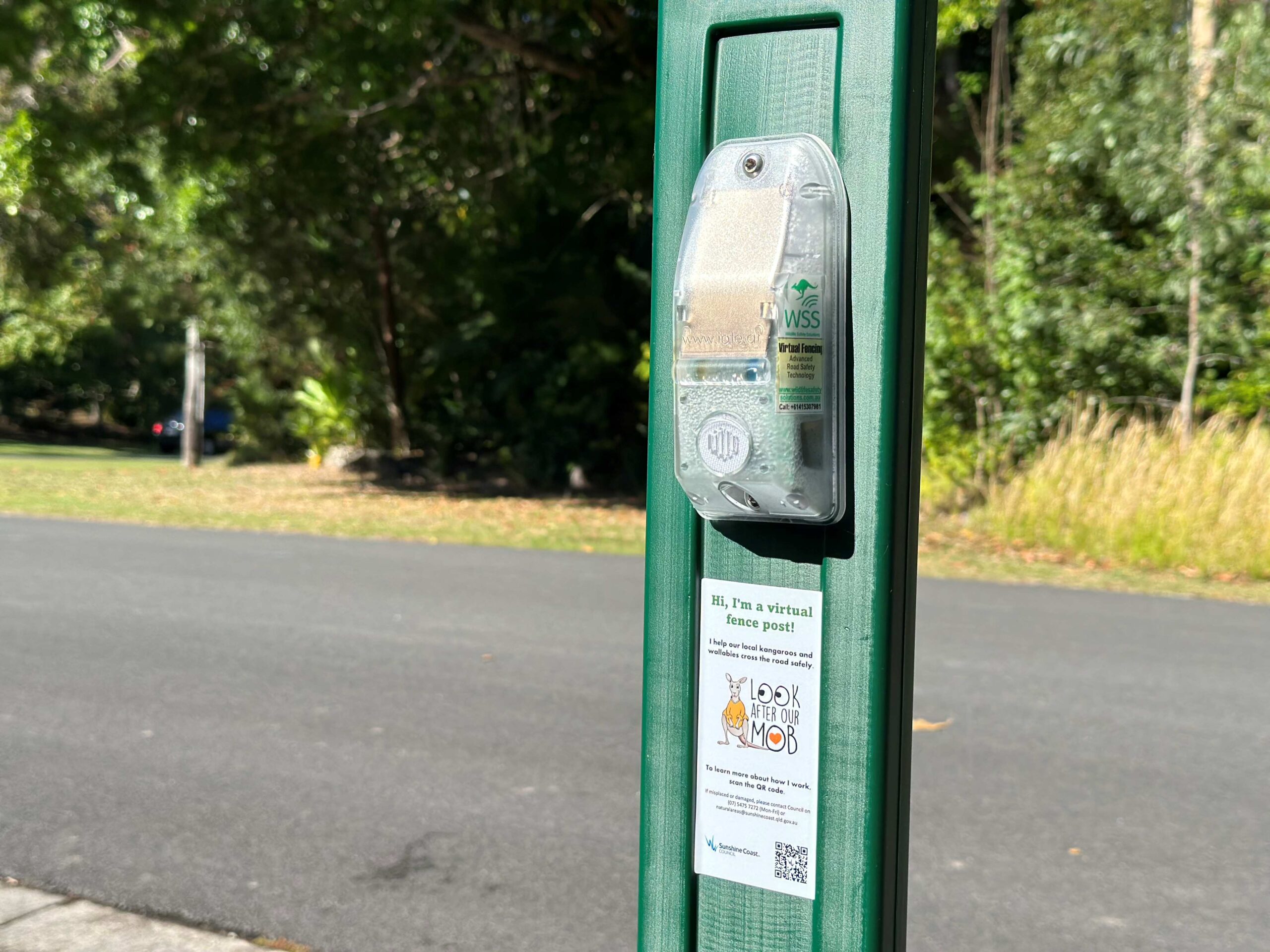
Each post is equipped with a special device that detects the light from oncoming headlights and emits a low sound to warn wildlife of approaching traffic.
The sound holds the animal’s attention long enough for them to pause before crossing the road with the aim to reduce the number of car and wildlife collisions.
Related story: Virtual fauna fencing part of plan to protect roos
Sunshine Coast Environment and Liveability Portfolio councillor Maria Suarez said Sunshine Coast Council aimed to protect macropods as much as it could.
“Like us, macropods are widespread and highly mobile – their home is now also our home, and our community is growing,’’ she said.
“It’s no surprise that this brings challenges to their survival however together, we can live in a wildlife friendly biosphere thanks to projects like this and the Sunshine Coast Macropod Conservation Plan.”
Kangaroos and wallabies generally don’t move around a lot during the day because they are sensitive to overheating and dehydration. This means most incidents happen during dawn and dusk when the animals are most active, which also coincides with times of poor visibility for drivers.
Related story: $5 million funding to stop koalas crossing roads
The fence is designed to work at these times and during the evening as it needs to be triggered from car headlights.
The virtual fence isn’t effective when the cars are travelling over 90km/h, so drivers need to stick to the speed limit.
SUBSCRIBE here now for our FREE news feed, direct to your inbox daily.
Division 10 councillor David Law said the new fence was a great outcome for the local kangaroos and wallabies and the safety of the community.
“Council is also calling on residents to take care on the roads and keep dogs away from wildlife,” he said.
“Many of the roadkill incidents that occur during the day are caused by domestic dogs chasing kangaroos and wallabies at a time when they are not usually on the move.”
Related story: Region’s worst road as hit-and-run deaths soar 154%
The fences have been tested and proven effective to stop wildlife crossing roads when traffic is passing – but it’s difficult to get data on the number of animals they do stop.
However, in other locations where fences have been installed across the Sunshine Coast there has been no reported roadkill during the time when the fence is intended to work.
The virtual fauna fencing also allows natural migration and movement to feeding and breeding grounds for native animals, maintaining the genetic flow across the region to ensure healthy populations.
The technology is being trialled at three other sites across the region: Sippy Downs Drive, Sippy Downs; Nojoor Road, Mudjimba; and Sugar Bag Road and Sunset Drive, Little Mountain.
Want more free local news? Follow Sunshine Coast News on Facebook, LinkedIn and Instagram.