
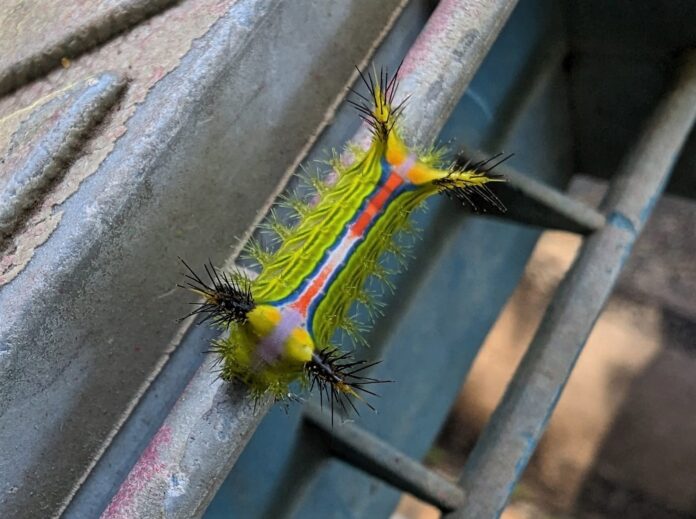
A caterpillar with a powerful sting is making itself known to Sunshine Coast residents.
While the cup moth is reasonably common in the region, residents who’ve been stung are warning others to not be fooled by the caterpillar’s striking exterior.
UQ Institute for Molecular Bioscience research fellow Dr Andrew Walker identified recent photos of the stinging culprits as cup moth larvae, most likely Anaxidia lozogramma.
Dr Walker’s research focuses on venom, silk, assassin bugs and caterpillars.
He said the cup moth’s bright colours were in fact the distinctive warning it displays when threatened.
“We have collected them from organic blueberry farms where they are a hazard to pickers who describe the pain as like being electrocuted,” he said.
“The natural host for this caterpillar is a bit mysterious. I have seen them and they’ve been reported to be seen feeding on lilly pilly and macadamia.
“Its binomial name means ‘bearer of gifts of wounds’, so in other words look but don’t touch.”
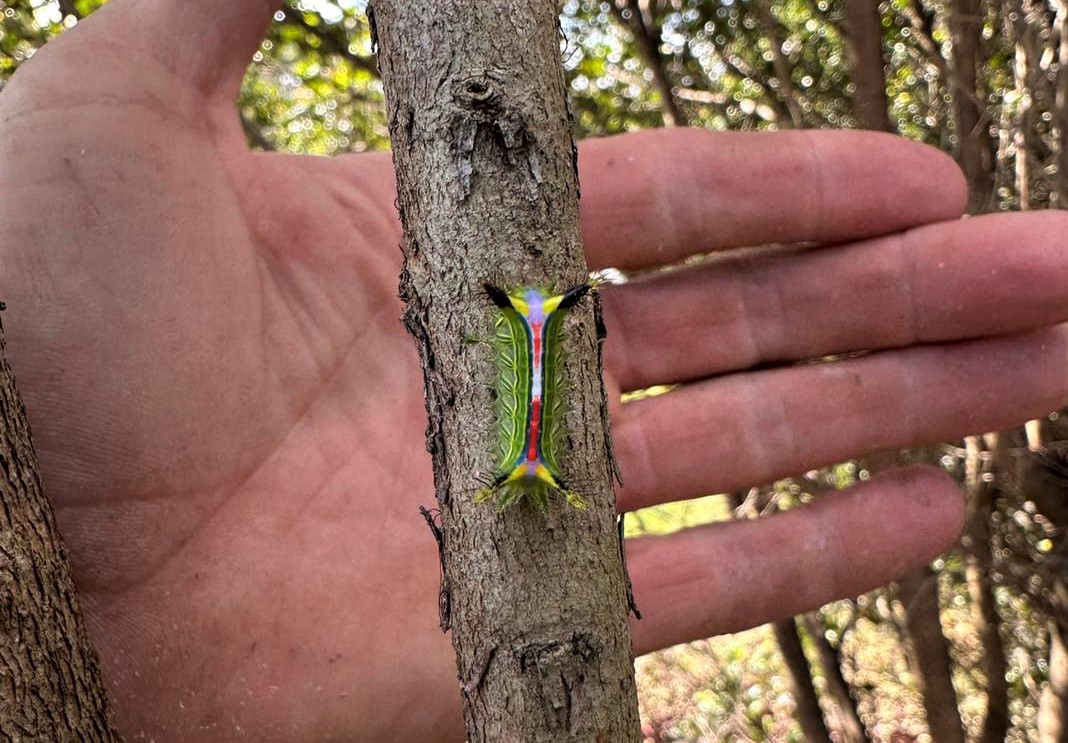
David Colledge recently took to Facebook to warn others about his encounter with a cup moth after being stung on a job at Burnside.
“Cutting back a few lilly pillys this morning and discovered a new caterpillar,” he posted.
“The bugga bit me.”
Mr Colledge said the cup moth’s sting on his elbow felt more like pain from a yellowjacket wasp than an electric shock.
“But I get bitten by lots of insects, bugs and wasps on a daily basis,” he said.
“It inflamed the same way, but a little itchier the next few days.
“I’ve been on the Coast for four years and it’s the first time I’ve seen the insect.”
Dallas Grant also recently posted on Facebook about the caterpillar.
“My mum sat on this today, a cup moth … said it hurt like all buggery, so keep an eye out where you sit,” he said.
Mr Grant said his mum, who lives at Kuluin, had seen a few larger cup moth larvae over the years.
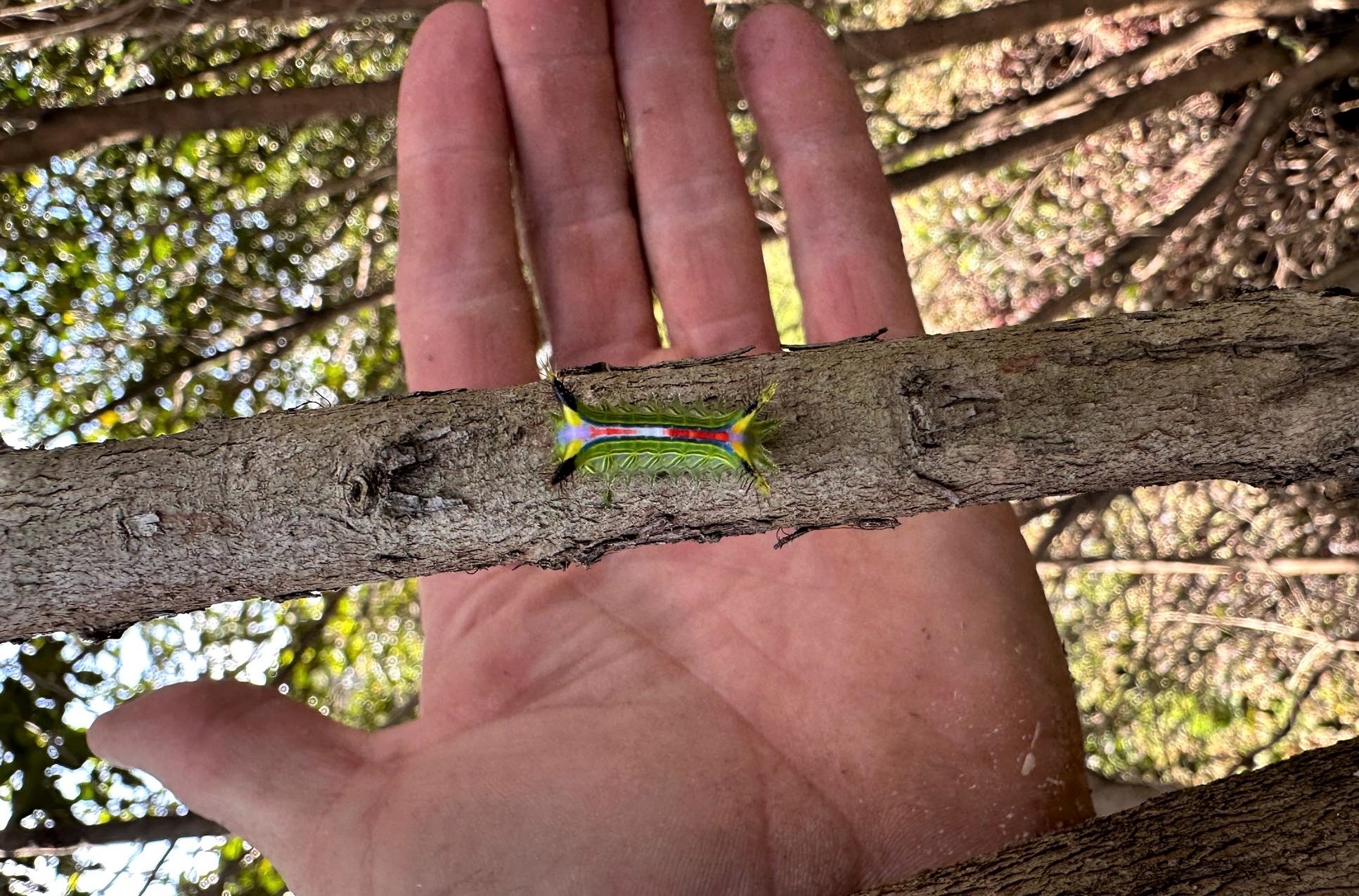
Researchers at UQ’s Institute for Molecular Bioscience are currently studying the venom of these caterpillars.
“Our research focuses on understanding how they work, how they evolved and if they contain molecules that could be used beneficially in biotechnology or the environment,” Dr Walker said.
“We showed that these Australian caterpillars produce a complex venom with hundreds of different components.
“Some of these cause pain when injected to stop the caterpillar being eaten, other components activate insect-signalling pathways (to who knows what end), yet still, others can inhibit the development of gut parasites that are rife in the Australian sheep flock.”
This research will also feature briefly in upcoming exhibition Insect Agency at the Queensland Museum.
“Currently, we have a lot of new research in the pipeline taking a deeper dive into the venoms of cup moth caterpillars (including the species Anaxidia lozogramma) how they work at a molecular level and if they contain toxins that could be used in medicine, biotechnology, or as bioinsecticides,” he said.
“I should point out, the potential applications of these venoms are very much pie in the sky possibilities. At the moment we are really just at early stages of trying to understand these venoms.”
Scroll down to SUBSCRIBE for our FREE news feed, direct to your inbox daily.