
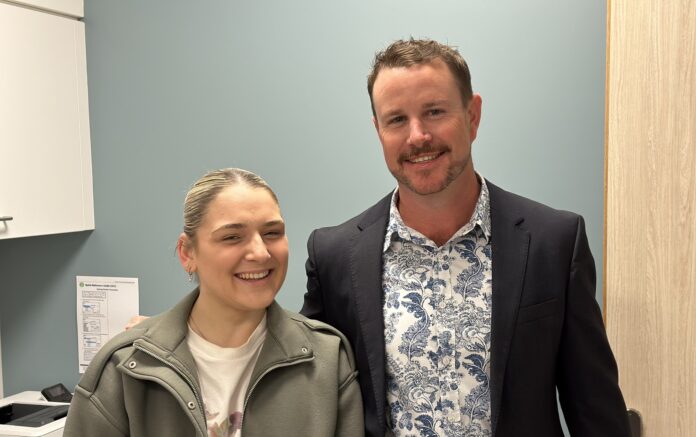
A teenager who was diagnosed with cancer has joined health officials to encourage Sunshine Coast residents to not ignore the symptoms of bowel cancer, no matter their age.According to Bowel Cancer Australia, bowel cancer is the deadliest cancer and the sixth leading cause of death overall for people aged 25 to 44.
Aleka Corston, 19, presented to the emergency department at Sunshine Coast University Hospital late last year with appendicitis and had to have her appendix removed.Her pathology then came back as a grade two neuroendocrine tumour.“I was on placement when I found out there was actually cancer in my appendix, so I had to cut my placement early and then I had the surgery for the bowel, or colon, to be removed,” she said.Doing this surgery allowed doctors to ensure Aleka’s margins were clear.
There are different types of pathology causing bowel cancer, but adenocarcinoma (that starts in the glands) is more common.
Aleka’s ongoing surveillance will be treated the same as if it was adenocarcinoma.Six months on, the paramedicine student said she was feeling good.“I don’t notice anything much now: a little bit of pain here and there but nothing compared to before,” she said.Ms Corston is grateful her cancer was picked up early and shared her story to encourage other young people to know the symptoms and seek medical advice.“It’s always safe to see a doctor. If it’s nothing then that’s the best news and if it does happen to be something then you’ve caught it early and you can deal with it early so it doesn’t progress to the next stage,” she said.
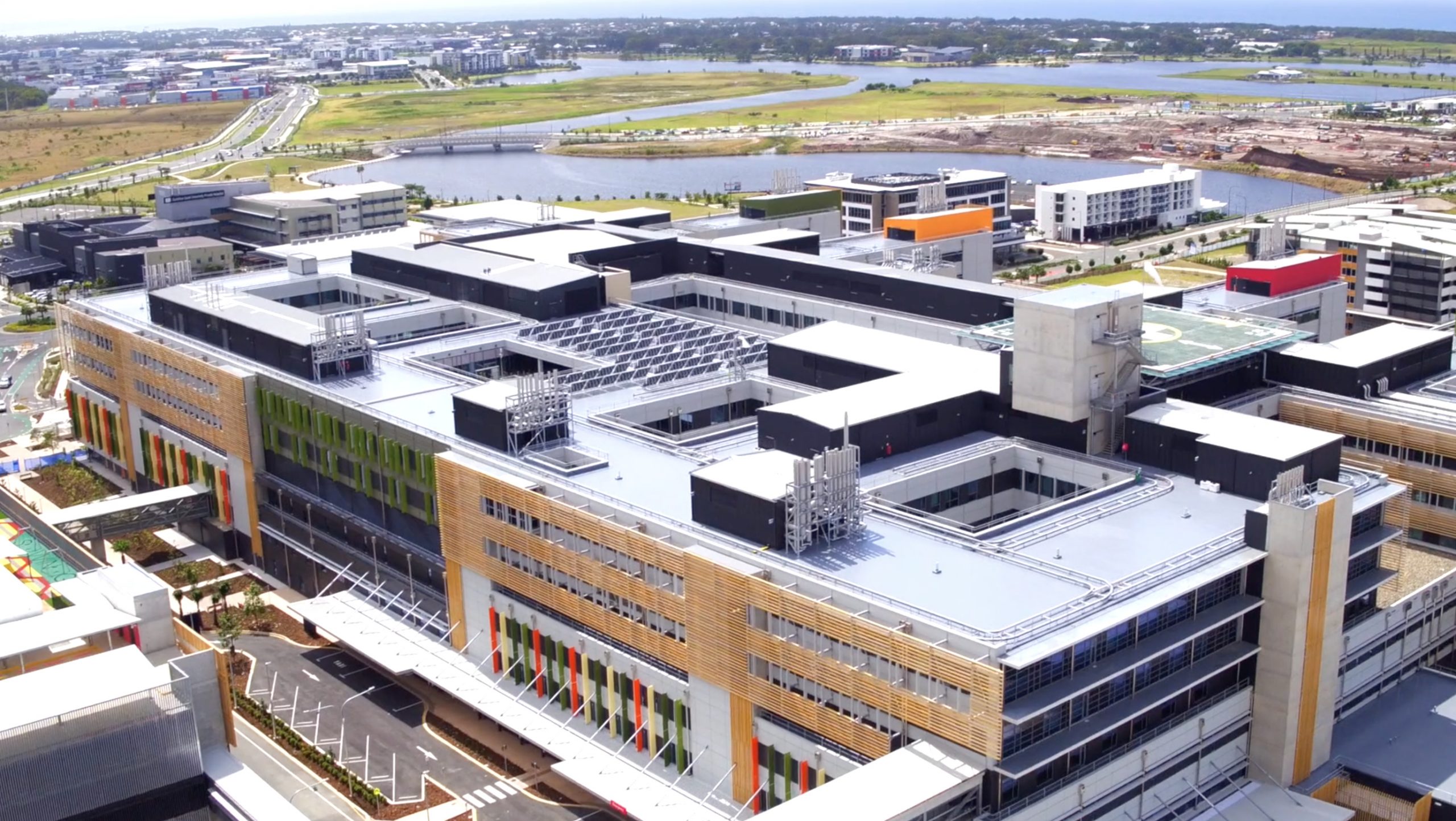
Sunshine Coast Health surgeon Dr Scott McDonald said it was important young people understood the risks, as it was not just a genetic disease.“If you are born after 1990 you have double the risk of colon cancer and four times the risk of rectal cancer, compared with people born in 1950,” he said.Dr McDonald said smoking, alcohol, eating excessive amounts of red meat and a higher BMI were all increasing risk factors for developing bowel cancer.“The symptoms that are common and the symptoms that are commonly ignored particularly when you’re young are things like bleeding from the back passage, a change in bowel habits, bloating, cramping, abdominal pain and unexpected weight loss,” he said.“I guess the other significant factor is because patients often ignore the symptoms at the earlier stages when you’re younger, putting it down to other life factors, it means patients are often presenting later with more advanced stages of disease which makes it more challenging to treat.”Further statistics from Bowel Cancer Australia show the proportion of bowel cancer located in the appendix was 85 per cent for people aged 15 to 24, compared to only 3 per cent for those older than 24.Bowel Cancer Awareness Month aims to raise awareness about the disease, with 300 Australians diagnosed every week.To learn more visit Bowel Cancer Australia.
Like stories that inform, connect and celebrate the Sunshine Coast? So do we. Join an independent local news revolution by subscribing to our FREE daily news feed at the bottom of this article.