
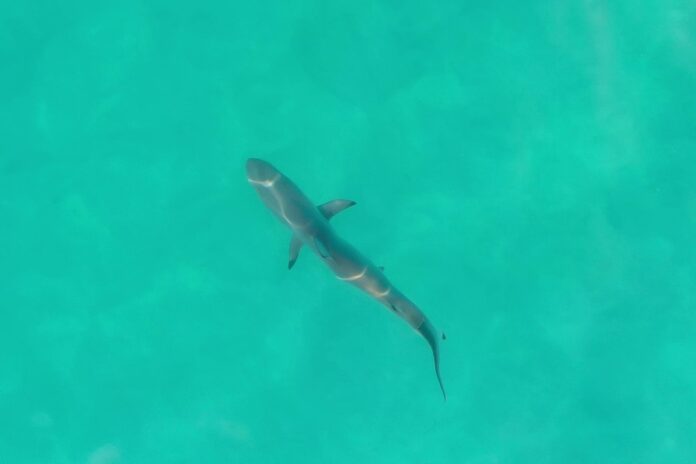
A shoreline drone trial has been lauded for its benefits, including the detection of several sharks on the Sunshine Coast.
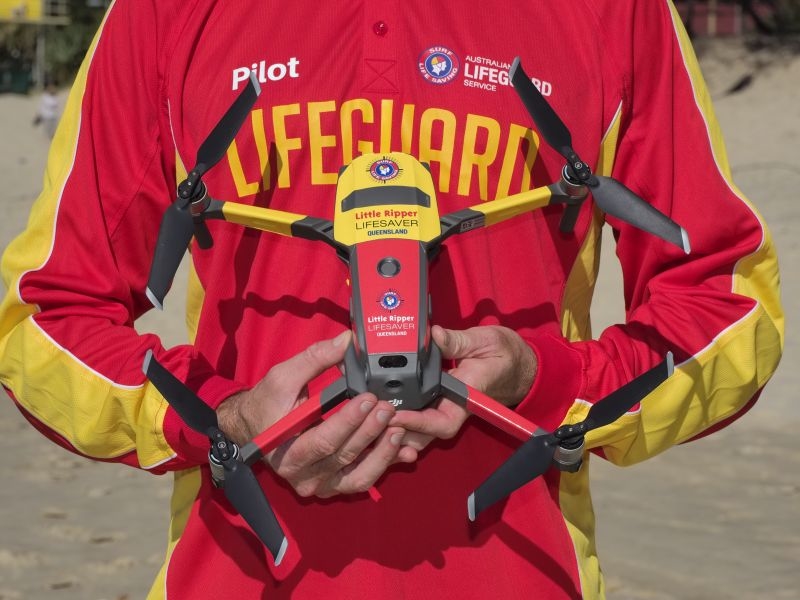
The SharkSmart Drone Trial has been labelled a holistic beach safety tool: spotting sharks, helping stricken swimmers, aiding search and rescue operations, and helping in major first aid incidents.
The trial started on five beaches in South-East Queensland in September 2020 and was extended to 10 beaches until 2025.
Drones have operated every morning on weekends, public holidays and school holidays.
Australian Lifeguard Service chief remote pilot Rob Adsett said the trial was highly beneficial.
“Drones provide a bird’s eye view of the ocean and what’s happening beneath the surface, compared to traditional monitoring by lifesavers and lifeguards from beach towers or watercraft,” he said.
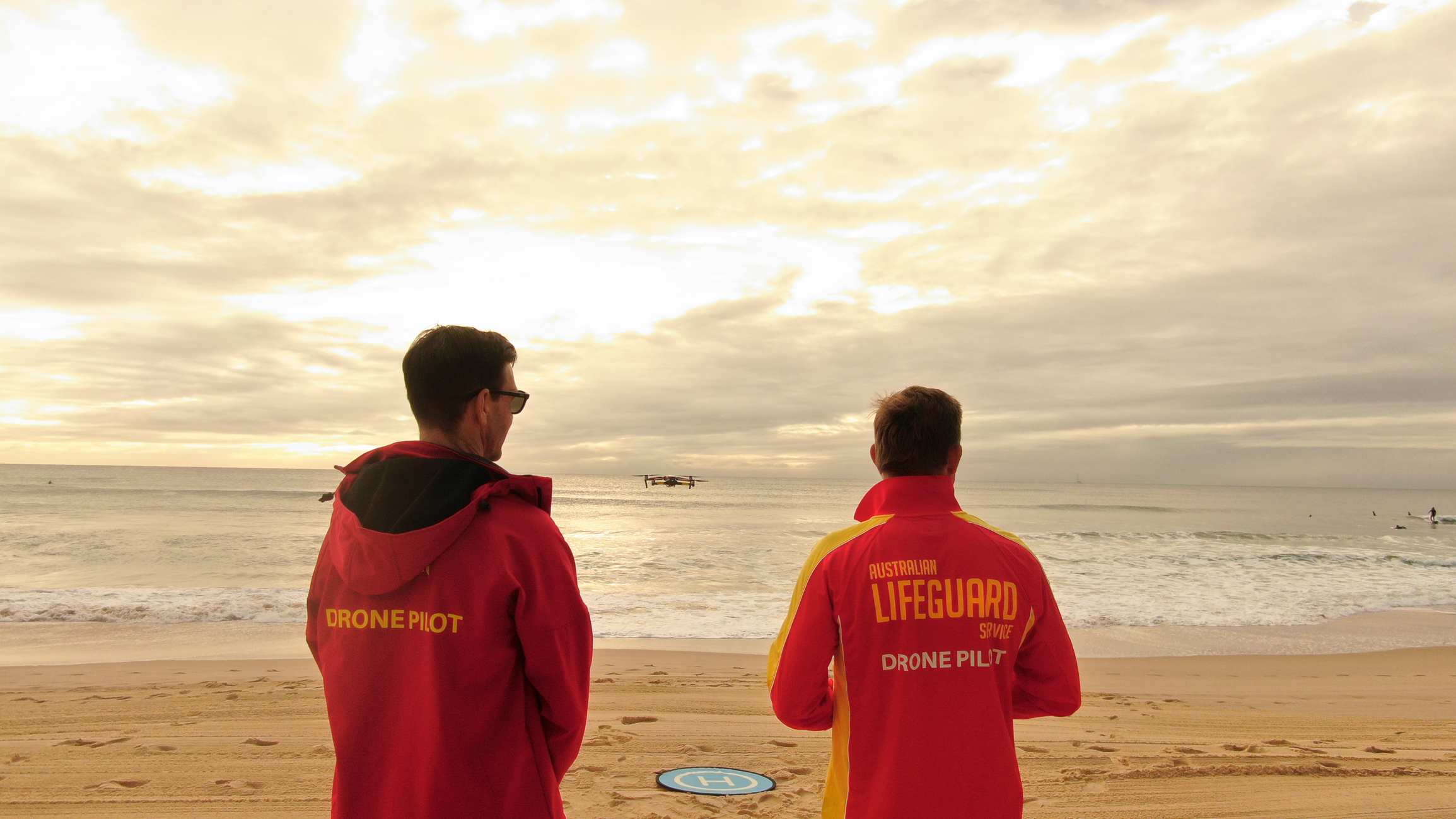
“And they are more cost effective than other beach aerial monitoring, such as helicopter flights.
“The impact on marine life is negligible (and) real-time monitoring means lifesavers and lifeguards can respond rapidly if a shark or other marine risk is spotted.”
Drones have been utilised at two Sunshine Coast beaches since the start of the trial.
“A number of sharks have been detected at both our Coolum Beach and Alexandra Headland sites,” Mr Adsett said.
“Our operators have been able to communicate and co-ordinate with our local lifeguards and lifesavers to ensure the safety of the public.
“The drones have also been able to identify non-threatening marine species that have been mistaken for sharks by the public, allowing SLSQ to keep the beach open.”
SharkSmart flights have also operated at Noosa Beach since November.
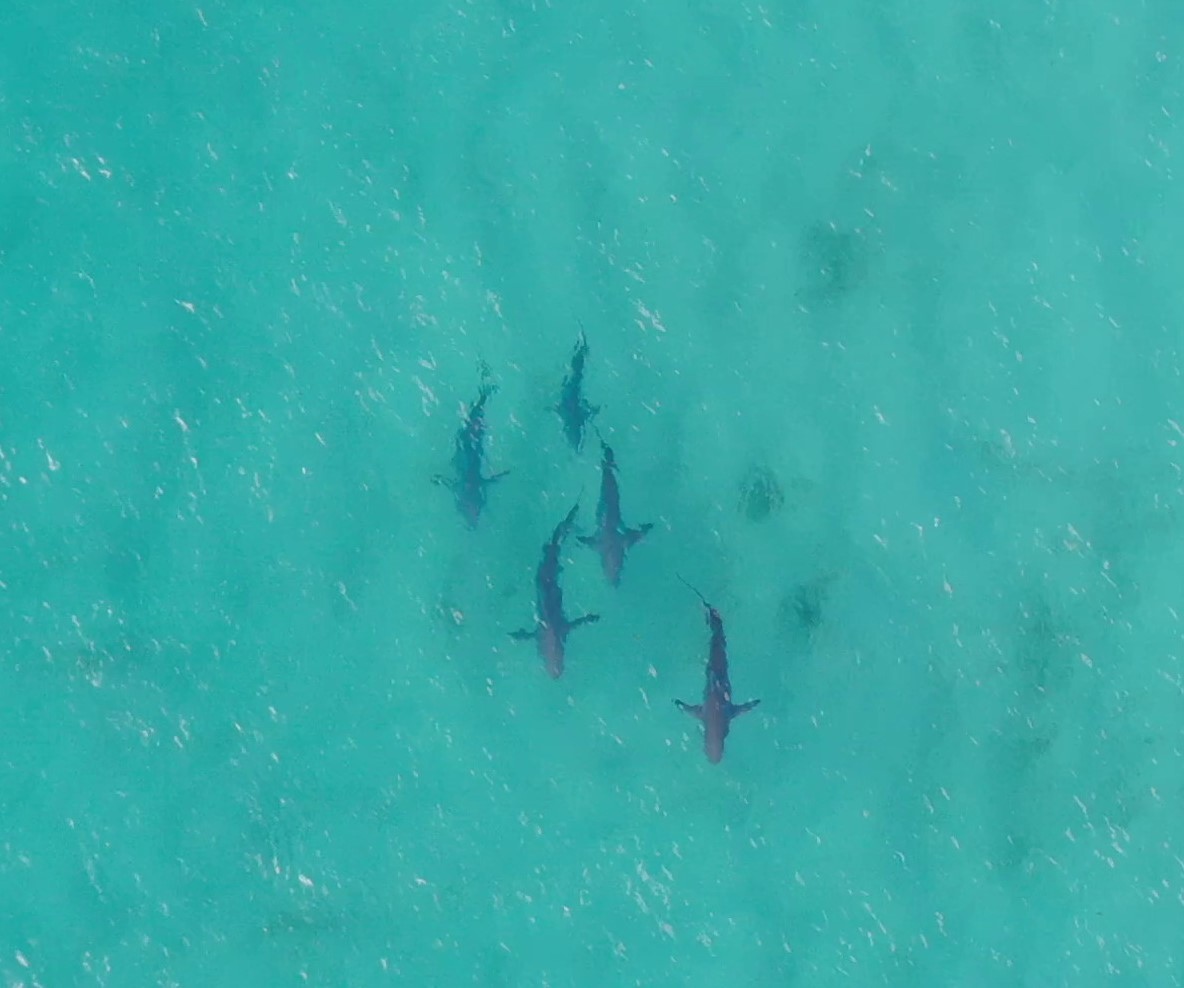
“In over 4600 flights conducted, a total of 23 sharks have been spotted in the region,” Mr Adsett said.
“Three sharks have measured at 2m or greater in length, and none posed a threat to public safety.
“The majority of sharks sighted were identified as non-threatening species and not coming close to members of the public.”
The drones were particularly beneficial in mid-March, when sharks were spotted feeding on schools of bait fish at several Sunshine Coast beaches.
Beaches at Alexandra Headland, Coolum and Noosa were closed for a short time as a result.
The drones have been upgraded during the trial, with the introduction of a dual battery system at vehicles to recharge batteries while on site, and seven batteries for each aircraft.
But the drones’ benefits haven’t been restricted to spotting sharks.
“The program also increases the ability to monitor the beach and water population,” Mr Adsett said.
“While on shift, our SLSQ-trained staff have been able to assist the lifeguards and lifesavers with search and rescue operations, as well as major first aid incidents.”
SLSQ chief executive officer Dave Whimpey said the drones had proved to be useful as a shark mitigation tool and to aid the work of surf lifesavers.
“Shark spotting drones are a 21st-century solution that gives our lifesavers more capacity to spot and monitor sharks, thereby enhancing the safety of water users,” he said.
Beaches at North Stradbroke Island and Burleigh were temporarily closed to manage the risk to swimmers, on four occasions.
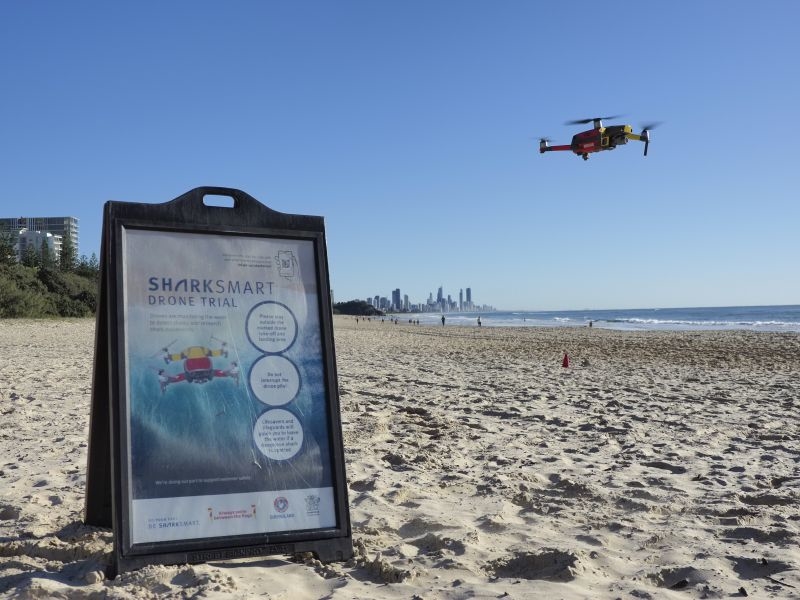
The trial – labelled a success of the Queensland’s aerospace industry by the Department of State Development, Infrastructure, Local Government and Planning – will continue at the Sunshine Coast, Gold Coast, Minjerribah, Rainbow Beach and Townsville.
Like stories that inform, connect and celebrate the Sunshine Coast? So do we. Join an independent local news revolution by subscribing to our free daily news feed: Go to SUBSCRIBE at top of this article to register.