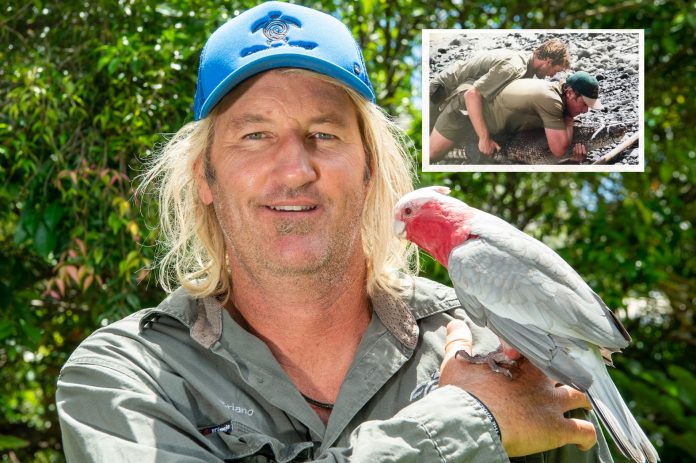
Sunshine Coast wildlife expert Brian Coulter is using the extreme skills gained with Steve Irwin’s famed croc team to help save Australia’s most vulnerable species.
‘Briano’, as he is known, has gone from wrestling the most dangerous creatures in the world to coaxing nervous koalas from trees to check on their health and habitat.
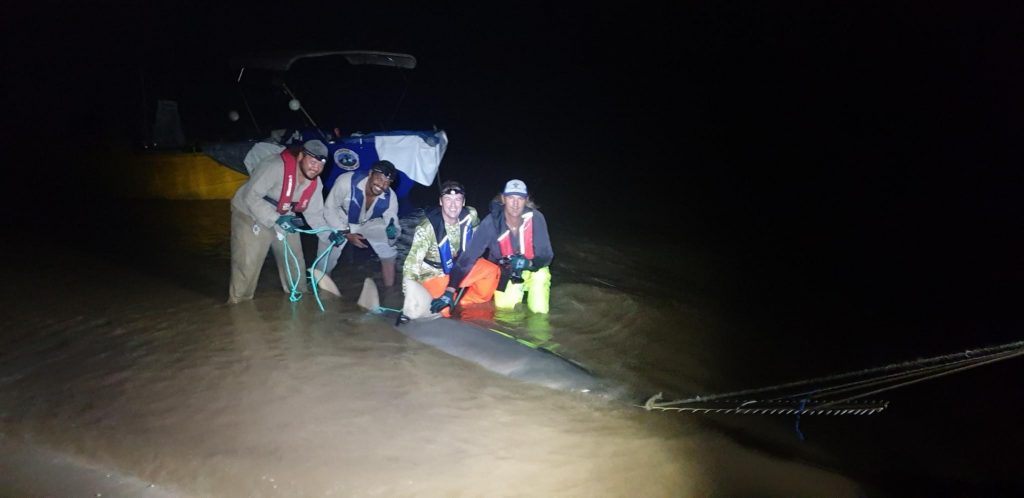
He also assists researchers striving to ensure the survival of critically endangered red goshawks and sawfish in Cape York.
Brian first met Steve in 1995 as a volunteer at what was then the Queensland Reptile Park at Beerwah, which became Australia Zoo.
The Croc Hunter told him he could be an apprentice but gave him a stern warning: “If you get bitten, you’re out!’’
Brian, who lives in Caloundra, says he learned so much from Steve, who died on September 4, 2006, after being pierced in the chest by a stingray barb while filming on the Great Barrier Reef. His protégé, who was present during the tragedy that gained world-wide attention, recalls that their last month together had produced the greatest of times.
Brian said it had been the team’s most exciting mission as far as catching and tagging massive crocodiles went.
“We caught 49 crocs – and they were all monsters. It was amazing.’’
Like stories about Sunshine Coast people doing great things? Help us deliver more by subscribing to our free daily news feed: Go to SUBSCRIBE at top of this article to register
Brian said one of his fondest memories with Steve was a trip they did to Vanuatu to catch and relocate a crocodile that had washed up on a little tropical island after a cyclone.
“It was threatening the islanders and much to their relief we caught it and relocated it in a small plane,” he said.
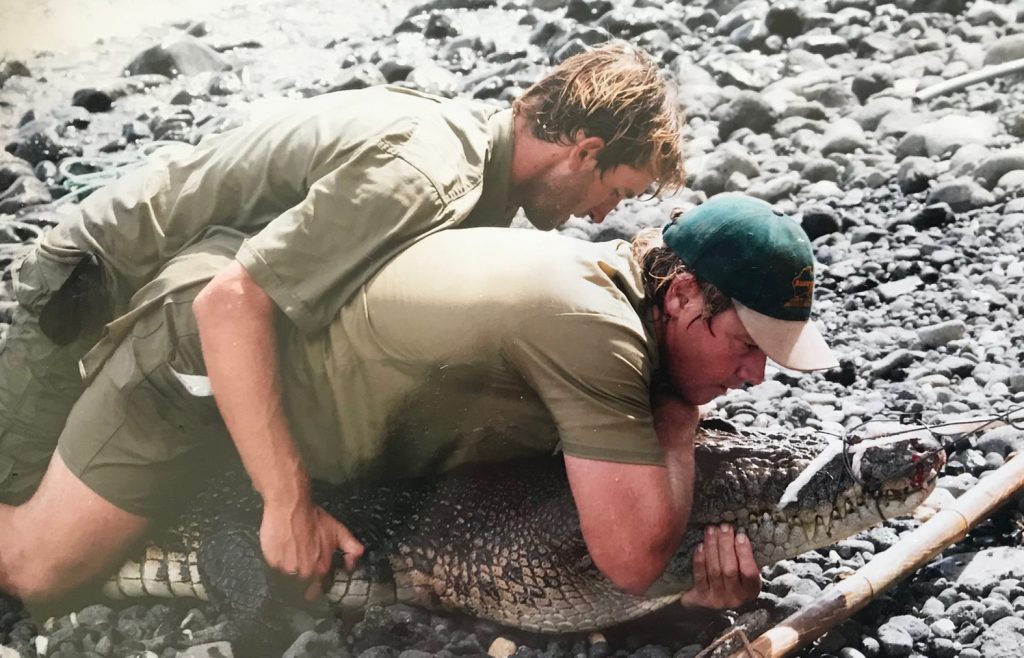
“It was a great adventure and was filmed! (South Pacific crocodile rescue) was the title. We even surfed over there at a place called Point Pango.
“This was definitely one of my favourite trips with Steve.”
Brian earned a reputation as a gun wildlife spotter and catcher and was manager of the Australia Zoo Rescue unit from 2007-2011.
“I was at the zoo for about 16 years until November 2011,’’ he said.
“It was an incredible experience and I’m still using the same skills – although it’s a bit different. At Australia Zoo, we did quite dramatic rescues after getting calls from the public. We would rush to help koalas that were hit by cars, attacked by dogs or hurt in fires.
“What I do now is more measured, and I have to be extremely careful not to stress the animals out. As the ones I catch have trackers, if they are showing signs of stress, I’ll can leave them for another day.’’
Brian has trapped thousands of koalas and taken them to veterinary clinics for health checks before returning them to the wild.
His business, Saltwater Ecology, conducts fauna surveys, assesses habitats and monitors wildlife that may be on sites earmarked for roads or development.
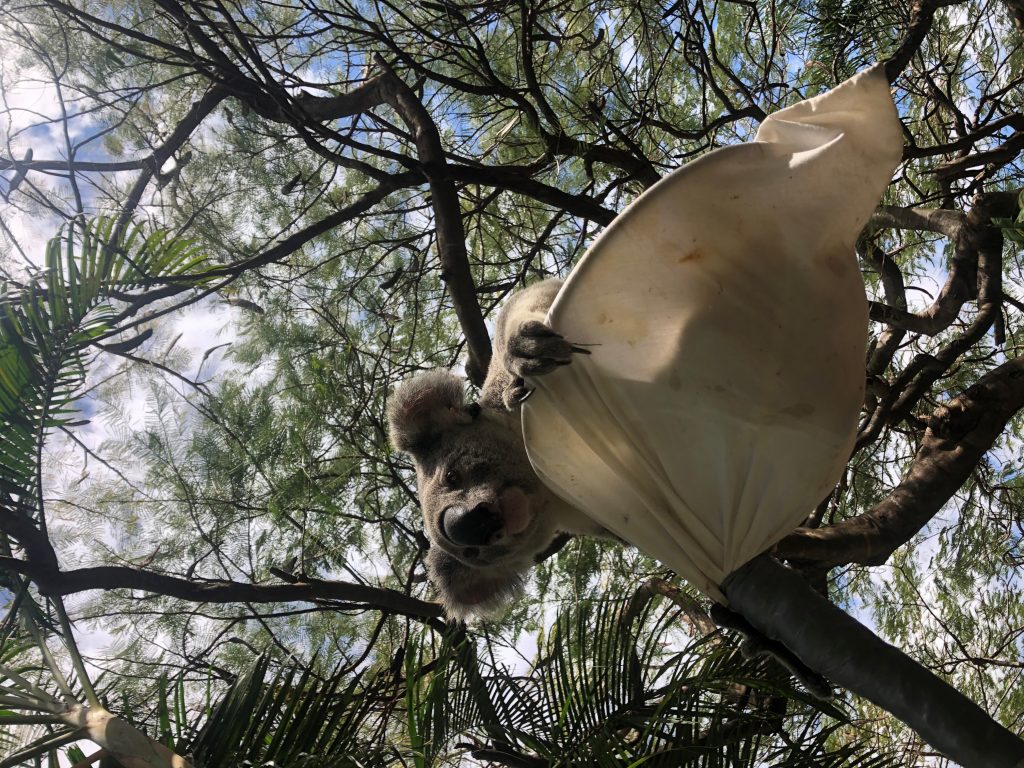
Brian’s recent work has been in the Moreton Bay region, where his team of three might take an entire day to capture a few koalas.
“The operations involve a lot of climbing and can be tricky. As well as the animals, there is a fair bit to assess, such as the strength of the trees, whether they have rotten or weak limbs, and whether they contain any nasty wasps or bees.
“The crucial part is reading the animal’s behaviour. Some koalas can be very stressy and there is a chance they might slip or jump when approached. I’m proud to say, I have never had a situation where one has died during capture.’’
Do you have a Sunshine Coast story the community would like to hear? Let us know via news@sunshinecoastnews.com.au
Brian and the team use a “halo’’ above the koalas to encourage them to drop down, where they can be scooped up in a big soft bag on a pull pole.
He said he had been part of a groundbreaking project in the Blue Mountains in NSW, where koalas had been found for the first time in a sub-alpine region, where they remarkably had survived harsh winters with heavy snow.
A trip to Cape York saw him scaling towering trees (pictured) adjacent to red goshawk nests to set up cameras used to monitor the magnificent birds of prey. There are believed to be only 200 pairs of red goshawks left in Australia.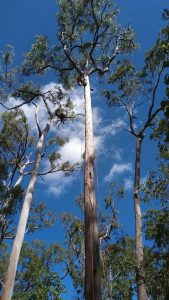
“I was invited to help with sawfish research at Port Musgrave near the mouth of Wenlock River, because scientists had encountered a big croc while trying to put satellite trackers on the fish,’’ Brian said.
“They needed someone with experience with crocs, large sharks, dugongs and turtles – which were all part of the job when I was with Steve.
“I love my work and still have an enormous passion for the environment. It’s a passion I learned from Steve and I will always remember the great times we had and keep doing my best to help our precious wildlife.’’