

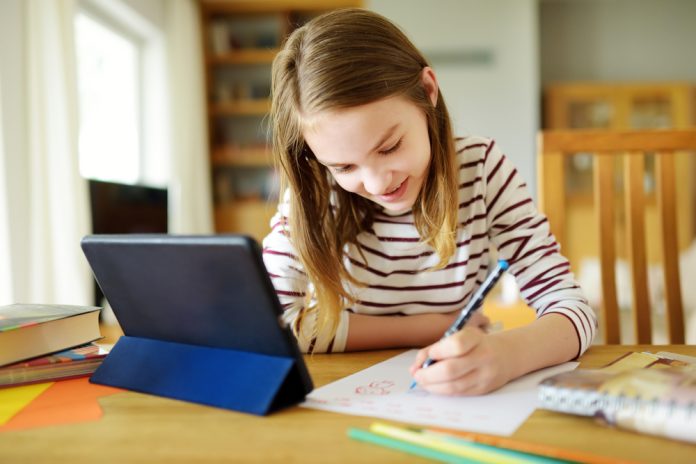
Some parents struggled to help their kids learn at home during last year’s coronavirus lockdowns but others found it so beneficial they decided to continue.
The number of students taking lessons at home was already on the rise before COVID-19, but 2020 saw a further increase, education expert Rebecca English says.
She attributes the shift, at least in part, to the experience children had learning from home during the pandemic lockdowns.
“Some parents hated the home learning with a passion but, believe it or not, some really loved it,” the Queensland University of Technology lecturer said.
“The numbers were already going up, but parents’ experiences during lockdown suggest they may be more disaffected with schools.”
Some realised their children learned better at home. Some parents of children with a special education need found their kids to be more engaged academically, less stressed socially and happier.
One family told Dr English they decided to home school their daughter, with high-functioning autism and dyslexia, after the lockdown because her anxiety lessened at home, she thrived and made gains in literacy.
That student is one of at least 22,000 who are homeschooled across Australia.
In Queensland there were 1100 kids homeschooled in 2013 but that almost quadrupled to 4300 in 2020.
The Sunshine Coast has a strong homeschooling community, especially in hinterland areas.
The actual figures may be as much double that because research has found many families choose not to register.
Home Education Association president Karen Chegwidden says the number of calls to their homeschooling national helpline almost tripled between March and May last year.
Some parents chose to homeschool because of uncertainty with the rolling school closures, she said.
One family found the transition from kindergarten to staying home difficult for their child at first, but had got to “the other side”, enjoying being together and an active part of their child’s education.
“They also didn’t want to send their child back when there was a possibility the school would close again,” Ms Chegwidden said.
Some parents had previously considered homeschooling, but lockdown gave them a push.
Associate Professor Elspeth McInnes says a significant 23 per cent of parents she surveyed found their children did better learning online during the lockdown than they had done in a classroom.
Some had learning difficulties and responded well to learning online.
Others had struggled at school for reasons like bullying, difficult relationships with teachers or finding the social world anxiety-producing, the University of South Australia lecturer said.
“This said to me we need to continue to see home or remote learning as one of the options we have available for children,” she added.
Professor McInness says the lockdown has made learning online more accessible – although it is dependent on students having resources and support.
“The digital divide is a huge thing,” she adds.
Learning from home during the lockdowns revealed the difference between those with and without technology, social and emotional support and necessary skills like reading ability.
Dr English says some parents became frustrated during lockdowns about the lack of clarity around school work to be completed, the relevance of tasks and their relationship to wider learning goals.
Others were confused about the difference in the length of the school day – for some about six hours – and the time they were expected to supervise children learning – in some cases, just 45 minutes a day.
Others realised their children learned better at home, away from the distractions of schools,” she added.
Dr English hopes schools and governments will learn from the lockdown education experience by offering greater flexibility.
“Parents I spoke with said they’d be keen on a ‘third way’ between full-time school and full-time home education,” she said.
“Some part-time school would be super … (and) maybe building greater flexibility into the system would serve parents’ and children’s needs better.”



