
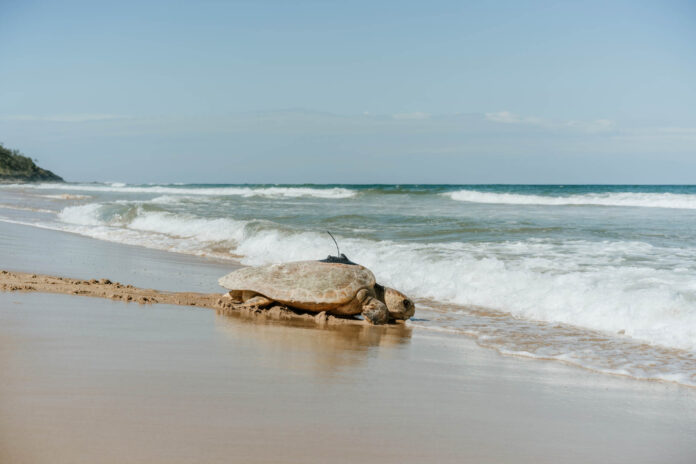
Scientists can now follow the movements of two critically endangered sea creatures in real time, after trackers were installed on them.
First Lady and Bullumby, loggerhead turtles that nested on Sunshine Coast beaches in December, are active and have left our shores to migrate home.
Sunshine Coast Council’s TurtleCare conservation officer Kate Hofmeister said volunteers were keeping a close eye on their movements.
“After laying her nest at Buddina, First Lady spent her inter-nesting period in the near-shore environment off the east coast of Bribie Island before returning to Buddina to lay her last clutch for the season,” she said.
“She then, she has made her way around Cape Moreton to the south-east coast of Malgumpin (Moreton Island).
“We believe this is her home. First Lady regularly returns to a central location and embarks on what could be foraging trips nearby.”
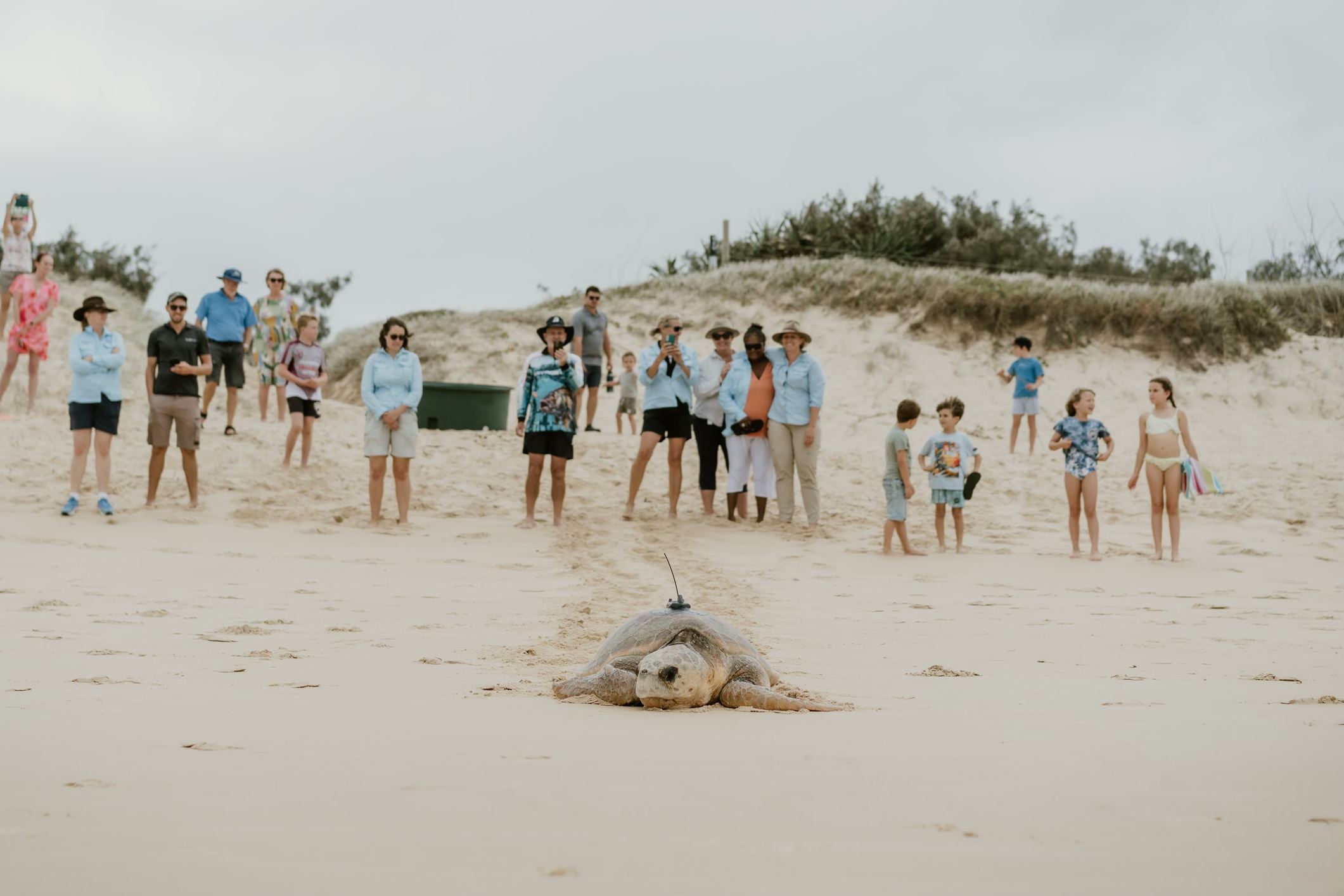
Mrs Hofmeister said Bullumby, which means ‘beautiful one’, appeared to live further afield.
“After laying her final clutch for the season, she followed the coastline north past the top of K’gari (Fraser Island) and has now headed north-east, into the Coral Sea,” she said.
“She could potentially travel up to 2700km back to her feeding grounds and home.
“We are excited to further unlock the mystery of our Sunshine Coast nesting turtles.”
The GPS satellite tags were attached to the back of each turtle and they send through highly accurate GPS data on the latitude and longitude location when it surfaces for a breath.
This data is downloaded into the Wildlife Computers Portal and accessed by Queensland Government and council.
The trackers were expected to work for about six months.
Mrs Hofmeister said while it was fascinating to find out where these turtles called ‘home’ at the end of nesting season, the GPS tracking device also told an important story locally amid efforts to preserve the region’s Blue Biosphere and help the species recover.
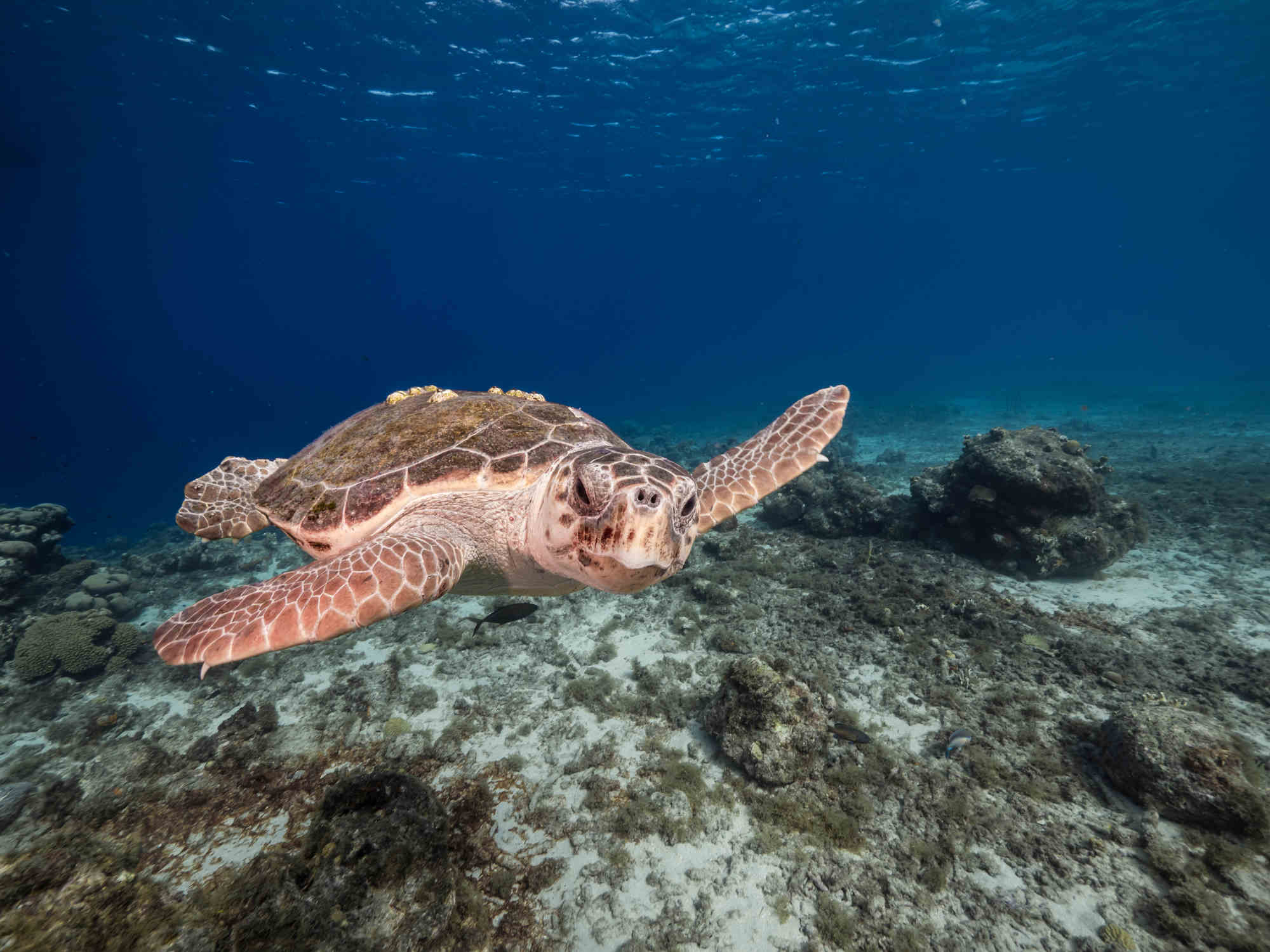
“Our Blue Biosphere is the first 5km offshore,” Mrs Hofmeister said.
“We will use the data to show where they’ve been and use those locations to understand what type of habitat they are using off our coastline between clutches of eggs.
“Since the 1970s, loggerhead turtles nesting along the Queensland coastline have decreased by almost 90 per cent due to a number of threats.
“This makes every nest and every egg critical to the ongoing survival and recovery of this critically endangered population.
“This valuable insight into turtle movements helps us to better understand and protect their habitats – with an ultimate goal to support their populations to recover.”
The project is part of a collaborative research project with Dr Colin Limpus from the Queensland Government’s Department of Environment and Science.
All TurtleCare activities are conducted under Queensland Turtle Conservation Project permits.
Find out more about the region’s marine turtles here.
Do you have an opinion to share? Submit a Letter to the Editor with your name and suburb at Sunshine Coast News via: news@sunshinecoastnews.com.au