
100% Locally Owned, Independent and Free

100% Locally Owned, Independent and Free

Fur baby: the adorable little wombat that's making a big impression at Wildlife HQ

Do you have a news tip? Click here to send to our news team.

Historic sugar mill site set for transformation

Three heritage-listed buildings that once housed sugar mill workers are set to be restored as part of a new hospitality, entertainment and community precinct More

Bird handling ‘confusion’ as new case confirmed

Relief has washed over a leading wildlife refuge after testing allayed fears a deadly bird flu strain has reached a fourth state. However, Twinnies Pelican More

Properties go under the hammer at major auction events

Dozens of homes have changed hands for more than $32 million collectively, at two bumper auction events. A variety of properties were purchased at Ray More

Infrastructure boost paves way for thousands of homes

More than 7100 homes have been unlocked across the Sunshine Coast and Gympie regions through more than $125 million in state government investment for More

Theatre giants to star at Coast festival

Two of Australia’s leading playwrights will discuss writing, creativity and contemporary theatre as part of a 10-day festival launching in Noosa on Friday. Suzie Miller, More

Ashley Robinson: north v south – the great divide

I was asked a question the other day about an advertisement that said “on the Sunshine Coast and Noosa”. The person asked me why More

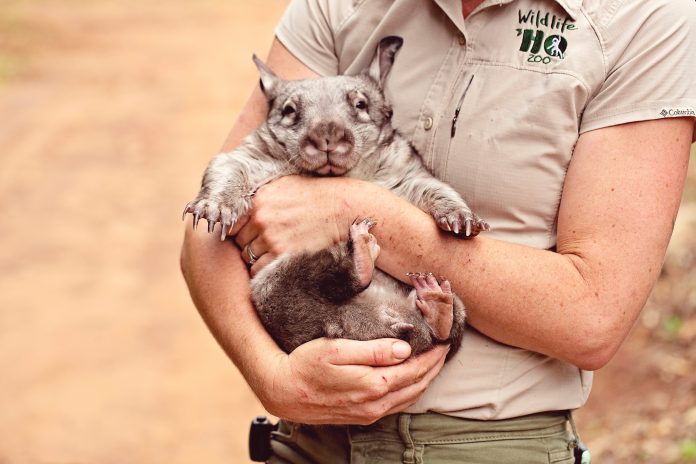
They have had some pretty cute little Tasmanian devils, dingo pups, koalas, emus and ring-tailed lemurs, but could this be Wildlife HQ’s most adorable baby yet?

Meet Ameia. She is a southern hairy-nosed wombat joey that recently arrived at the Big Pineapple attraction.

The zoo said she had a difficult start to life, having lost both parents in South Australia.

Ameia was just 800g and needed plenty of love and care.

She’s been getting considerable attention from the staff at Wildlife HQ, who say looking after her is heaps of fun due to her cheeky personality.

Ameia will become a part of the zoo’s education program.

The southern hairy-nosed wombat is described as a stout and robust animal with strong claws adapted to digging.

They are distributed patchily in areas of semi-arid shrubland and mallee from the eastern Nullarbor Plain to the New South Wales border area.

Wombats, which can grow up to 32kg, dig large burrow complexes, in which up to 10 may sleep.

To find out about the zoo’s animals and experiences, visit: whqzoo.com

 

Subscribe to SCN’s free daily news email

This field is for validation purposes and should be left unchanged.
This field is hidden when viewing the form
[scn_go_back_button] Return Home
Share