
Do you have an opinion to share? Submit a Letter to the Editor at Sunshine Coast News via news@sunshinecoastnews.com.au. You must include your name and suburb for accountability, credibility and transparency. Preference will be given to letters of 100 words or less. Some of the opinions below are comments from SCN’s Facebook page.
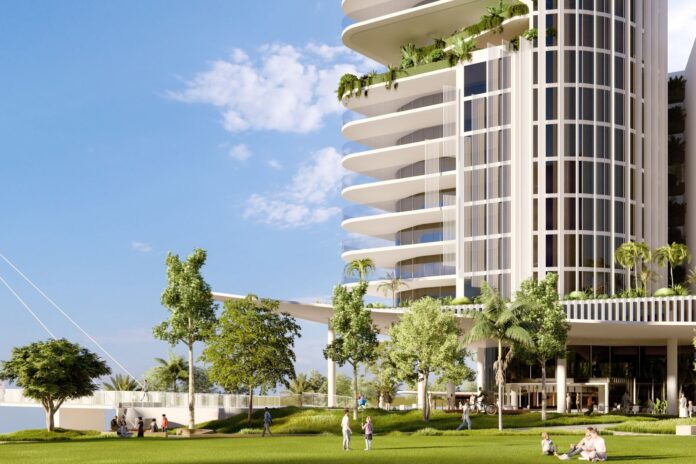
- Read the story: Work starts on town centre with up to 2600 homes
Adrian Riches: Not the city centre for the masses. It’s the Sunshine Plaza that’s the hub and city centre.
Megan Sainsbury: Ah, yet another enclave for the wealthier than the average folk. Nice bonus for investors too, new builds can be negatively geared.
Steve Williams: Please bring in an IGA. We need more grocery options. Coles is already being smashed. Hospital staff also take up all of Coles’ parking spaces. I guess hospital staff will park on the streets of the new city centre. Let’s hope Stockland reserves enough space for car parks.
- Read the story: Approval clears path for coastal unit project
Megan Knight, Coolum Beach: I’m very disappointed with council’s decision on the now-approved development in First Avenue, Coolum. This is already a street that you have to drive through at very low speed due to cars on both sides of the street whose owners don’t have anywhere to park with their residences.
Your article states that there will be 69 parks with 11 visitor spaces, that’s 58 parks for residents. Two-to-three bedroom apartments number 43, so likely 86 cars at least. That is 28 car parks short. So even once residents use up the visitor car parks (which they will be forced to do because there’s going to be nowhere for them to park on the street because that’s already at capacity), that is still 17 cars, which literally will have to park elsewhere in Coolum and walk home from there.
Are we going to see cars parked in the Birtwill Street shopping centre overnight? It is hard. People must come before profit.
- Read the story: Community group pushes for new indoor pool
Bruce McDonald: Further to your story, the Caloundra Aquatic Centre pools are in desperate need of an upgrade or better replacement. With the new housing developments south of Caloundra, no new pools have been included in their design. The 50m pool is over 30 years-old and not built to modern standards of competition. Club meets now have to be hosted at Kawana’s facility.
I would like if you could ask council what its intention is to address this problem? With the Olympics on our doorstep, and as you noted pools are expensive to build, an urgent review of this situation needs to be activated. Pools have a major impact on the community they serve and the children and adults that use them. It’s a disgrace the Maleny community has to find funds to build their own pool.
- Read the story: Unusual roundabout design targets safety concerns
Graham Lockey, Coolum Beach: Thank goodness the proposal is for a roundabout and not yet another set of unnecessary traffic lights! A single lane roundabout will slow the traffic and keep us all safer. The other aspect that planners ignore is the fact that to expand a single lane road into a two-lane roundabout to then revert to a single lane road is unnecessary, expensive and dangerous, with some drivers choosing this as an ‘I’m faster than you’ battle to exit the roundabout, completely defeating the slowing properties of the roundabout. So, planners keep it as a single lane roadway.
I sincerely hope that the design planners do not choose to plant the centre of the roundabout as this restricts the sightlines and requires expensive maintenance, not all of us choose to drive high rise vans with windows (SUVs)!
Over the last few years, the imposition of traffic lights where roundabouts would have been a better outcome has been ridiculous.
The various lights currently being installed along the David Low Way will, again, cause needless delays to motorists, with turning arrows lasting too long when there is no traffic in the turn lane and timed light changes stopping traffic when no cars are present on the opposing road.
- Read the story: Iconic Norfolk pines targeted in poisoning
Theresa Green, Maroochydore: The amount of trees being cut down or poisoned on the Sunshine Coast is beyond belief. The fines are antiquated and they should be made to donate some of their land back to us and replant the trees, bare minimum not just a fine. When will we realise that trees are sacred and we need to stop concreting our beautiful region and start working around nature, which they have successfully done in other countries. If we are going to bang on about our ‘biosphere ‘ as a selling point for tourism in the Sunshine Coast, we had better look like we know what we are doing. No trees means no shade in the hottest country in the world. It’s not rocket science.
- Read the story: New dog park proposed
John Thorogood: Council’s current public consultation regarding dog parks is very much a Clayton’s consultation. How about asking dog owners where they’d like off-leash exercise areas located? I bet the resounding response would be ‘near where I live’ and ‘somewhere with amenity’. But no, council’s ‘solution’ is to offer dog owners locations, which are neither convenient nor blessed with amenity (cafes etc). You only have to walk along Cotton Tree Esplanade to see the high number of dogs being walked. The eastern parklands are extensive and could easily accommodate an off-leash exercise area. Why is council so blinkered?
Trish Kenrose: Nobody uses the agility stuff. Waste of money. Put shaded seating instead.
Gail Lockyer: You can take all the agility stuff in Federation Parks, Palmwoods and recycle it because it only gets peed on and not used. Dogs want space to run – that doesn’t mean a dog park in every neighbourhood.
- Call for backpacker accommodation review
Philip Staley: For more than 30 years I have operated Dolphins Backpackers at Sunshine Beach. During this time, I have seen Noosa grow into one of Australia’s best-known coastal destinations. Yet one part of the visitor economy seems increasingly overlooked: affordable beds for backpackers and independent travellers.
Noosa and Byron Bay share much of the same international appeal. Both are famous for their beaches, surfing, natural beauty and relaxed atmosphere. Both attract young people from around the world. But look at the backpacker accommodation available in Byron Bay and the contrast with Noosa is striking.
Byron Bay has continued to accommodate the backpacker market, including larger purpose-built hostel operations. Noosa, by comparison, has a relatively limited range of dedicated backpacker options. Before any official comparison is made, both councils should publish an up-to-date count of licensed hostel beds, including changes over the past two decades.
Why should Noosa, with its strong international reputation, have so few affordable options for this important group of visitors? And what is being done to address the problem?
Backpackers are not just passing tourists. They buy meals, groceries and surf lessons, visit local attractions, use public transport and support small businesses. Some stay longer and take up seasonal jobs in hospitality and tourism. Their spending is spread throughout the community.
Of course, Noosa must protect its environment and residential amenity. Nobody is calling for uncontrolled development or for Noosa to copy Byron Bay in every respect. But responsible, well-designed backpacker accommodation can be compatible with sensible planning controls.
The real question is whether the planning system recognises backpacker beds as an important part of Noosa’s tourism infrastructure. If proposals meet the applicable planning requirements, they deserve to be assessed fairly and on their merits, not dismissed simply because they serve budget travellers rather than luxury guests.
Noosa Council and our tourism leaders should be willing to answer some straightforward questions. How many dedicated backpacker beds do we have today? How many did we have 10 or 20 years ago? How does that compare with Byron Bay when measured against visitor demand? And what practical opportunities exist to increase supply without compromising local values?
After three decades in this industry, I believe Noosa needs a more balanced accommodation strategy. A destination should not be judged only by its high-end resorts and room rates. It should also be judged by whether young travellers can afford to experience it. If Noosa continues to welcome the world, it must ensure there is somewhere affordable for the world to stay.
- Traditional owner parklands
Bridgette Chilli: Why aren’t there traditional owner parklands on the Sunshine Coast? Why aren’t parks named after my ancestors? Why is this, because my family, the Chilli family, are the original traditional owners of Jhdungah Country Sunshine Coast – Gubbi Gubbi Kabi Kabi Nation. I would love to honour my family who are the proper traditional owners of Jhdungah Country Sunshine Coast.
- Saluting strength in action
Garry Renolds, Peregian Springs: There’s a quiet revolution breaking out in country halls across Australia and it isn’t driven by politicians, committees or consultants. It’s being led by women.
The revival of the CWA, that grand old brigade of scones, sewing and steel‑spined kindness, isn’t about nostalgia. Younger women are joining because the world feels wobbly and they want something solid to hold on to.
Long before we invented terms like “community resilience”, the CWA women were practising it. They cooked for families in crisis, checked on neighbours during drought, stitched quilts for fundraisers and somehow knew who needed help before anyone else did. They didn’t call it leadership. They called it Tuesday (or any other day of the week).
In a time when towns are stretched by cost‑of‑living pressures and the frayed edges of social fragmentation, the CWA offers something rare – a place where community still feels whole. Now, from Roma to Ravenshoe, and along the coast, that spirit is rising again.
On the Sunshine Coast, the most striking development is the opening of new branches, including a brand‑new one in Bli Bli. And this month, Maroochydore is hosting the QCWA State Conference, a gathering which highlights just how central this region has become to the organisation’s future.
New members are discovering that the CWA isn’t quaint. It’s a blueprint for how communities survive and thrive. As one young woman put it: “I came for the baking. I stayed because these women know how to hold a town together.”
Today’s members bring new tools to old wisdom – digital organising, social‑media fundraising and the juggling act of work and family that makes their commitment even more remarkable.
They anchor communities when rivers rise, when crops fail, when someone’s world falls apart at 3pm on an ordinary Thursday. Real strength doesn’t shout. Sometimes it wears an apron, carries a thermos, and calculates on a spreadsheet how many meals will be required for disaster‑relief workers.
The CWA isn’t making a comeback. It’s passing the torch – and Australia is quietly rising with it.
Do you have an opinion to share? Submit a Letter to the Editor at Sunshine Coast News via news@sunshinecoastnews.com.au. You must include your name and suburb for accountability, credibility and transparency. Preference will be given to letters of 100 words or less. Some of the opinions above are comments from SCN’s Facebook page.