
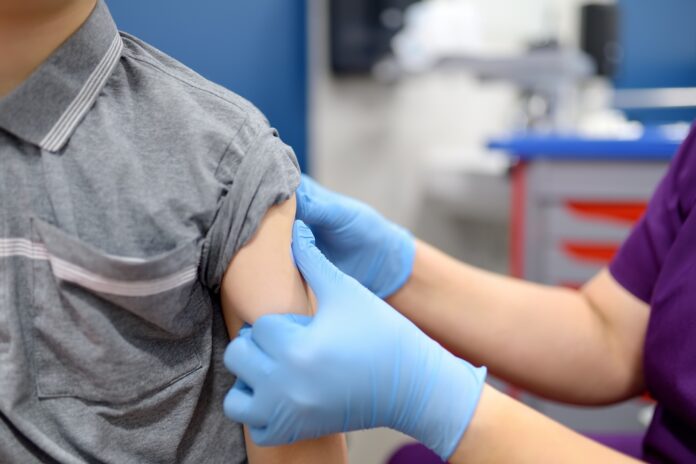
A Sunshine Coast pharmacist has warned a measles outbreak could place more pressure on the region’s already stretched hospitals as new research points to significant immunity gaps across the nation.
Mooloolaba Beach Pharmacy owner Josephine Host is urging residents to check their vaccination status “rather than clog up emergency departments” as cases of the disease rise.
She said many people were unsure if they’d had the recommended two doses that protect against measles.
“Community pharmacists can now access a patient’s national immunisation register, advise them on what they may need and why they need them,” she told Sunshine Coast News.
“I think most people think prescribing pharmacists can only give influenza vaccines.
“What a lot of people don’t realise because it is still relatively new, is that trained prescribing community pharmacists can provide all immunisations in Queensland.”

A major study led by the National Centre for Immunisation Research and Surveillance (NCIRS) released last week revealed an estimated 1.7 million Australians, or 6.7 per cent of the population, did not have sufficient immunity to measles in 2019.
The study found the greatest immunity gaps were among infants too young to have completed the measles vaccination schedule and Australians born from the late 1970s onwards. At least five per cent of every birth cohort from 1977 onwards was estimated to be susceptible.
Measles numbers have risen sharply in recent years, from single figures in 2022 to 181 cases in 2025, with 112 cases recorded so far in 2026, according to the National Notifiable Diseases Surveillance System.
Queensland Health has recorded 18 measles cases in the state to date this year. That compares to four cases in the same period during 2025. Only two cases have been recorded on the Sunshine Coast.
The resurgence is part of a growing global problem.
AAP reported that the United States had confirmed 2318 measles infections by late July, already surpassing its entire 2025 tally and reaching its highest annual total in 35 years.
The figure was the highest since the major US resurgence between 1989 and 1991, when more than 55,000 infections and 123 deaths were recorded.
“The main measles outbreaks are from international travellers coming into Australia – and our now lower immunisation rates in children, leaving more who have not had their vaccines at risk of contracting the virus,” Ms Host said.
“Post-Covid, in those first couple of years, there were not that many international travellers. We are seeing a dramatic increase.”
Ms Host said Australians travelling to countries such as India and parts of Southeast Asia where measles outbreaks were occurring could also contract the disease and bring it home.
The NCIRS study, which was published in the Australian and New Zealand Journal of Public Health, also found overall measles immunity in Australia was 93.3 per cent, meaning almost seven in every 100 Australians were unlikely to have sufficient protection against the disease.
Experts warn these immunity gaps may now be wider, as childhood vaccination coverage continues to decline.
NCIRS reported childhood vaccination fell for the fifth consecutive year in 2025, reaching a five-year low.
The proportion of children fully vaccinated fell to 90.5 per cent at 12 months, 88.4 per cent at 24 months and 92.5 per cent at five years of age.
Two in five children also received their first measles-mumps-rubella vaccine later than recommended.
Sunshine Coast Health said in June that the region had the lowest childhood immunisation coverage in Queensland, with particularly low rates in areas including Maroochydore, Noosa and the Noosa hinterland.
NCIRS researchers attributed the decline to the COVID-19 pandemic.
Ms Host agreed.
“People were put into a position where they were forced to have a vaccination and it wasn’t necessarily their choice,” she said.
“That is possibly why one of the reasons we are now seeing lower rates. People feel like they have more choice over that.”
Ms Host also pointed to the “explosion of social media” with platforms such as TikTok spreading anti-vax messaging.
She said people could chat with their local pharmacist to gain all of the relevant information before discussing with their GP if they had further concerns.
Do you have an opinion to share? Submit a Letter to the Editor at Sunshine Coast News via news@sunshinecoastnews.com.au. You must include your name and suburb.
In Queensland, appropriately trained pharmacists can administer measles and other vaccines.
Measles symptoms can include fever, lethargy, a runny nose, cough and sore red eyes, followed several days later by a blotchy red rash.
Anyone who suspects they may have the illness should avoid public spaces and contact 13HEALTH (13 43 25 84) before seeking medical care so precautions can be taken to prevent further spread.