
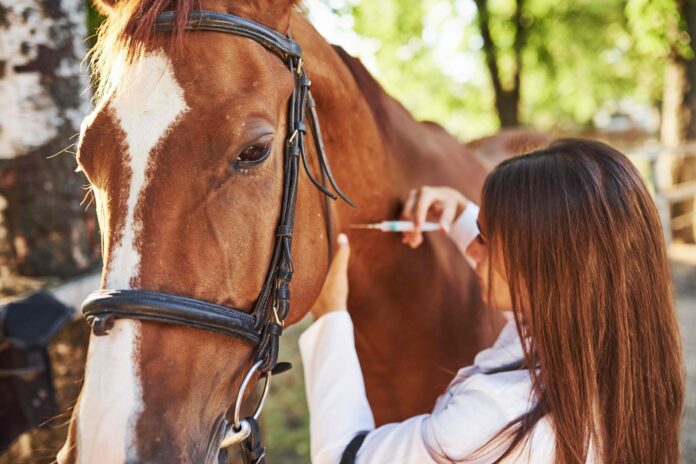
Scientists warn bacteria found in some South East Queensland horses underscores a growing antimicrobial resistance threat across species, including to humans.
Scientists from the University of the Sunshine Coast (UniSC) have found a clinically important mutation in the bacterium Pseudomonas aeruginosa (P. aeruginosa), which can make infections harder to treat in both animals and people.
The discovery was made during a study examining the prevalence of the environmental pathogen across a range of Australian species including birds, livestock, native wildlife, pets and horses.
Associate professor Derek Sarovich said antimicrobial resistance was one of the world’s most pressing health issues.
“This is believed to be the first reported instance of the clinically important mutation in horses and further research is needed across a broader geographic region,” he said.
“The results emphasise how humans, wildlife, animals and the environment are inextricably linked, and pathogens like this need to be tackled holistically and collaboratively on a global scale, as outlined by the World Health Organisation.”
Do you have an opinion to share? Submit a Letter to the Editor at Sunshine Coast News via news@sunshinecoastnews.com.au. You must include your name and suburb.
Declared a priority pathogen by the World Health Organisation, P. aeruginosa is commonly found in soil and water but can cause severe infections in humans and animals.
It is particularly dangerous for people with weakened immune systems or chronic lung conditions.
Researchers screened almost 1,700 DNA samples obtained between 2010 and 2023 from healthy and diseased birds, pets, horses, cattle, kangaroos and koalas in South East Queensland.
Lead author Kellie Strickland said infection rates were generally low, but horses stood out.
“We thankfully found a low infection rate across nearly all animals tested, however domestic horses stood out with the highest rate of seven percent,” she said.
“While this was notable because P. aeruginosa infections can cause fertility and pregnancy problems in mares, the results are comparable with international research.
“Of significant concern to our team was the discovery of a genetic mutation in the bug, detected in two of the horse samples.
“The mutation is known to cause resistance toward an antibiotic often used to treat P. aeruginosa infection in both humans and horses.”
The discovery raises concerns because antibiotic-resistant bacteria can move between animals, humans and the environment, potentially reducing the effectiveness of treatments relied upon in both veterinary and human medicine.
Researchers say the findings reinforce the importance of a ‘One Health’ approach to tackling antimicrobial resistance, recognising that the health of people, animals and ecosystems is closely connected.
The findings have been published in the journal Scientific Reports.