
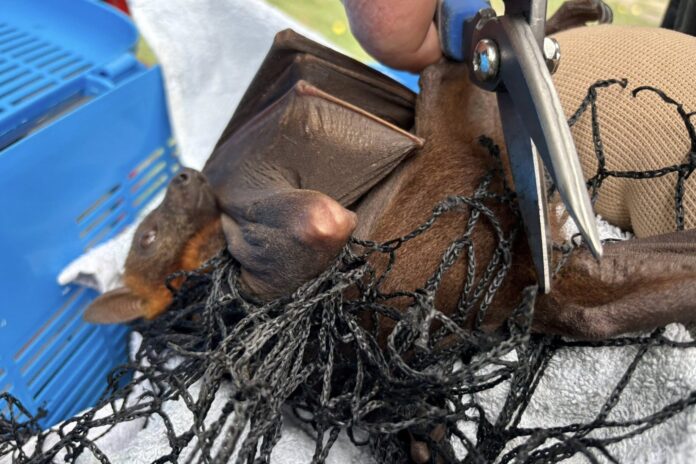
Dozens of flying foxes have died after becoming entangled in netting at a golf club, prompting urgent calls from wildlife carers for the nets to be removed.
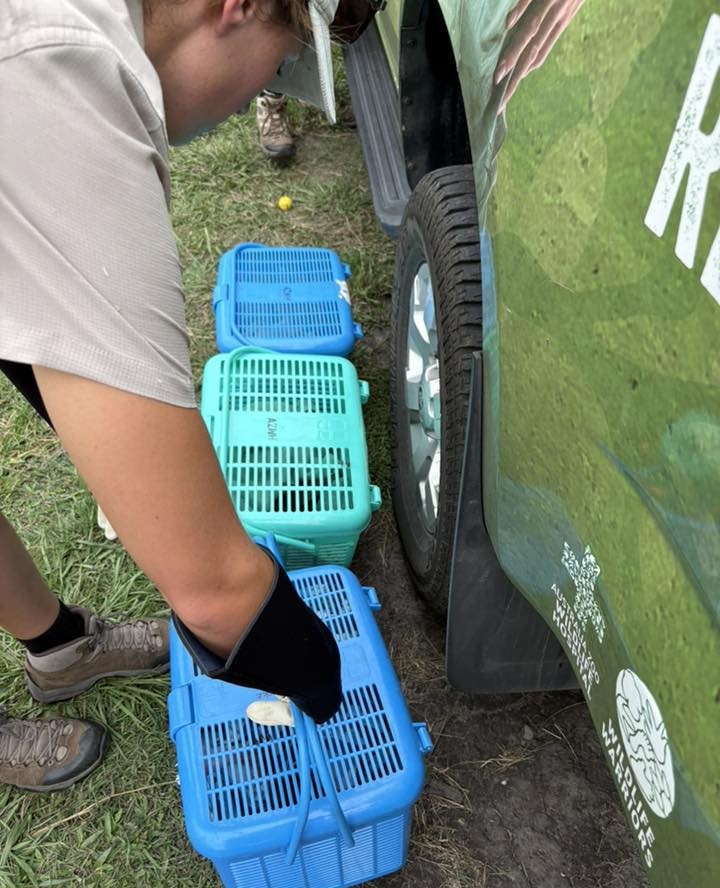
About 88 flying foxes were caught in the Noosa Golf Club’s nets over the past two days, with just under half surviving, Wildlife SEQ and Bat Rescue Inc carer Katrina Odgers said.
Noosa Golf Club president Dale Officer put the number closer to 60, with about 12 fatalities.
“The club is trying to do everything it can to save as many of these flying foxes as possible,” he said.
Club staff raised the alarm with wildlife carers on Tuesday morning after dozens of bats were found trapped high above the ground in the netting.
“We were just watching them die in front of us,” Ms Odgers said.
“There were little babies calling out — it was just awful.”
She said the height of the netting made rescues slow and difficult, with a cherry picker required to reach the animals.
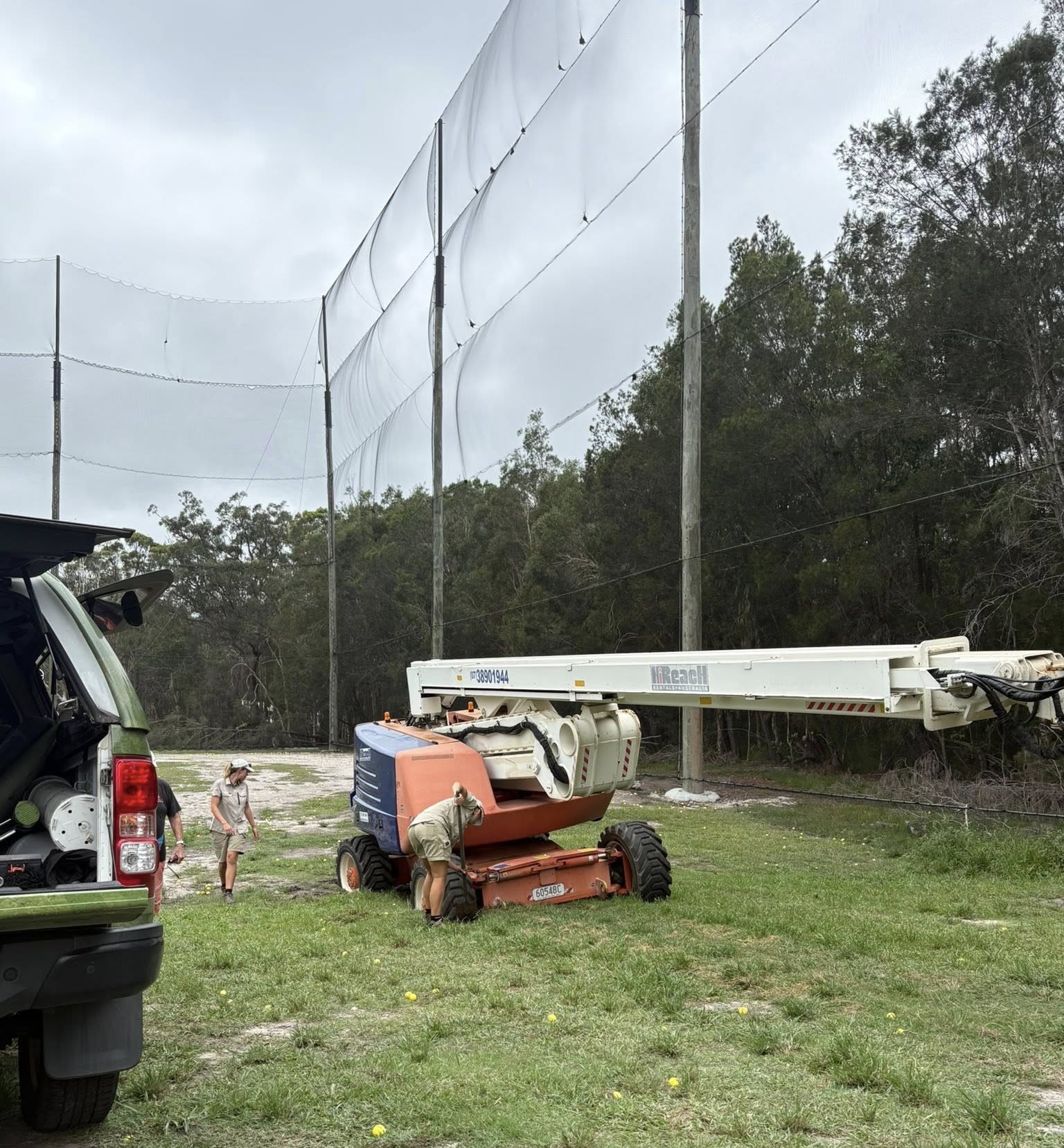
“Because it was so high, it took about five minutes just to get the crane up there, and while they were cutting them out, others were dying,” she said.
Ms Odgers said the size and condition of the netting played a major role in the deaths.
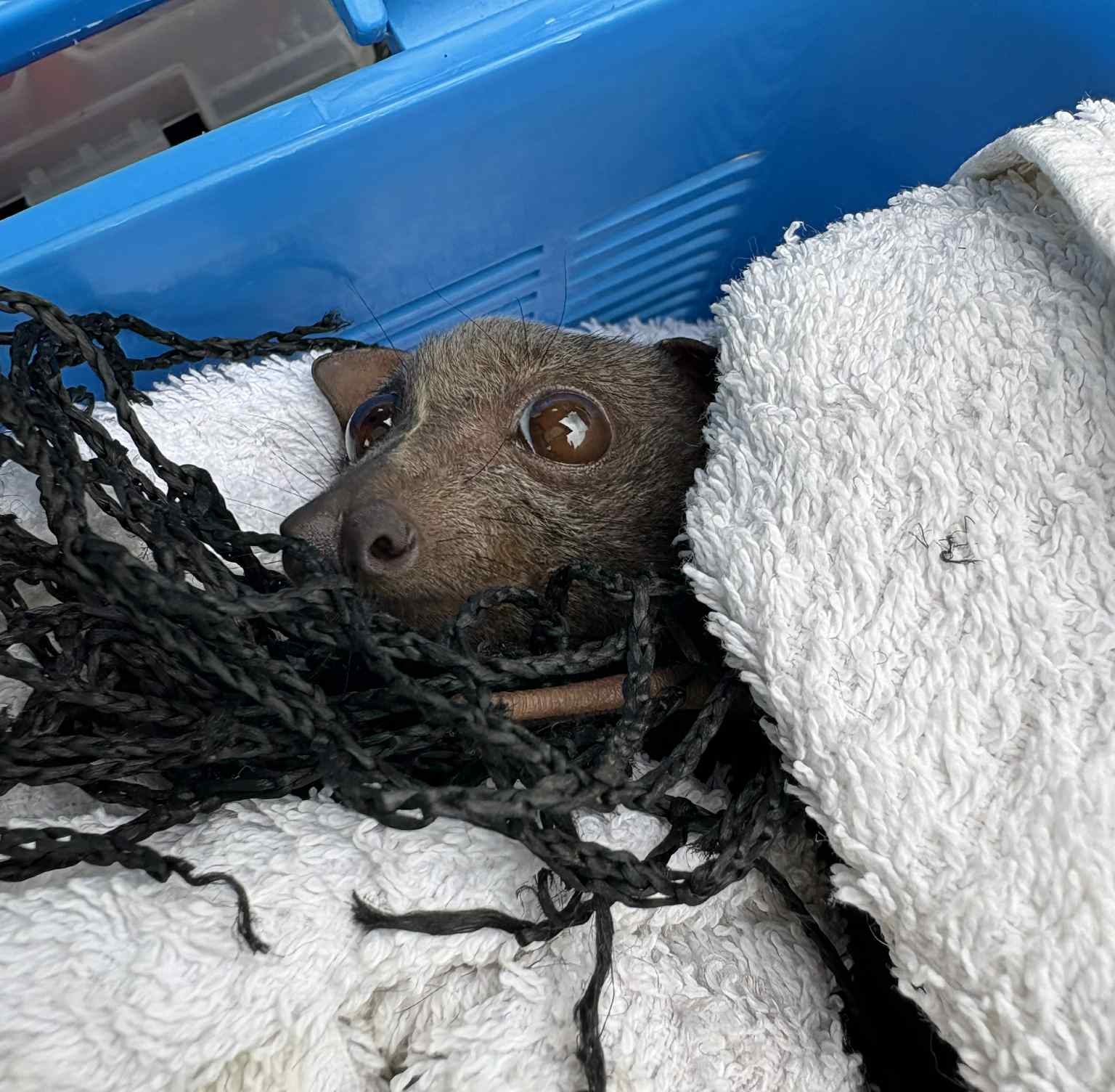
“The netting was so big that a lot of them actually got their necks caught in the holes. It was horrific,” she said, adding that some bats had to be euthanised on site.
“They stress and become hyperglycaemic very quickly, so we had to give them glucose straight away.
“They were so dehydrated they couldn’t even blink.”
The seasonal migration of little red flying foxes through the area aligns with the flowering of bloodwoods and various eucalypts.
Ms Odgers said nearby flowering gums were drawing the bats into the area.
“The bats fly in, see the trees, then drop down and hit the net,” she said.
Want more free local news? Follow Sunshine Coast News on Facebook, LinkedIn and Instagram, and sign up for our FREE daily news email.
She said exhausted bats were falling into joins between sections of slack netting, where they became fatally tangled.
“If those nets were tight, it wouldn’t be such a problem — but they’re slack and that’s where they’re getting caught,” she said.
Ms Odgers said wildlife carers had expected the nets to be removed after the first day but were told they would remain in place.
“We’re all volunteers — we’ll drop anything to help animals — but day after day, this is just not okay,” she said.
While Ms Odgers called for the nets to be removed immediately, Mr Officer said the $900,000 structure was not simple to take down.
“They’re 25 metres high — it’s not something that’s easily fixed,” he said.
“People think you can just pull them down but it takes special machinery even to put them up or take them down.”
The club met with Wildlife SEQ and Queensland Parks and Wildlife officials on Wednesday morning to discuss the issue.
“We are working with fencing experts to implement bat-friendly nets as soon as possible,” Mr Officer said.
“We’re looking at reflectors, ribbons or streamers so the bats can see there’s an obstacle.
“In the meantime, we’ve hired floodlights to go on the range so the bats can see the nets.”
Flying foxes are protected under both state and federal legislation.