

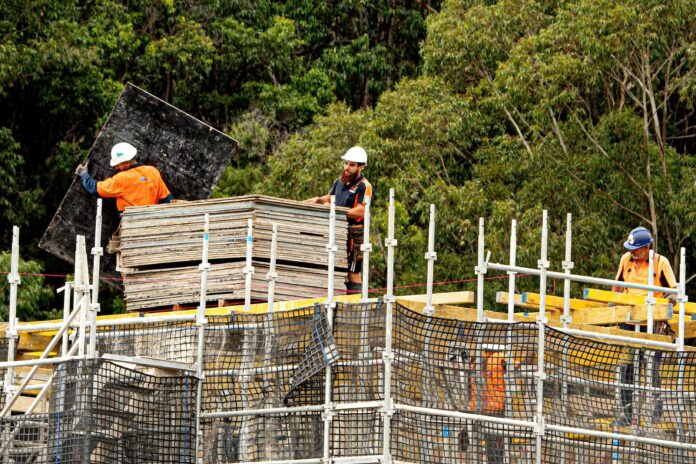
The pace of home building is expected to ramp up this year, but labour shortages, builder insolvencies and higher global inflation posing headwinds.
The run of lacklustre new housing starts continued in late 2024, with dwelling approvals falling 3.6 per cent in November, to 14,998.
Building approvals as tracked by the Australian Bureau of Statistics have been gradually trending higher, though fewer interest rate cuts than thought earlier may moderate the recovery.
Oxford Economics Australia head of property and building forecasting Timothy Hibbert expected around 170,000 dwellings to be built over the 2024 calendar year, up 4 per cent on 2023.
“Signs are that we will see further modest improvement in 2025, with attached dwellings providing increased support,” Mr Hibbert said.
He wasn’t expecting a boom over the next 12 months, with utility connection bottlenecks and trade labour shortages imposing speed limits on the rebound.
“We don’t expect a more meaningful double-digit recovery in total approvals until 2026, when mortgage rate cuts aid the release of pent-up housing demand, while traction on the supply policy front will become increasingly evident,” Mr Hibbert said.
Independent economist Saul Eslake said there was tentative evidence home building had passed its weakest point but the pace of approvals was still slow.
“You would need to see quite a bit of month by month improvements to be at all confident that we’re getting to the sort of levels of new starts that are consistent with the government’s ambitious targets,” he told AAP.
A national goal of 1.2 million new homes over five years has been set with the intent of boosting supply and improving housing affordability.
Help us deliver more news by registering for our FREE daily news feed. All it requires is your email at the bottom of this article.
But with labour shortages and other challenges plaguing the industry, the target is at risk of falling short.
High borrowing costs have been weighing on the construction sector and interest rate cuts should offer some reprieve when they arrive, most likely in the first half of the year.
Mr Eslake was still tipping the first cut in February but was unsure how many more would follow given the possibility of higher global inflation under a Trump administration.
With only two or three 25 basis point cuts looking likely, Mr Eslake says any influence on home building will be muted.
Other drags on new housing construction included competition for workers with major infrastructure projects.
“There is at least some anecdotal evidence to back it up is that home builders are unable to compete with government infrastructure projects for skilled labour,” he said.
Infrastructure spending has already featured in the Labor government’s pitch to voters ahead of an election, with the prime minister pledging $7.2 billion to upgrade the 1600km-long Bruce Highway on Monday.
A further handbrake to the supply of new dwellings was insolvency rates, with builders going broke in big numbers after finding themselves caught between high construction costs and fixed contracts with customers.
The economist said planning, zoning laws and regulations administered by state and local councils were another issue, particularly for high-rise apartments in inner city and older suburbs.



