The Department of Transport and Main Roads has detailed how a multibillion-dollar rail line could impact the environment, and provided mitigation strategies.
TMR has referred plans for Stages 1 and 2 of Direct Rail Sunshine Coast, which totals about 27km of line, to the federal Department of Environment for assessment.
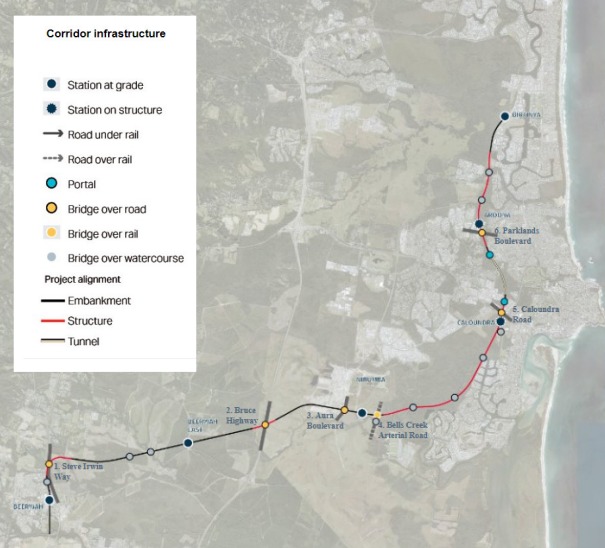
Stage 1, from Beerwah to Caloundra, has full funding of $5.5 billion. Stage 2, from Caloundra to Birtinya, is undergoing planning, design and market engagement to confirm costs and timeframes for construction. The alignment for Stage 3, from Birtinya to Maroochydore, is protected. The LNP has stated that it is committed to delivering the full line by 2032.
A project information centre and satellite office has been established in Caloundra, tenders have been released and geotechnical investigations are well underway.
The referral summary project description stated that the project area is 402ha, labelled as “disturbance footprint”. Parts of the land are earmarked for site preparation, vegetation clearing and earthworks, waterway realignments, piling and construction of viaducts, and bridges and general construction activities.
Accompanying documents examined the potential for impacts to areas of environmental significance. It also included design refinements and strategies to avoid, minimise or manage any impacts.
It stated that three potential matters of national environmental significance could be affected.
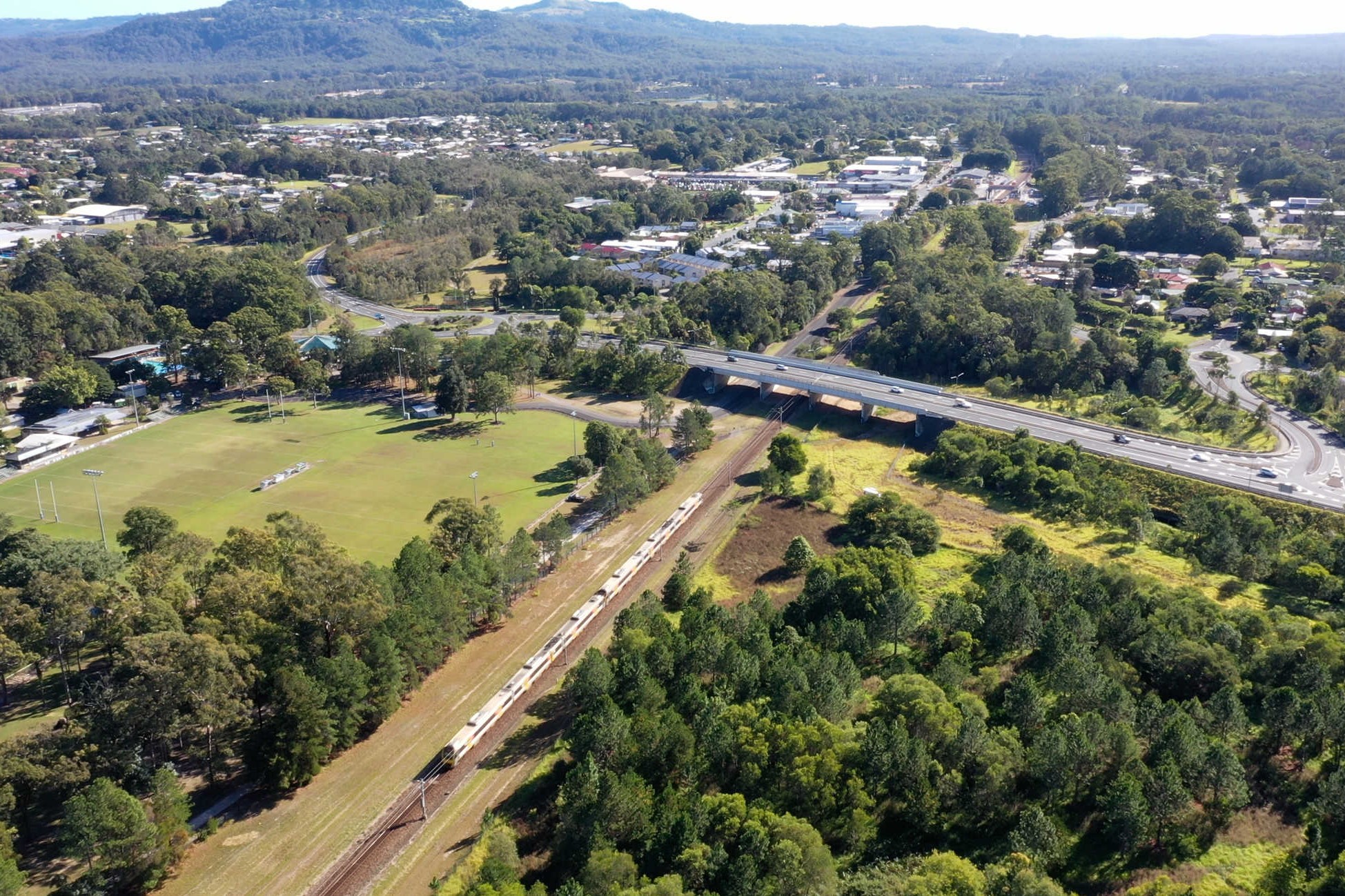
They include the Ramsar wetland, threatened species and ecological communities, and migratory species.
The wetland is mapped 25m downstream from the project area and TMR said the project should not have a significant influence on it.
“There will be no direct impacts to the wetland due to the project area being outside the wetland boundary, and indirect impacts that may arise due to changes in hydrology or water quality will be managed through design and construction planning and the implementation of construction mitigation measures,” it stated.
A section of rail line is expected be elevated to help limit indirect impacts.
Several threatened species and ecological communities could be directly and indirectly impacted. Among them are the coastal swamp oak, whipstick wattle, glossy-black cockatoo, koala and wallum sedgefrog.
TMR outlined mitigation measures including line realignment, the relocation of a planned stabling yard, a longer planned tunnel beneath the Caloundra Town reserve and elevated sections of rail line.
“A range of management measures, management plans and further surveys, investigations and/or assessments are (also) proposed to further minimise, mitigate or manage potential impacts,” it stated.
Offsets were proposed to be provided where significant impacts were identified.
“To offset the impacts to threatened flora species, a combination of translocation of impacted individuals and propagation and planting of impacted individuals is proposed,” TMR stated.
“Direct land-based offsets are proposed to offset the impacts to threatened fauna species.
“Preference will be given to a single offset site which satisfies multiple offset obligations; however, this may comprise multiple offset sites.”
TMR identified some migratory species that could be directly and indirectly impacted but stated that the project would not have a significant effect on them, and measures would be taken.
“No ecologically significant proportion of the populations of migratory birds are present or considered likely to occur within the referral area,” it stated.
“In addition, due to the relatively small amount of potential migratory terrestrial bird foraging habitat being impacted by the proposed action, and the large extent of higher-quality suitable foraging habitat in the broader landscape, the proposed action is unlikely to have a significant impact on migratory bird species.”
Mitigation measures include realignment of the line near Beerwah and a proposed viaduct.
A full range of the project’s potential impacts and counter measures can be seen in the Environment Protection and Biodiversity Conservation Act Public Portal.
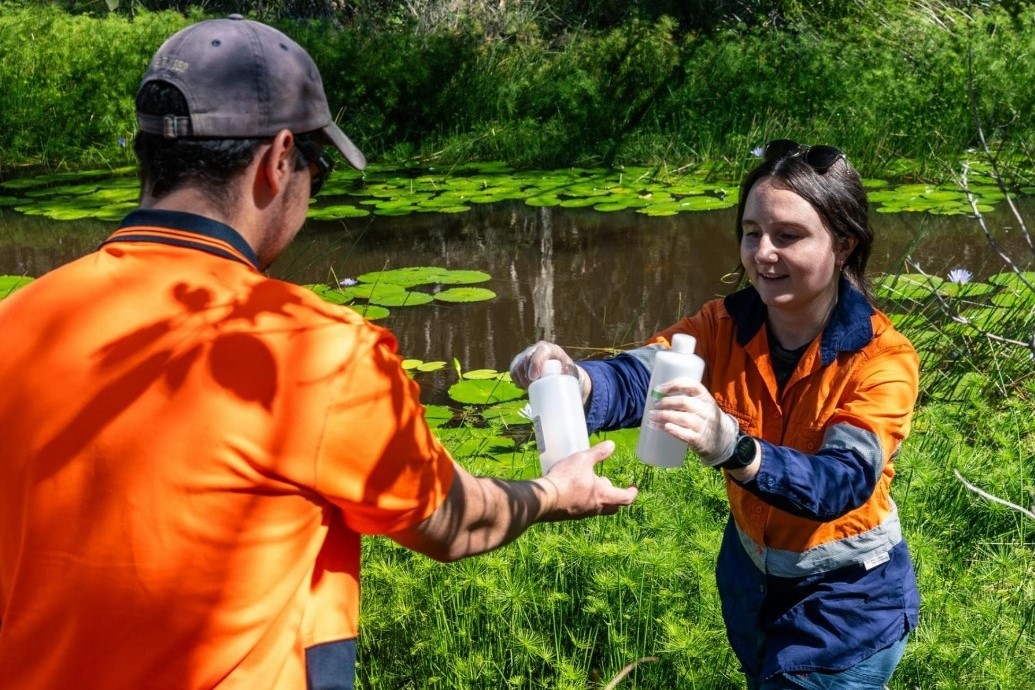
Consultation has been held with an Environment Stakeholder Interest Group, which consists of representatives from several local environmental groups.
Talks with the Kabi Kabi First Nations People started last year. Detailed cultural heritage surveys and further engagement will be undertaken to further inform assessments, design and agreements.
The line would be built primarily within a dedicated public transport corridor, but some property acquisition is likely. TMR has not stated how many homes and businesses could be affected. Relocation of sports facilities is currently under investigation and may be delivered by the Sunshine Coast Council.
TMR said the rail line was required.
“The Sunshine Coast region is at a significant crossroad,” it stated.
“It is the largest urban area in Australia without a direct rail connection to its nearest capital city and, as a result, the region has the second highest car ownership rate in Australia.
“The urban centre of the Sunshine Coast is expanding, with locals and visitors often travelling long distances within the region and between Brisbane, Moreton Bay and the Sunshine Coast for work, education and social services.
“To meaningfully reduce car dependence and improve accessibility to, from and within the region, a separated, fast, high-quality, reliable public transport option is required.
“Alternatives including new alignments and alternate modes are not proposed as these were explored extensively during the planning phases of the project and were found to have greater impacts and lower benefits than the proposed action.”
Want more free local news? Follow Sunshine Coast News on Facebook, LinkedIn and Instagram, and sign up for our FREE daily news email.