
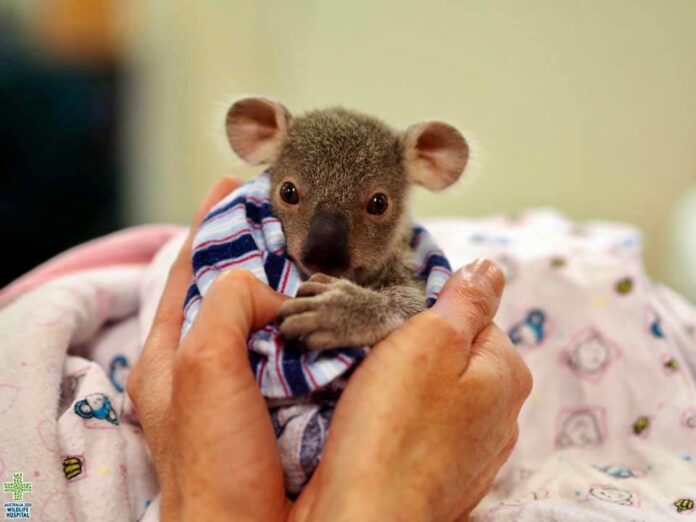
A koala that was nurtured by wildlife carers and released back into the wild has died after sustaining severe injuries.
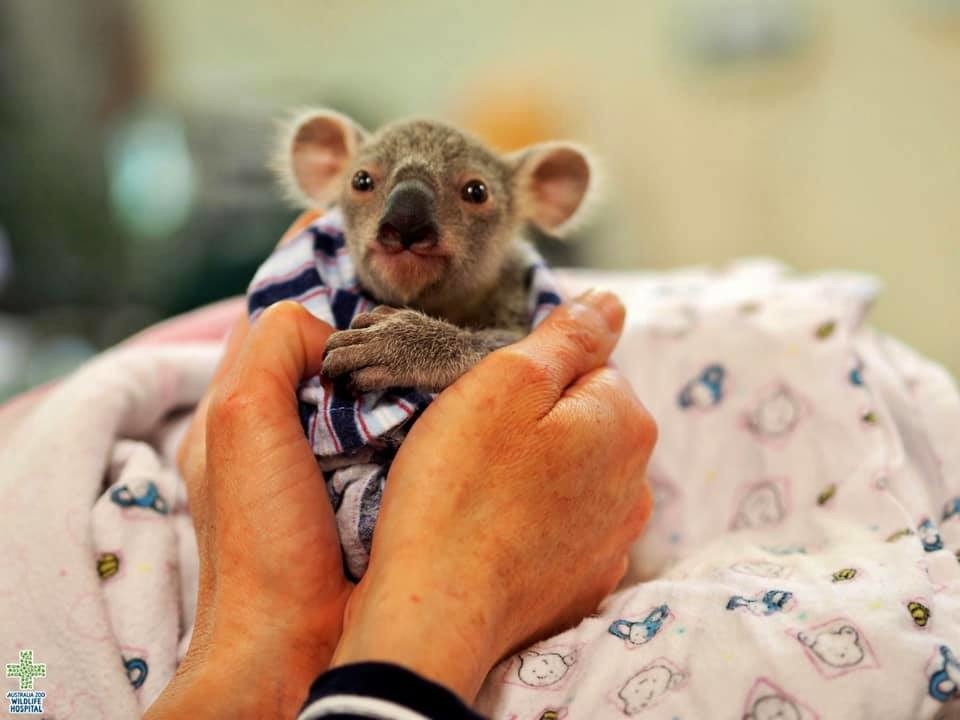
‘Luke’ the koala captured the hearts of staff at Australia Zoo Wildlife Hospital when he was first admitted to the rehabilitation facility as a joey four years ago, after he was rescued from his mother’s pouch after she was hit by a train.
The hospital’s dedicated team worked tirelessly to stabilise him, providing around-the-clock care, warmth and nourishment.
As he grew, Luke was placed under the care of a specialised wildlife carer, who prepared him for a future back in the wild.
When he was old enough, Luke was successfully released in his natural habitat.
Recently, Luke returned to the Australia Zoo Wildlife Hospital, bearing the marks of a severe trauma to his front limb.
It is suspected that he was caught in barbed wire fencing.
The injury had left his bone exposed and despite the best efforts of staff, the severity of his injuries proved insurmountable.
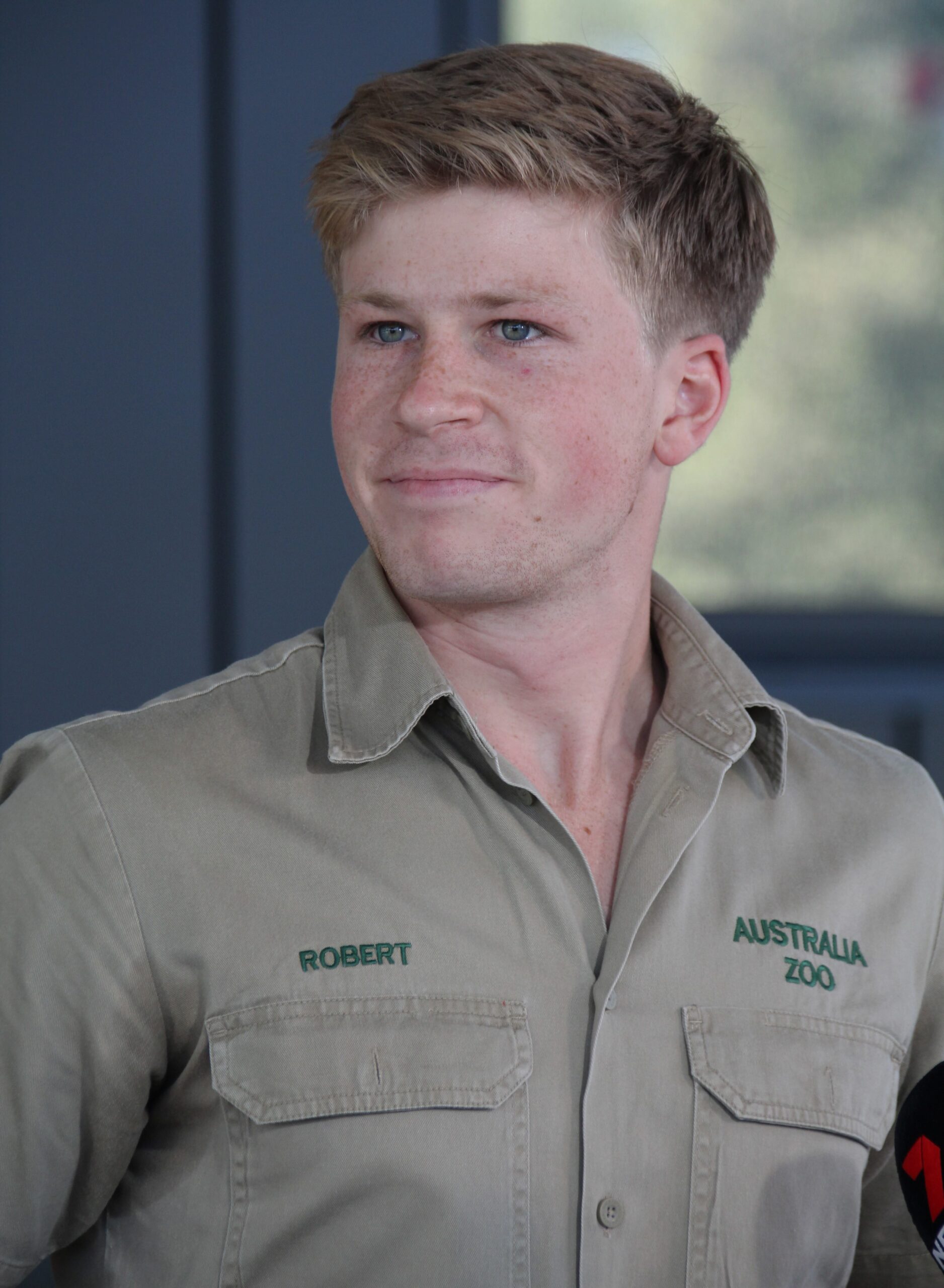
Wildlife conservationist Robert Irwin urged the public to help protect wildlife.
“It is extremely heartbreaking to see patients like Luke and his mum at the Wildlife Hospital who suffered such terrible injuries,” he said.
“Sadly, this is not a rare occurrence, especially during trauma season, and we need everyone’s help now more than ever to continue our lifesaving efforts to help wildlife in need.”
Luke’s journey serves as a reminder of the threats that animals face in the wild.
The Wildlife Hospital is open every day and admits patients at no cost to the public.
Patient admissions triple during trauma season, which spans from September to February each year.
As temperatures rise, wildlife become increasingly active seeking food, water, shelter and companionship.
“Trauma season arrived two months earlier this year and we’ve been admitting 600 patients a month,” Robert said.
“Recently, the Wildlife Hospital had 60 koalas in care, which is incredibly high, and this excludes other wildlife such as birds, marine turtles, possums and more.
“Our veterinary team is going above and beyond to treat every patient with the goal of releasing them back to the wild.”
The Australia Zoo Wildlife Hospital is one of the biggest rehabilitation facilities in the world and Australia’s busiest koala hospital.
The iconic yet endangered koala continues to face threats such as collisions with vehicles, domestic pet attacks, disease and habitat loss.
Staff have treated more than 11,000 koalas since opening and are working with researchers to find a cure for deadly diseases such as chlamydia, an illness rapidly wiping out the population.
The public has been urged to remain vigilant on the roads, keep an eye out for injured wildlife and contact the nearest rescue group to help an animal in need.
To donate and help wildlife visit Wildlife Warriors.
Scroll down to SUBSCRIBE for our FREE news feed, direct to your inbox daily.