
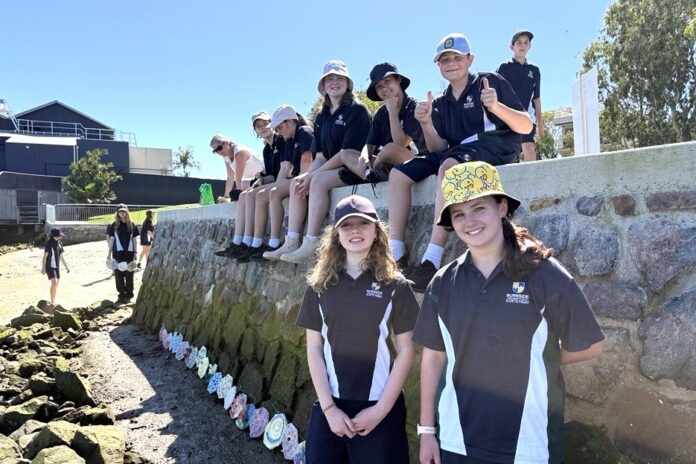
High school students have helped create a marine habitat, designing ceramic tiles for a the Sunshine Coast’s newest ‘living seawall’.
Year 7 students from Burnside State produced the pieces for the barrier on the bank of the Mooloolah River near Penny Lane at Mooloolaba.
The specially designed tiles mimic the complexity of natural coastal habitats. The textured surfaces create shelter for marine species, encourage seaweed growth and provide homes for fish and other marine life.
Inspired by existing living seawall innovations developed by the Sydney Institute of Marine Science and Reef Design Lab, the school-led initiative was delivered in partnership with Sunshine Coast Council, who provided access to the site and coordinated the installation last month.
The project started in the classroom.
As part of an international Environmental Recovery Initiative through the International Education and Resource Network, students were investigating local environmental challenges and studying tides as part of their Earth and Space Science curriculum.
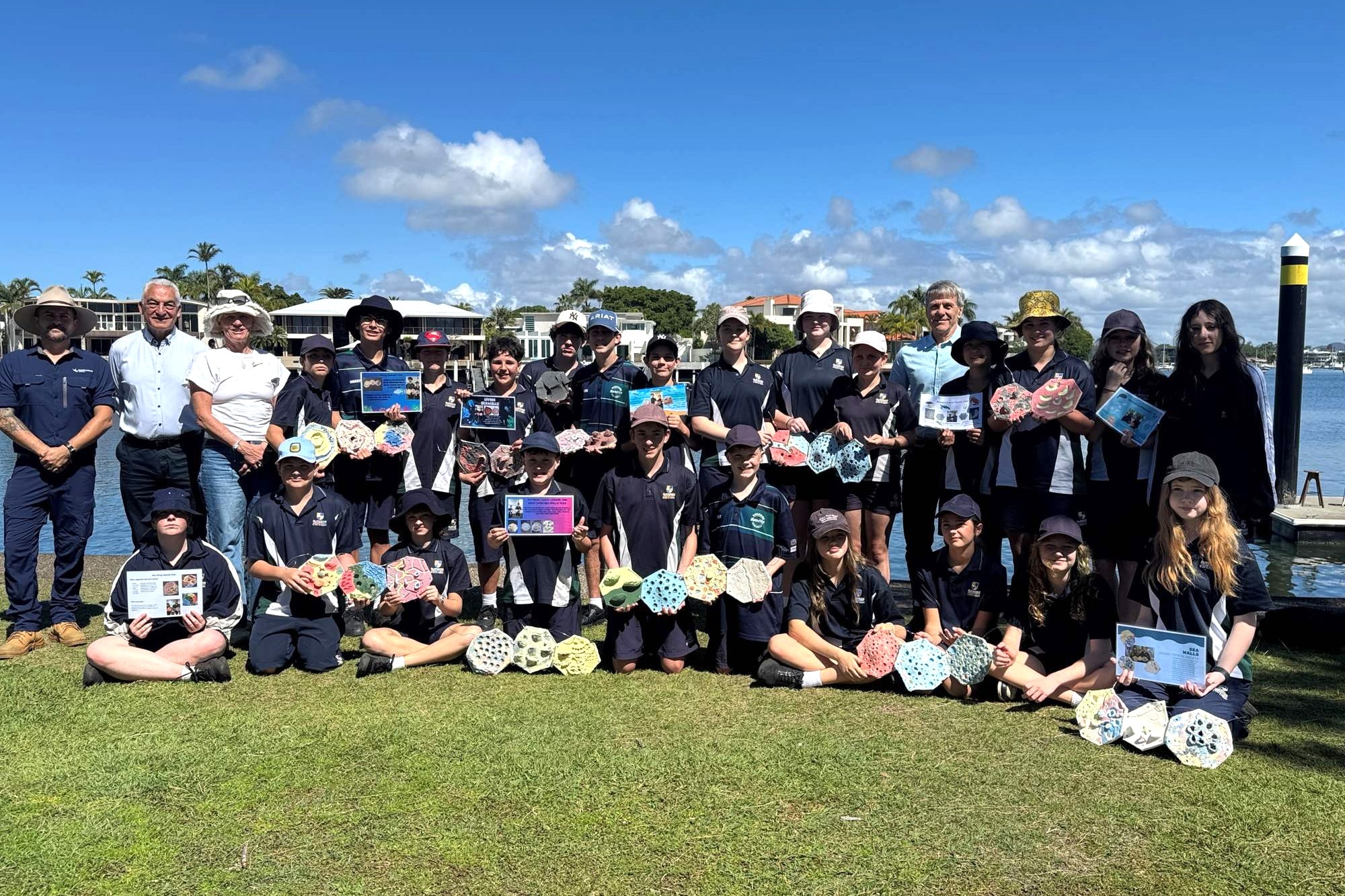
Their research led them to the living seawall project and the opportunity to make a real-world contribution to their local environment.
Teacher Susanna Hieke-Gawthorn said the project allowed students to connect classroom learning with meaningful environmental action.
“Students were studying tides and learning about the challenges marine organisms face living on seawalls when they discovered the living seawall project,” she said.
“They learnt how the rise and fall of tides creates a harsh and constantly changing environment and began exploring ways they could help improve habitat for marine species in our local area.
“This project has given students a genuine opportunity to contribute to environmental recovery while applying their science learning in a real-world setting.”
The partnership quickly expanded beyond the classroom.
Students connected with the council, visited an existing living seawall in Caloundra, collected biodiversity data, learned from marine scientists at the University of the Sunshine Coast and shared their findings with students in Latin America and Spain participating in the same international network.
Help keep independent and fair Sunshine Coast news coming by subscribing to our FREE daily news feed. All it requires is your email at the bottom of this article.
The students will continue their involvement after the installation, monitoring the seawall over time and observing changes in marine biodiversity.
“Hopefully, next year we will see increased biodiversity on the tiles and observe many marine species making the wall their home,” Dr Hieke-Gawthorn said.
“We want students to see how science can create positive environmental outcomes and understand their role in protecting local ecosystems.”
Councillor David Law said the project demonstrated the value of collaboration between education, conservation and local government.
“This is a wonderful example of young people taking action for the environment and creating something that will benefit our coastal ecosystems for years to come,” he said.
“Council is proud to support initiatives like this that bring together schools, researchers and the community to deliver practical environmental outcomes.
“In our Sunshine Coast Biosphere, we recognise that everything is connected, and so these students are making a real impact.
“Decades into the future, that impact will still be rolling on, and that’s a powerful legacy.”
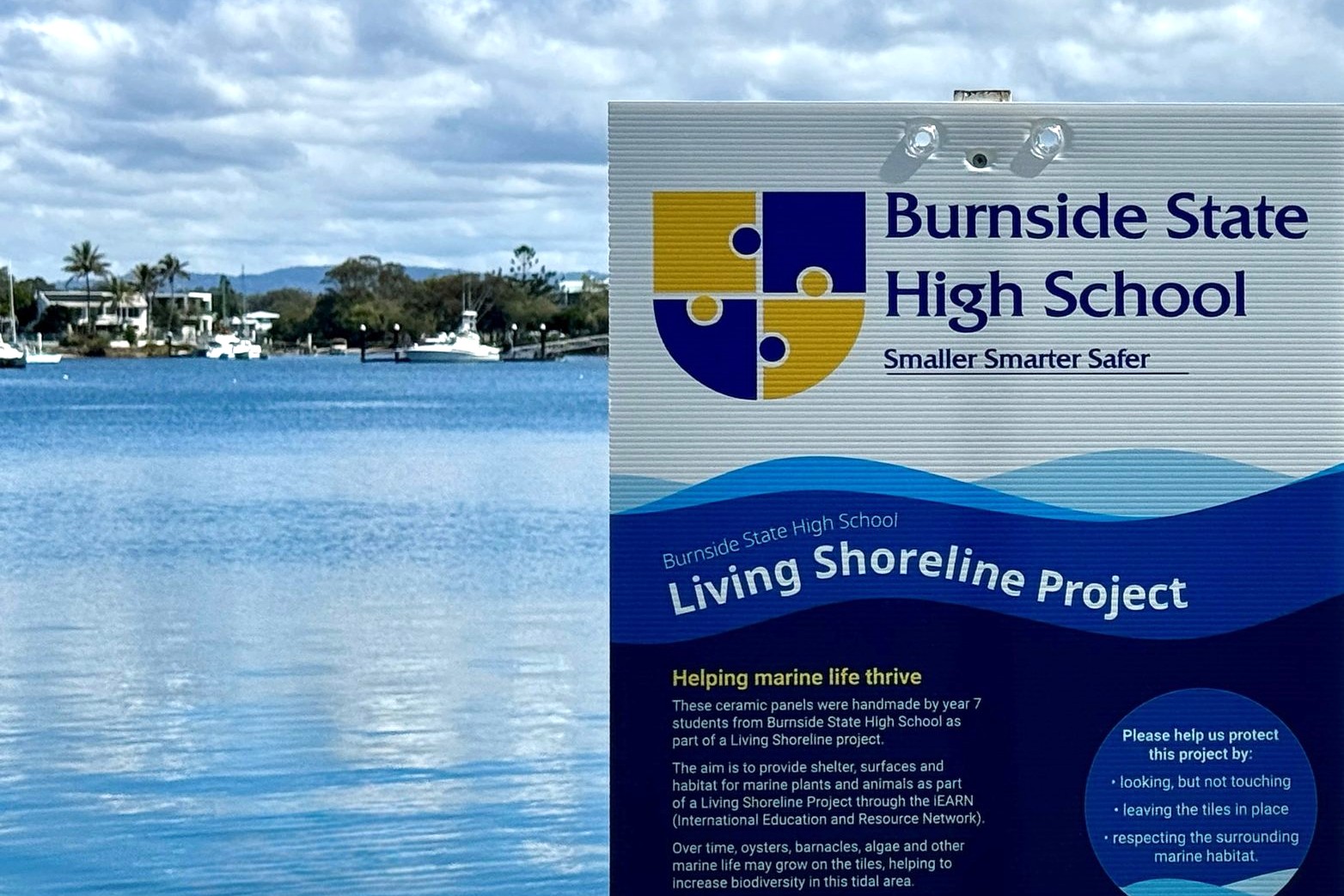
Councillor Joe Natoli said living seawall projects were part of a broader approach to caring for our coastline using nature-based approaches.
“When we build or replace coastal infrastructure, council investigates each location and considers whether nature-based solutions like this could help support coastal ecosystems,” he said.
“As a coastal community, we have an important role to play in caring for our marine environments, and living seawall panels are one example of how we can we can both protect our shoreline and create habitat for marine life.
“Other nature-based solutions, including oyster restoration projects, are helping us explore innovative ways to make our coastline healthier and more resilient.”
The Sunshine Coast is already home to two living seawalls delivered in partnership with the University of the Sunshine Coast.
Those installations use panels developed by the Sydney Institute of Marine Science and the Reef Design Lab and are monitored by UniSC researchers.