
A Sunshine Coast water catchment has received its lowest ever rating in a biennial analysis.
The Maroochy basin, which is primarily based around the Maroochy River, was given a score of 58.06 out of 100 in the Healthy Land and Water report card.
It’s the area’s lowest rating in 10 recordings, since they started in 2015.
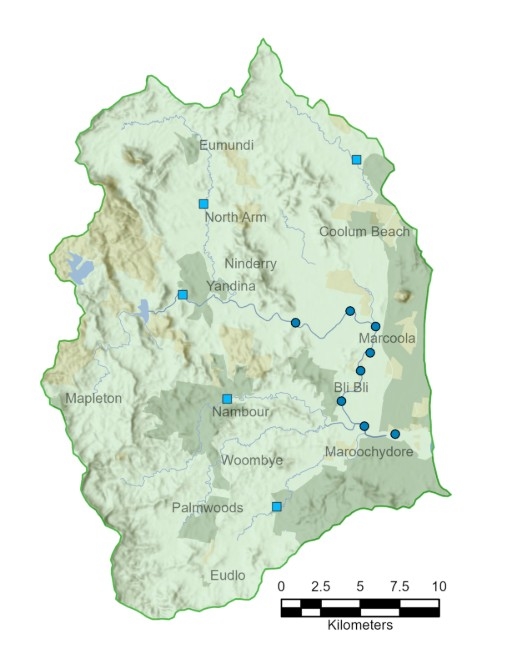
The catchment stretches from Doonan in the north to Eudlo in the south, and to Mapleton in the west. It encompasses the coastline from Coolum to Alexandra Headland.
It was rated ‘very good’ from 2016 to 2019 but has been adjudged only ‘fair’ since, with a general decline in condition.
Local journalists supporting local people. Help keep independent and fair Sunshine Coast news coming by subscribing to our FREE daily news feed. All it requires is your email at the bottom of this article.
All four local catchments have deteriorated in recent years, with Noosa (74.13) and Pumicestone (67.19) dropping from ‘excellent’ to ‘very good’ and Maroochy and Mooloolah (55.06) slipping from ‘very good’ to ‘fair’. The latter has remained on the same low score for three consecutive readings.
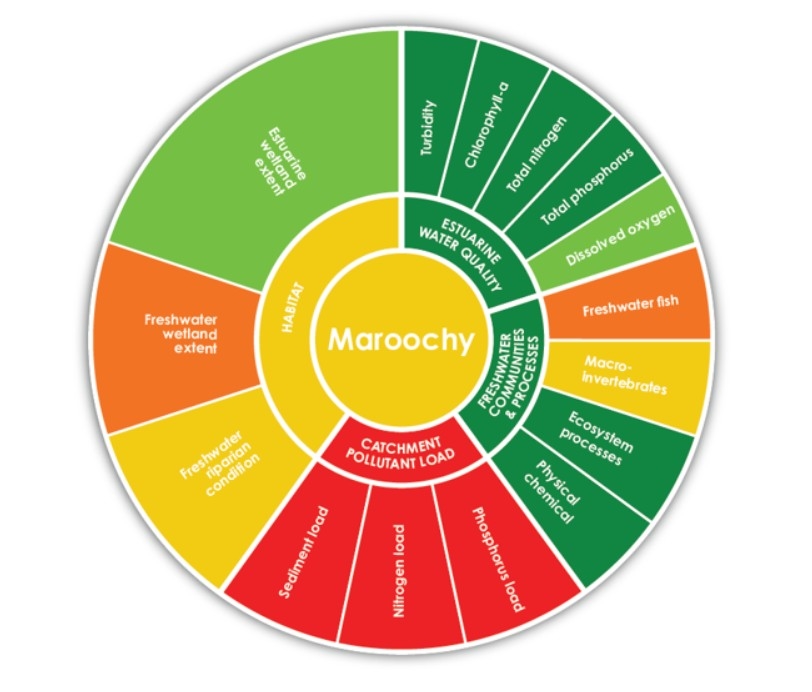
But the Maroochy catchment’s slide is most notable. It’s plummeted more than 16 points since 2016. The catchment’s catchment polluted load is rated ‘very poor’.
“Pollutant loads increased significantly from low to very high, with sediment (mud) loads increasing from 57.1kg/ha in 2023 to 1182kg/ha in 2025. Run-off also delivered very high loads of nitrogen (18.1kg/ha) and phosphorus (3.7kg/ha) to waterways,” the report card stated.
The catchment’s freshwater wetland extent is rated ‘poor’.
HLW advised some possible solutions including: reducing pollution and sediment runoff, improving waterway connectivity, implementing water-sensitive urban and sustainable agricultural practices, and supporting community engagement through education, awareness programs, and incentives for local groups and landholders.
The report card stated that the estuarine water quality and freshwater communities and processes are rated ‘excellent’, and HLW acknowledged a range of projects in the area, including: Blue Heart sustainable floodplain management; a waterways taskforce and RESET site, the Yandina Creek wetland, the Maroochy estuary saltmarsh restoration, the Doonan Creek Environment Reserve and more.
Meanwhile, the Mooloolah catchment, which stretches from Mooloolaba in the north to Caloundra in the south, and Maleny to the west, remains a low point for waterways in the region.
Its catchment pollutant load and freshwater fish are rated ‘very poor’ while estuarine wetland extent, freshwater wetland extent and sediment food are ‘poor’.
Healthy Land & Water coordinates the report card program on behalf of a partnership including the state government, the councils of South-East Queensland and water utilities. It is delivered with support from scientists from multiple universities, including the University of Sunshine Coast, and the CSIRO.
HLW told Sunshine Coast News the region’s waterways are generally “maintaining good overall health, though there are variations depending on the specific catchment.”
“Looking at changes over the years, we’ve observed a slight decline in certain parts, particularly in sediment and nutrient levels.
“These changes are mostly linked to increased sediment and nutrient runoff, which can be traced back to factors like urban development and agricultural activity.
“The main concerns and challenges we’re facing relate to managing catchment erosion, reducing nutrient input from both urban and farming sources, and protecting critical habitats such as wetlands and seagrass beds.
“As the region continues to grow, urban expansion and major weather events like floods are having a greater impact on water quality, making these management efforts even more essential.”
HLW detailed actions that could be taken.
“Restore riparian zones and wetlands to improve water quality, managing sediment and nutrients runoff like better storm water control and protecting key habitats like seagrass beds and wetlands from further disturbance. Also work to improve and support initiatives on catchment management.”